

- Publisher:mzadmin
- Published on:2026-11-17
- Pageviews:6535
How is the steel bar skeleton made?
The production of a concrete utility pole requires not only a "body" built with high-strength concrete, but also a "skeleton" made of steel bars woven into a cage to support it from within. Many friends may not be familiar with how the steel bar skeleton inside a concrete utility pole is made. We are a professional manufacturer of concrete utility poles, with more than 20 years of deep experience in the power pole and tower industry. Today, this article will introduce in detail the secrets of the steel bar skeleton that makes concrete utility poles indestructible. Let's take a look together!
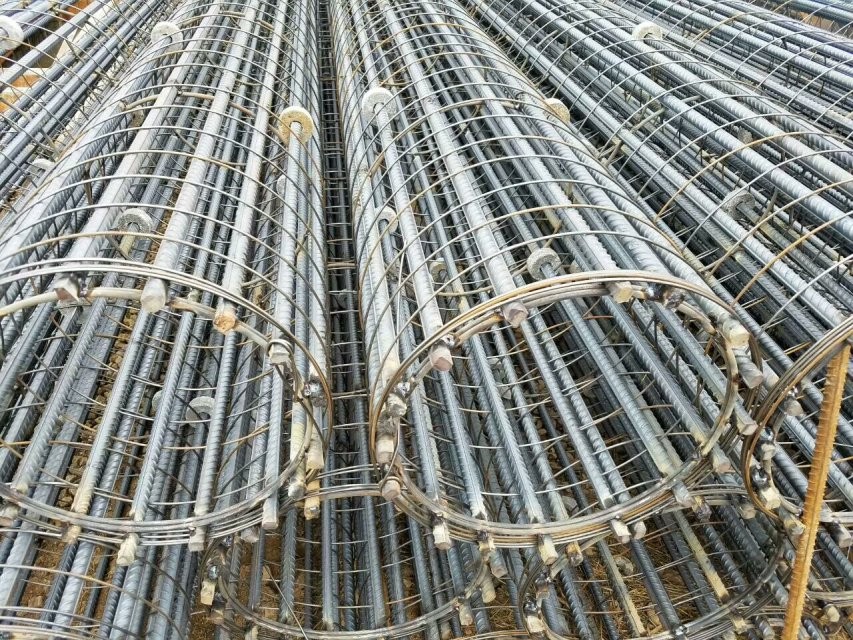
The production of the steel bar skeleton is divided into three steps: selection of steel bars, processing of steel bars, and fabrication of the steel bar skeleton.
Selection of steel bars
Prices of concrete utility poles on the market vary greatly. For the same 8-meter pole, some quote 150 yuan, while others quote 200 yuan. The price difference mostly lies in the internal steel bars that cannot be seen. What diameter and what quality of steel bars are used directly determines the service life of the concrete utility pole. Concrete utility poles can be divided into prestressed and non-prestressed types. Different types of poles use different steel bars. The skeleton consists of three parts: longitudinal main bars, spiral bars, and spacing ring bars.
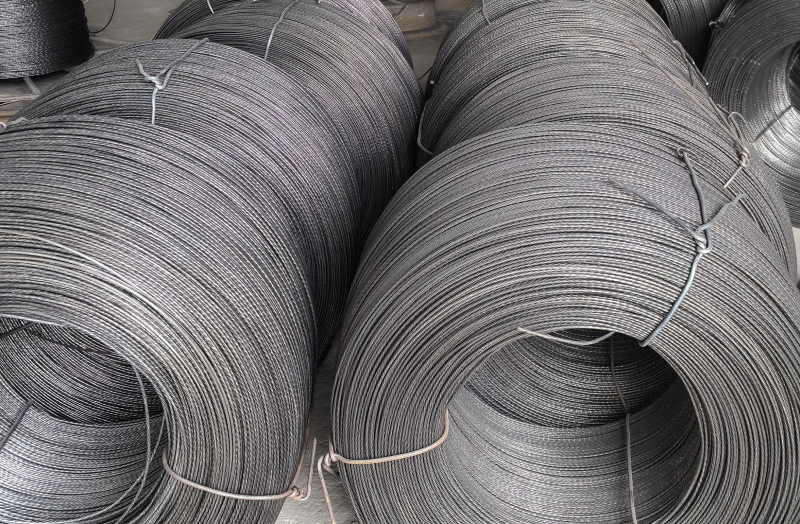
For ordinary reinforced concrete poles, namely non-prestressed concrete utility poles, the longitudinal load-bearing main bars generally use HRB400 hot-rolled ribbed steel bars, that is, Grade III threaded steel bars, with a minimum diameter greater than or equal to 8 mm. According to Chinese production standards, the diameter of the main bars should be less than or equal to 2/5 of the pole wall thickness. For prestressed poles, prestressed steel wire, prestressed steel rods, and prestressed steel strands can be used. The advantage of prestressed materials lies in their high strength and low relaxation. They are also the mainstream poles in the domestic market and are relatively widely used. Concrete utility poles should be equipped with spiral bars along their entire length. Spiral bars can confine the concrete and play an anti-cracking role. Their diameter should be 2.5-6.0 mm. When the tip diameter of a tapered pole is less than 190 mm, the diameter of the spiral bar should not be less than 2.5 mm; when the tip diameter of a tapered pole is greater than or equal to 190 mm and less than 230 mm, the diameter of the spiral bar should not be less than 3 mm; when the tip diameter of a tapered pole is greater than or equal to 230 mm, the diameter of the spiral bar should not be less than 4 mm. The spacing ring bars are used to support the main bars and ensure the roundness of the skeleton. They are arranged inside the longitudinal load-bearing bars. The diameter should preferably be 5-10 mm. When the diameter of the longitudinal load-bearing steel bars is greater than 18 mm, the diameter of the spacing ring bars should not be less than 8 mm.
When purchasing steel bars, steel bars that meet the standards should be selected. There should be no local bending. Before entering the factory, the diameter and mechanical properties should be verified. Be alert to the mixing in of non-standard steel bars. If the diameter of the steel bars does not meet the standard, the crack resistance and bearing capacity of the pole will be greatly reduced. This is the basic guarantee for the service life of the pole.
Processing of steel bars
Before making the steel bar cage, the steel bars should be pretreated first, and heavily rusted or cracked steel bars should be eliminated. Then use a steel bar straightening and cutting machine to straighten the steel bars. The steel bars should be cut according to 1.5/1000 of the total length. There should be no hard bends or wave bends. After straightening, prestressed tendons should not have scratches or indentations. The welded parts of ordinary steel bars should use flash butt welding, and the strength of the welded joint should not be less than the strength grade requirement of the steel bar itself. The upset heads of prestressed tendons need to be processed with a cold upsetting machine. The diameter of the upset head should be equal to 1.5-1.8 times the diameter of the steel bar. The upset head should have no cracks and should not be skewed. The strength of the upset head should be greater than or equal to 98% of the standard strength of the base material. The upset head is used to be clamped on the tensioning plate for tensioning. Unqualified ones are directly scrapped. The spacing rings should be round and flat, with an outer diameter tolerance of no more than 1.5 mm. The joints should be overlap welded and stacked according to specifications.
Fabrication of the steel bar skeleton
Before making the steel bar skeleton, first check whether the semi-finished products previously made are qualified: main bars, spiral bars, spacing rings, steel plate rings, prestressed tendon upset heads, positioning plates clamped at both ends. For tapered poles, the large end and small end should be distinguished. The positioning holes should be equally divided according to the number of main bars to ensure accurate skeleton positioning reference.
After completing the preparatory work, pass the main bars sequentially through the equally divided holes of the positioning plates at both ends. The main bars should be tightened and straightened, and evenly arranged around the circumference. The main bars of tapered poles should be aligned along the taper and must not be twisted. Start the roll welding machine. The equipment automatically feeds wire, winds the spiral bars, and performs resistance spot welding at the intersections. During the roll welding process, inspection is required: whether the weld spots are firmly fused, without burning the bars or false welding. The total number of unwelded or missed weld spots should be less than or equal to 3%, and missed spots should be repaired by spot welding afterward. The main bars must not shift or twist. After the skeleton is formed, release the positioning tooling and take out the skeleton. Flange poles also require end welding. This production method is CNC roll welding. Its advantage lies in automation, and engineering poles give priority to this production method.
Another method is manually tied and spot-welded skeleton fabrication. Fix the positioning tooling at both ends, clamp the main bars into the positioning holes, straighten, evenly distribute, and fix them; sleeve in the spacing rings. Spacing ring spacing: ordinary reinforced concrete poles less than or equal to 500 mm, prestressed poles less than or equal to 1000 mm; wind the spiral bars from one end to the other, closely fitting the main bars; bind with annealed iron wire, firmly tie every intersection, stagger the binding points, and assist with spot welding at key positions to prevent loosening during centrifugation. This production method has lower cost and uses simple tools, making it suitable for small-batch product manufacturing.
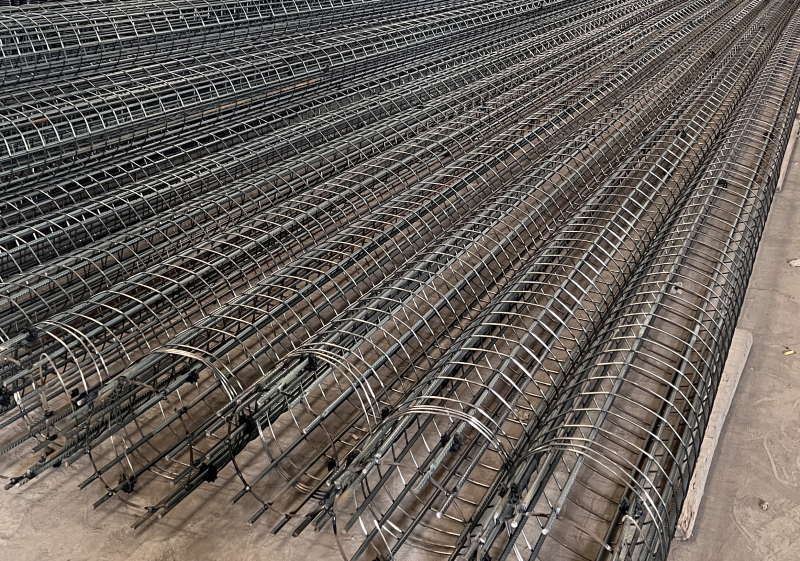
After the skeleton is completed, conduct self-inspection. The error in the circumferential spacing of the main bars must not exceed 5 mm; the average error of the spiral bar spacing over 10 consecutive rings must not exceed 10 mm; the skeleton must have no distortion and qualified roundness, with verticality not greater than 1/40 of the spacing ring diameter; the clear distance of the main bars should be greater than or equal to 30 mm in the pole body and greater than or equal to 25 mm at the small end; weld spots and binding points should be firm without looseness; prestressed tendons should be checked for intact upset heads; the flange end face should be flat without skew. Only after all the above inspections are qualified can the steel bar skeleton be considered completed.
As the internal support of the pole, the steel bar skeleton not only bears tensile force, but also confines the concrete and transmits loads, greatly improving the impact resistance and crack resistance of the pole. After reading this, do you understand how the steel bar skeleton is made? With years of experience and strength, our company is committed to the forefront of the cement products industry. In addition to concrete utility poles, our cement product supply also includes: concrete guy anchor plates, concrete bearing plates, concrete foundation plates, and other cement products. We have rich experience in overseas export projects. If you need high-quality production of prefabricated power components, welcome to contact us.
