



- Publisher:mzadmin
- Published on:2026-10-23
- Pageviews:2866
Concrete Poles: Newer Isn’t Better—Don’t Rush Before the Curing Age Is Reached
A concrete utility pole that has just been demolded may look hard and smooth on the surface, but the concrete inside it is far from reaching the state in which it can withstand long-term loads. Being “new” does not mean being “strong.” Using a concrete utility pole before its curing age has been reached is equivalent to exposing a key chemical reaction that has not yet completed directly to wind, rain, and stress.
The strength of a concrete utility pole is not obtained by “drying,” but by the continuous hydration reaction between cement and water, which generates cementitious products such as calcium silicate hydrate (C-S-H) and binds sand and aggregate into a whole. The speed and extent of this reaction are jointly controlled by temperature, humidity, and time; it cannot be rushed, nor can it be skipped. Among the cement clinker minerals, C₃S (tricalcium silicate) hydrates quickly and contributes most to strength growth in the first four weeks; C₂S (dicalcium silicate) hydrates slowly but continues to contribute after four weeks, responsible for medium- and long-term strength development. At about one year, their contributions gradually become comparable. This means that 28 days is not the end point of strength growth, but a “reference testing age” generally accepted by the engineering community. Concrete utility poles made with ordinary Portland cement are usually required to undergo transverse strength testing only after 28 days from manufacture. The reason is precisely that only at this age do the mechanical properties of the concrete have comparable and judgeable engineering significance.
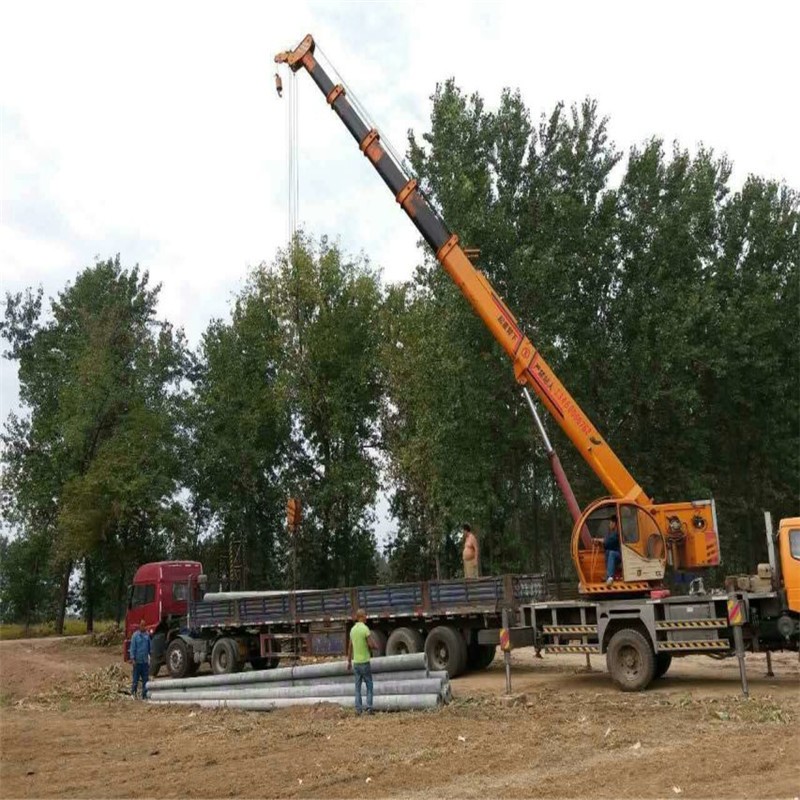
Modern concrete utility pole production commonly adopts centrifugal molding plus steam curing. Centrifugal spinning densifies and shapes the concrete under high-speed rotation, while steam curing enables the pole body to gain sufficient demolding strength within several to a dozen or so hours, so that it can be lifted out of the steel mold and transferred for subsequent storage. Some processes steam-cure at above 100°C for about 8 hours, and after demolding continue insulated and moist curing for several days. This appears “fast,” but steam curing mainly accelerates early strength development; it does not replace the entire curing age. Test data illustrate the point: in comparative tests on C50 concrete, the 3-day compressive strength of the steam-cured group reached 52.4 MPa, significantly higher than that of the standard-cured and natural-cured groups; but by the 28-day age, the strength of the steam-cured group and the standard-cured group were already similar. In other words, steam curing makes the pole “harden early” but does not make the concrete “mature early.” Demolding strength is usually only required to reach 60%–70% of the design strength. This value ensures that the pole body will not be damaged during lifting, transport, and stacking; it does not ensure that it can withstand conductor tension, wind load, and ice-coating load over the long term.
A more insidious problem than “insufficient age” is inadequate humidity during curing. Concrete hydration requires water, especially in the early stage. If the pole body loses water too quickly during storage, the hydration reaction will stall, capillary pores will increase, and strength development will suffer irreversible retardation. In the aforementioned C50 test, the 28-day strength of the water-deficient curing group was only 84% of that of the standard-cured group. Although the natural-cured group reached 97% of the standard-cured group, this was premised on continuous moisture retention. In actual production, if poles are stored in the open after demolding, watered untimely, or transported directly just after demolding to meet schedule, the pole loses not only a few megapascals of strength but also the density of its internal concrete structure. This damage will not repair itself automatically simply by leaving the pole for a few more days; it will remain in the pole body in the form of microcracks and become a starting point for stress concentration in the future.
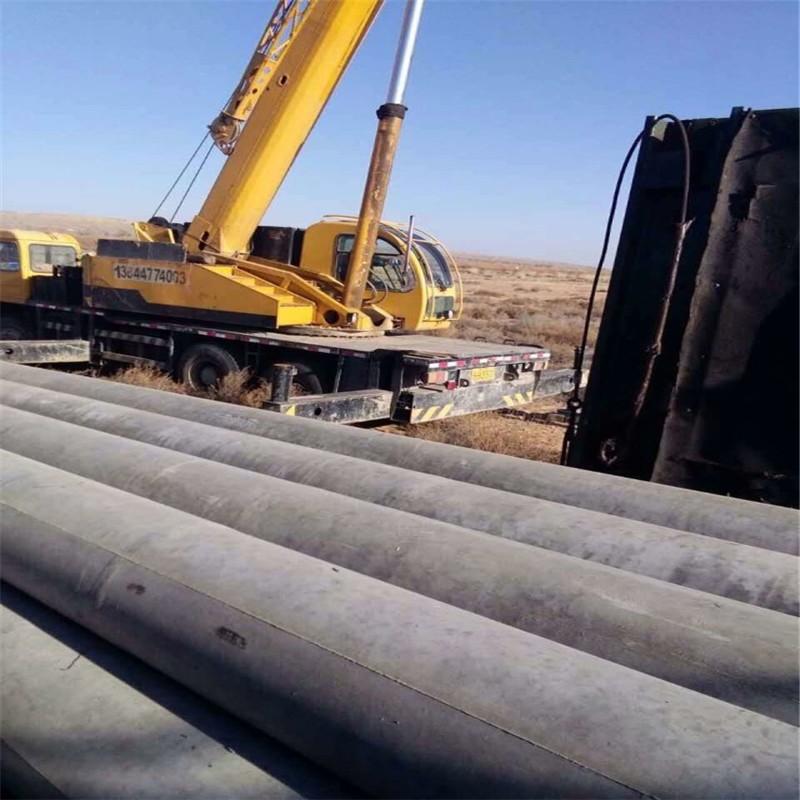
China’s national standard Annular Concrete Poles (GB/T 4623) explicitly requires, in ex-factory inspection, checking the 28-day compressive strength test records of the concrete in the tested batch and conducting inspection and evaluation in accordance with relevant standards. This is not a formal clause that can be handled “flexibly.” The 28-day age strength is the core basis for judging whether the concrete mix proportion of this batch of poles is qualified and whether the production process is stable. Ex-factory inspection looks at 28-day strength, not the strength on the day of demolding. This itself shows that being demoldable does not mean being ready for delivery; being ready for delivery does not mean the curing age has matured enough for immediate load-bearing.
For constructors and purchasers, more worthy of attention than the “date of manufacture” is whether the pole body has undergone complete and continuous moist curing, and whether there are strength inspection records corresponding to its age. A concrete utility pole that has been stored for a sufficient time and has complete curing records may not look so “new” on the surface, but its concrete has completed the hydration it should complete, its pore structure has tended toward stability, and its strength reserve is genuinely usable. The quality of a concrete utility pole is half determined in the factory and half completed in time. Curing age is not a burden of inventory management, but a necessary process for concrete to move from “formed” to “mature.”
