



- Publisher:mzadmin
- Published on:2026-10-19
- Pageviews:5877
Reinforcement Tensioning for Prestressed Concrete Utility Poles: The Principles Explained
A concrete utility pole stands beside a power line and must withstand conductor tension, wind-induced swaying, and even occasional accidental impact. If the reinforcement inside is merely ordinary tied reinforcement, the concrete on the tension side can crack easily. Once cracks appear, moisture and air penetrate, reinforcement corrosion accelerates, and the service life of the pole is shortened. The prestressing tensioning process solves exactly this fundamental problem: before the pole bears any load, the concrete is placed under compression in advance, thereby greatly delaying the onset of cracking. What are the principles behind this process? What is the difference between pre-tensioning and post-tensioning? How are quality and safety controlled during tensioning? This article breaks it down layer by layer in plain language.
1. Why Compress the Concrete in Advance
Concrete is strong in compression but weak in tension. Its compressive strength is high, but its tensile strength is very low; when subjected directly to tension, it often cracks before it can develop much load-bearing capacity. In prestressing, the reinforcement is first stretched to a degree far greater than the tensile force it may later bear, and then concrete is cast while the reinforcement is held in this tensioned state. After the concrete hardens and grips the reinforcement firmly, the tensioning equipment is released. The reinforcement tries to retract but is held back by the concrete. As a result, tensile stress remains in the reinforcement, while the concrete is compressed by the reinforcement’s tendency to retract and gains a pre-existing compressive stress. When the pole actually bears external load, the concrete on the tension side must first offset this precompressive stress before it begins to carry tension. In other words, the precompressive stress gives the concrete a buffer zone, making it less likely to crack; the crack resistance and stiffness of the pole are therefore significantly improved.
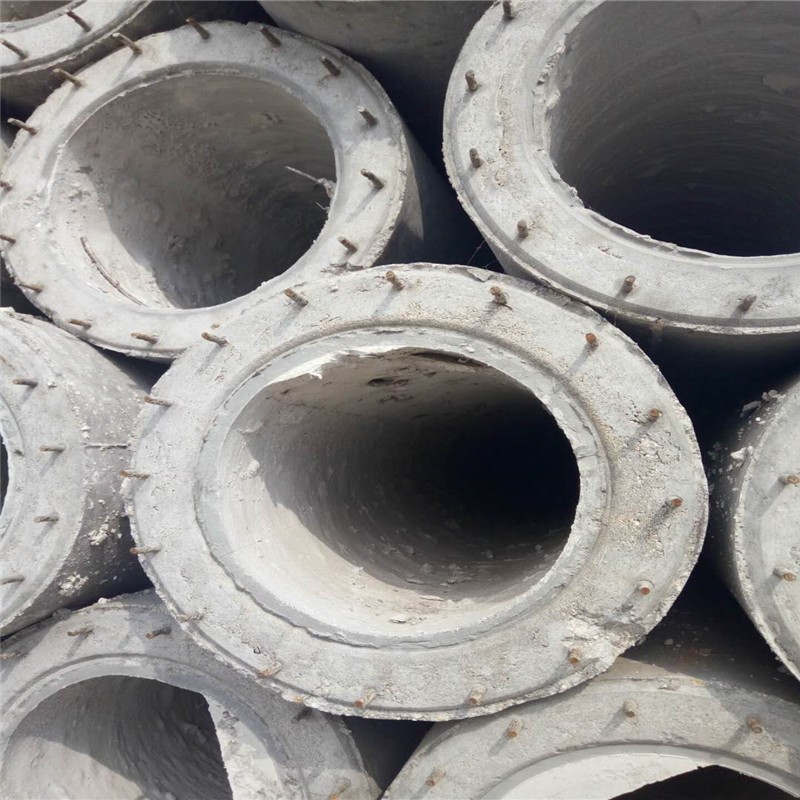
2. Two Process Routes: Pre-Tensioning and Post-Tensioning
Pre-tensioning is the most traditional and most widely used method for prestressed concrete utility poles in China. Its logic is to tension the reinforcement first and cast the concrete afterward. After the reinforcement cage is positioned in the steel mold, the tensioning equipment applies tensile force to the main reinforcement. After the mold is closed and before centrifugal forming, tensioning is completed, keeping the reinforcement taut at both ends of the mold. Concrete is then placed, followed by centrifugal forming and steam curing. When the concrete reaches sufficient strength to grip the reinforcement firmly, the tension is released, and the reinforcement’s retraction force is locked into the concrete. In post-tensioning, by contrast, the concrete is cast first with ducts or sleeves left in place. After the concrete has hardened to the design strength, prestressing reinforcement or steel strand is inserted and tensioned, and anchors are finally used to lock the tension force at the ends of the pole.
3. The Core of the Tensioning Process: Stress Control, with Elongation as the Check
Whether pre-tensioning or post-tensioning is used, the core operating principle is to use stress control as the primary method and elongation as the verification. Why is elongation so critical? If the actual elongation deviates too much from the theoretical value, it indicates that there may be a problem with the tensioning system or the reinforcement itself; continuing to tension could create hidden risks. Usually, the deviation between actual and theoretical elongation is required to be controlled within plus or minus 6 percent. If it exceeds this range, tensioning must be suspended, the cause identified and adjustments made before continuing. The standard practice is to first apply an initial stress of about 10 to 25 percent of the control stress, start measuring elongation from this point, and then add the calculated elongation below the initial stress to obtain the actual total elongation. This is done to exclude the initial stage in which the reinforcement is brought from a slack state to a taut state, making the data more realistic.
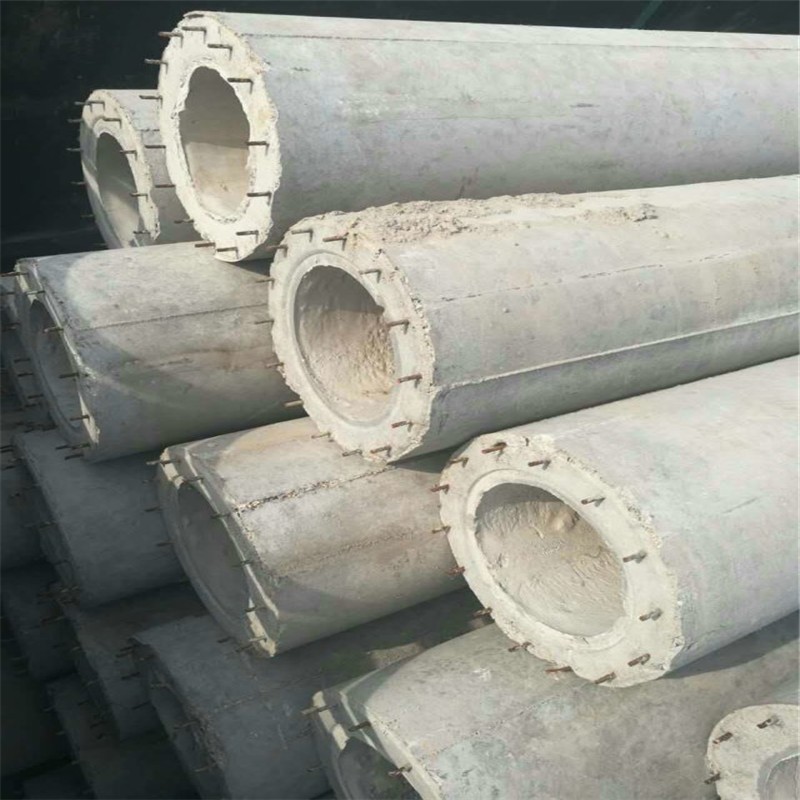
4. Quality Control and Safety: Easily Overlooked Details
The quality of tensioning ultimately depends on whether the prestress locked in is reliable. After anchoring is completed, the deviation between the actual effective prestress and the design value is usually required to be controlled within plus or minus 5 percent. End components such as tensioning plates and reinforcement-hanging plates must not be obviously tilted, and no broken reinforcement should appear after tensioning. These seemingly minor requirements directly affect whether the pole can maintain its designed crack resistance during long-term operation. Slip and breakage are the two most important abnormalities to watch for during tensioning. Slip means that the reinforcement quietly slips in the anchorage and the force cannot be established; breakage means that the reinforcement breaks during tensioning. The key to preventing slip lies in cleanliness and alignment: the surfaces of the anchorage wedge grips and steel strand must be free of oil, loose rust, or cement paste; the teeth of the wedge grips must be intact; and the jack must be aligned with the anchorage to avoid one-sided loading. Marking the steel strand before tensioning is also a practical way to detect slip. Once an abnormality occurs, do not force tensioning; stop the operation and troubleshoot.
The tensioning process for prestressed concrete utility poles is essentially about advancing part of the future tensile force for the concrete before it has learned to bear load. Pre-tensioning locks prestress into mass-produced poles by tensioning first and casting later; post-tensioning leaves room for higher load-bearing requirements by casting first and tensioning later. Whichever route is used, the dual verification of stress and elongation, regular calibration of equipment, vigilance against slip and breakage, and the insistence on no standing at either end together form the complete chain that takes this process from principle to reliable product.
