

- Publisher:mzadmin
- Published on:2026-10-02
- Pageviews:7435
Wood vs. Concrete Utility Poles: Which One Should You Choose?
In power transmission and distribution networks, utility poles are one of the most basic structural components. Material choice not only affects initial construction costs but also determines maintenance investment, safety levels, and environmental compliance over the coming decades. At present, the common options are preservative-treated wooden utility poles and prestressed concrete utility poles. Each has advantages, and no single material is suitable for every scenario. This article compares them from five aspects: full lifecycle cost, durability, environmental regulations, installation and maintenance, and geographic suitability, to help engineers and procurement teams make sound judgments.
I. Full Lifecycle Cost
If only the purchase unit price is considered, wooden utility poles are usually cheaper, which is why wood remains the first choice in many regions. However, when the timeframe is extended to the entire service life, the conclusion may differ. The service life of wooden poles is affected by climate, soil, and preservative treatment quality, and they usually need replacement or major repair after 15 to 25 years. Concrete poles have a higher initial price and weigh about three times as much as wooden poles, so transportation and installation costs are also higher. However, prestressed concrete poles can have a design life of 50 to 80 years, age slowly, and maintain stable reliability. A 70-year service-life study in a U.S. coastal region showed that replacing wooden poles with prestressed concrete poles could save about USD 11.55 million and reduce costs by about 68%. Therefore, in harsh climates and long-term operation scenarios, the average annual cost of concrete poles may be lower.
II. Durability and Structural Performance
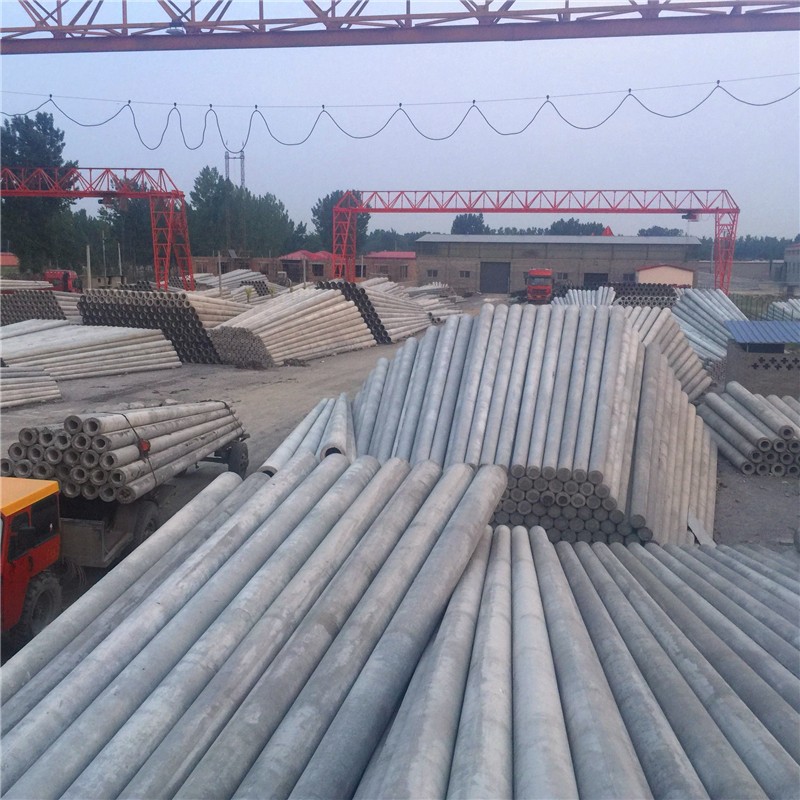
Prestressed concrete poles have a tensile strength of about 8,000 psi and offer good resistance to lightning, fire, vibration, fungi, insects, and high winds. They do not degrade from ultraviolet light, are not easily damaged by termites or woodpeckers, and do not twist or warp, so their physical performance is more standardized. The disadvantages are that concrete is hygroscopic and may suffer freeze-thaw damage in severe cold regions; once cracks appear, the internal prestressing steel may corrode. Therefore, installation must follow specified lifting points, and cracks should be inspected. The advantage of wooden poles is their natural elasticity and better toughness under high winds and earthquakes, but durability depends heavily on preservative treatment and the environment, and actual service life varies widely, from 20 to 70 years.
III. Installation and Maintenance
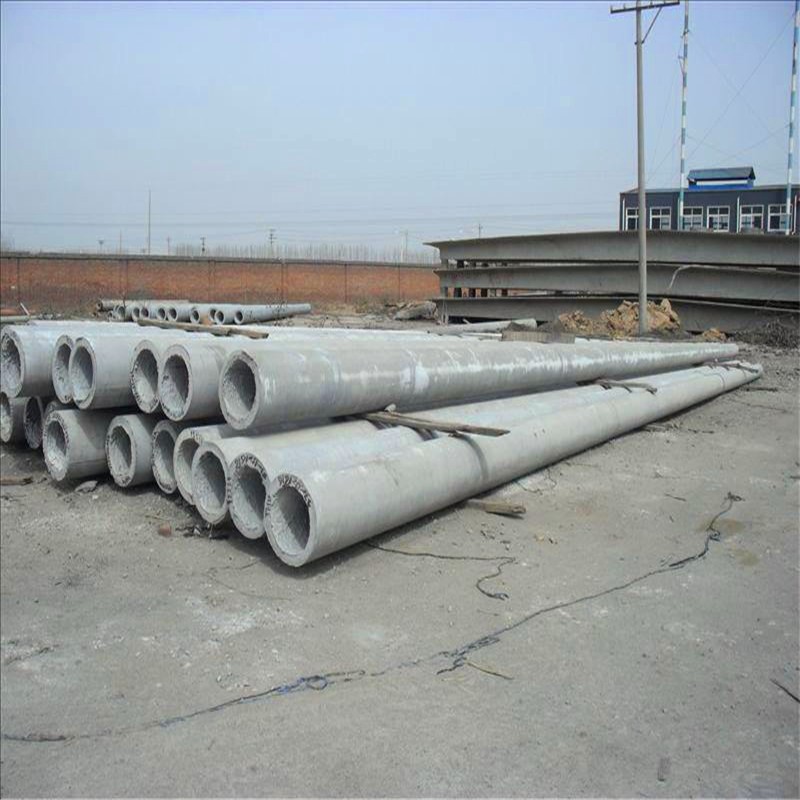
Concrete poles are heavy and require large transport vehicles and lifting equipment, resulting in higher installation costs. Line workers cannot climb them directly as they do wooden poles, so maintenance usually requires specialized equipment such as bucket trucks. The advantage is low maintenance frequency: there is no need to regularly inspect preservative coatings or deal with insect damage and decay. Wooden poles can be dismantled and reinstalled elsewhere during their service life, while concrete poles are mostly installed once. Concrete materials are recyclable, but recycling facilities are relatively limited, and in practice retired poles often end up in landfills.
IV. Geographic Suitability
In coastal, salt-fog, and hurricane-prone areas, prestressed concrete poles have clear advantages. They are corrosion-resistant, require no chemical treatment, and are suitable near sensitive water bodies. In severe cold regions, freeze-thaw risk must be assessed, and products with optimized mix designs should be selected. In areas with abundant forest resources, low timber prices, and mild climates, wooden poles still have a cost advantage, especially for projects sensitive to initial budget and with sufficient maintenance resources. Project selection should also comply with local standards to ensure that load, safety, and durability meet regulatory requirements.
Scenarios where concrete poles should be preferred include: coastal or high-salt-fog areas; areas frequently hit by hurricanes, floods, and other extreme weather; environmentally sensitive areas; and new construction or upgrade projects that pursue low maintenance frequency and long-term cost optimization. Scenarios where wooden poles should be preferred include: inland areas with mild climates; short-term projects with limited initial budgets; remote areas where large lifting equipment is difficult to access; and markets with ample timber supply and competitive prices. From an industry trend perspective, as controls on persistent organic pollutants tighten and lifecycle cost analysis becomes more common in grid planning, prestressed concrete poles are moving from an alternative to a preferred option in more and more scenarios. Only by understanding the real differences between the two materials in technical performance, regulatory compliance, and full-cycle economics can sound engineering decisions be made.
