



- Publisher:mzadmin
- Published on:2026-09-21
- Pageviews:9629
Tilt Warning for Concrete Utility Poles
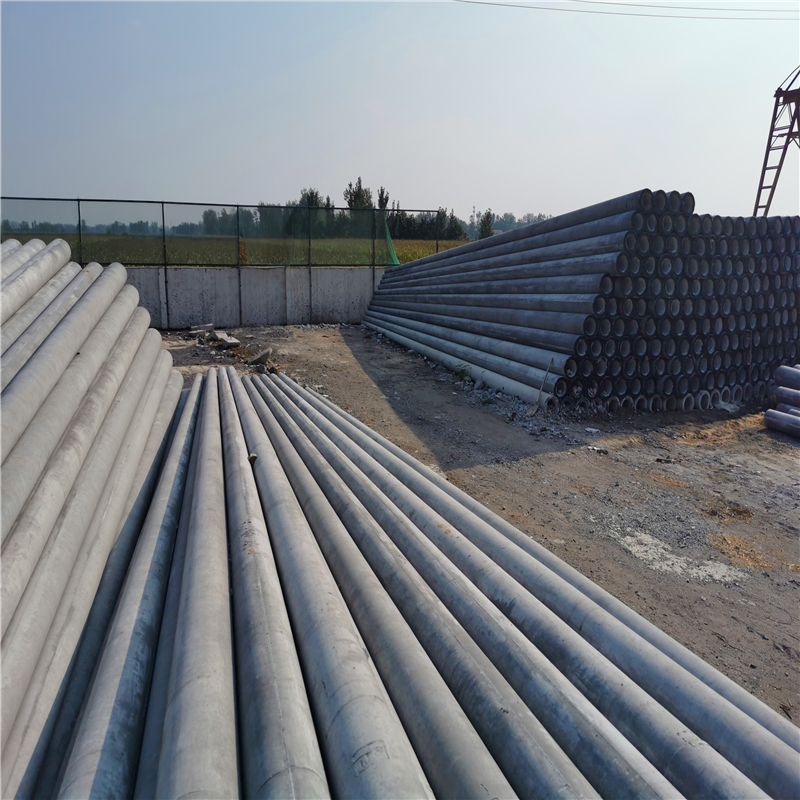
A concrete utility pole is an important load-bearing structure in distribution networks. Tilting is not simply "standing crooked"; it is the result of combined effects of the foundation, pole body, conductor tension and external loads. Soil settlement, rainwater erosion, nearby construction, vehicle collision, unbalanced conductor tension, concrete cracking and steel reinforcement corrosion can all alter the stress state of the pole body and gradually increase the tilt angle. Once the safety limit is exceeded, strong wind, ice coating or external disturbance may cause pole collapse and wire breakage, leading to power outages, electric shock and fire.
Traditional manual inspection relies on a theodolite or the naked eye, with long inspection cycles and many blind spots, making it difficult to capture slow tilting and sudden displacement. Modern tilt warning systems are centered on tilt sensors, usually using MEMS three-axis accelerometers and gyroscopes to measure the pitch and roll angles of the pole body relative to the gravity direction, with resolution up to 0.01°, and to calculate angular velocity and tilt rate. The sensors are installed on the upper part of the pole body or at key load-bearing points and transmit data via NB-IoT, LoRa or 4G/5G. An edge computing module first performs filtering, temperature drift compensation and anomaly rejection before uploading data to the cloud platform.
The platform integrates GNSS/BeiDou high-precision positioning, crack meters, soil moisture and meteorological data to build a graded warning model. For example, a tilt angle of less than 1° with a stable change rate is listed as attention; 1° to 2° or a daily change rate exceeding 0.05° is listed as warning; more than 2°, or accompanied by root cracks or foundation slip, is listed as an emergency alarm, immediately dispatching work orders and coordinating outage maintenance. For bending caused by uneven conductor tension, cross-validation using multi-point tilt and tension sensors can distinguish pole tilting from elastic deflection and reduce false alarms. The key lies in threshold setting and trend judgment. Different pole types, soil conditions, spans and conductor tensions correspond to different safety margins, so a fixed angle cannot be used alone. Machine learning can model historical tilt, wind speed, temperature and rainfall data to predict the 24-hour tilt trend. Low-power design enables the equipment to operate for 3 to 5 years on solar power or lithium thionyl chloride batteries. For the public, if a concrete utility pole is obviously tilted, its root is cracked, or conductors are swinging abnormally, people should stay away and report it to the power department. Tilt warning turns passive repair into proactive prevention and control and is an important technical guarantee for the safe operation of distribution networks.
