

- Publisher:mzadmin
- Published on:2026-09-17
- Pageviews:3445
How to Lift Concrete Utility Poles with a Pole Clamp
A pole clamp is essentially a lifting device that works on the principles of friction and self-locking. It typically consists of two curved clamping plates, a connecting pin shaft, and a lifting ring. The inner surface of the curved clamping plates matches the curvature of the pole's outer wall, so that when clamping, they fit closely against the pole body and form a large contact area. When the crane hook lifts upward through the lifting ring, the clamping plates generate an inward clamping force under the action of their own weight and the weight of the pole. The heavier the pole, the greater the clamping force — this is the self-locking effect. It is precisely this principle that enables the pole clamp to grip the pole body firmly without any additional bolt tightening or hydraulic device.
When using a pole clamp for lifting, the first step is to determine the clamping position. This position cannot be chosen arbitrarily; it must be determined according to the bending moment distribution of the pole. The loads a concrete utility pole bears during lifting are completely different from those in its service state. If the clamping point is too close to the pole top, the bending moment at the base will be excessive, possibly causing the pole to crack during lifting; if the clamping point is too close to the base, the upper-middle part of the pole may be damaged due to an excessively long cantilever. The usual practice is to set the clamping point at about one-third of the pole length from the top, or to determine it by calculation based on the reinforcement design and allowable bending moment of the pole. For tapered poles, attention must also be paid to whether the pole diameter at the clamping position falls within the applicable range of the pole clamp.
The second step is to install the pole clamp. Operators need to first clean mud, frost, or oil from the pole surface, because these substances significantly reduce the coefficient of friction and cause the clamping plates to slip. Then the two clamping plates are symmetrically clamped on both sides of the pole, ensuring that the axis of the clamping plates is perpendicular to the pole body and not skewed. Skewing will cause uneven stress on the contact surface and excessive local pressure, which may crush the concrete surface or cause sudden slippage during lifting. After installation, check whether the pin shaft is in place and whether the lifting ring is secure. Only after confirming everything is correct can the crane hook be attached.
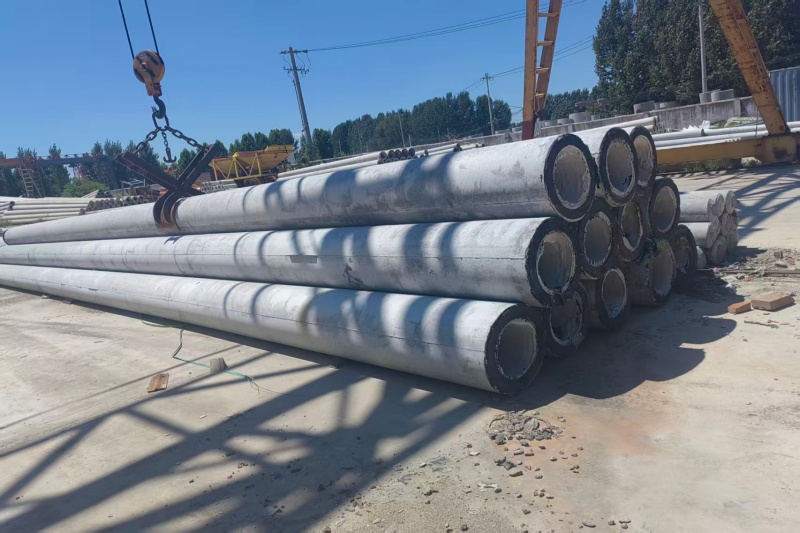
The third step is a trial lift. The crane lifts slowly so that the pole just leaves the ground or its support point, then pauses for a moment to observe whether the pole clamp shows any sign of slipping and whether the pole exhibits abnormal deformation or cracking sounds. After confirming stability, continue lifting at a uniform speed. Throughout the lifting process, the pole should remain horizontal or nearly horizontal, avoiding one end tilting up too high, which would cause a sudden change in the force at the clamping point. Slewing and lowering must be smooth; sudden starts and stops or rapid swinging are prohibited, because these actions generate additional dynamic loads that may exceed the designed clamping capacity of the pole clamp.
The selection of the pole clamp is equally critical. Different specifications of pole clamps correspond to different pole diameter ranges and rated loads. When selecting, it must be confirmed that the pole diameter within the clamping range matches the actual outer diameter of the pole, and that the rated working load is greater than the pole weight by a safety factor. A common practice is a safety factor of no less than 2.5 times. The lining material of the clamping plates also matters: soft linings can increase friction and protect the concrete surface, but they must be replaced promptly once worn. The pin shaft and lifting ring are load-bearing components and should be inspected before each use for cracks, deformation, or severe wear.
