



- Publisher:mzadmin
- Published on:2026-09-15
- Pageviews:5839
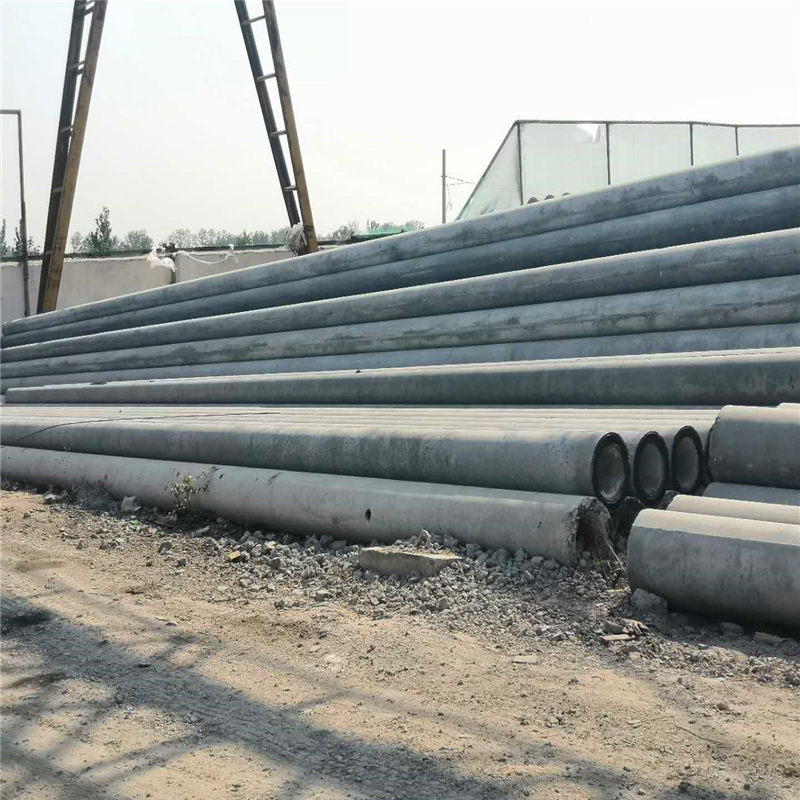
Methods for Erecting Concrete Utility Poles
Concrete utility poles are the most basic supporting structure in distribution networks, and the quality of their erection directly determines whether the line can operate safely for more than a decade or even longer. How a concrete pole measuring over ten meters in length and weighing several tons is steadily erected from the ground into a designated position involves a rigorous set of engineering methods. Before erection, the depth and dimensions of the foundation pit must be precisely controlled. Typically, the burial depth of a utility pole is calculated as one-sixth of the pole length; for example, a 12-meter pole has a burial depth of about 2 meters. The bottom of the pit needs to be compacted and leveled; in the case of soft ground, a cushion layer must also be laid or a base plate installed to increase the load-bearing area. The positional deviation of the foundation pit along the line direction should not exceed 5% of the designed span, and should not exceed 50 mm in the perpendicular direction. These figures may seem strict, but it is precisely they that ensure multiple poles, once erected, can stand in the same straight line.
Currently, the mainstream pole erection methods fall into two categories: mechanical hoisting and manual assembly. Mechanical hoisting uses a truck crane and features high efficiency and good safety, making it suitable for most plains and areas with convenient transportation. During hoisting, the position of the lifting point is crucial. For uniform-diameter poles, the lifting point is usually set at about 0.29 times the pole length from the pole base; this position minimizes the bending moment on the pole body during lifting and prevents concrete cracking. Manual erection is mostly used in mountainous areas or narrow sites inaccessible to machinery, with common methods including the fork-pole method and the tripod method. The fork-pole method relies on the coordination of multiple people, using pole forks to support the utility pole and raise it gradually, usually requiring more than 15 people, and no fewer than 20 people when erecting a 12-meter pole. The tripod method uses fir poles to set up a simple hoisting frame, combined with a manual winch for lifting; although efficiency is not high, it remains a reliable choice under specific environmental conditions. Regardless of the method, no one is allowed to stand inside the foundation pit or beneath the pole during erection; apart from the commander, all other personnel should remain at a distance of more than 1.2 times the pole height.
After the utility pole enters the pit, the alignment work truly determines its long-term performance. Verticality is checked with a theodolite or a plumb line, and the deviation should be controlled within one-thousandth of the pole length and not greater than 30 mm. The lateral displacement of straight poles should not exceed 20 mm, and the deflection of the pole tip should not exceed one-half of the tip diameter. Corner poles and terminal poles, however, need to be pre-offset in the direction opposite to the applied force, so that after tensioning they return exactly to the designed position. Once alignment is completed, backfilling and compaction should be carried out immediately, compacting once for every 300 mm backfilled, and above ground level an additional 300 mm of soil should be mounded into a truncated cone shape to prevent rainwater from scouring the pole foundation. For corner poles, terminal poles, or sections with soft soil, clamping plates or guy wires also need to be installed to resist unbalanced tension. The angle of the guy wire to the ground should preferably be controlled at around 45 degrees and must not be less than 30 degrees.
