



- Publisher:mzadmin
- Published on:2026-09-13
- Pageviews:3786
Why Do Concrete Poles Develop Cracks?
In power line inspections, cracks in concrete poles are one of the most common defects. Many O&M personnel find that after several years in service, some poles gradually develop fine transverse or longitudinal cracks on the pole body, and in severe cases, concrete spalling and exposed reinforcement occur. Where do these cracks come from? Are they a product quality issue, or are they caused by the operating environment? As a concrete pole manufacturer, we systematically analyze the causes of cracking from the perspective of the full lifecycle—manufacturing and use.
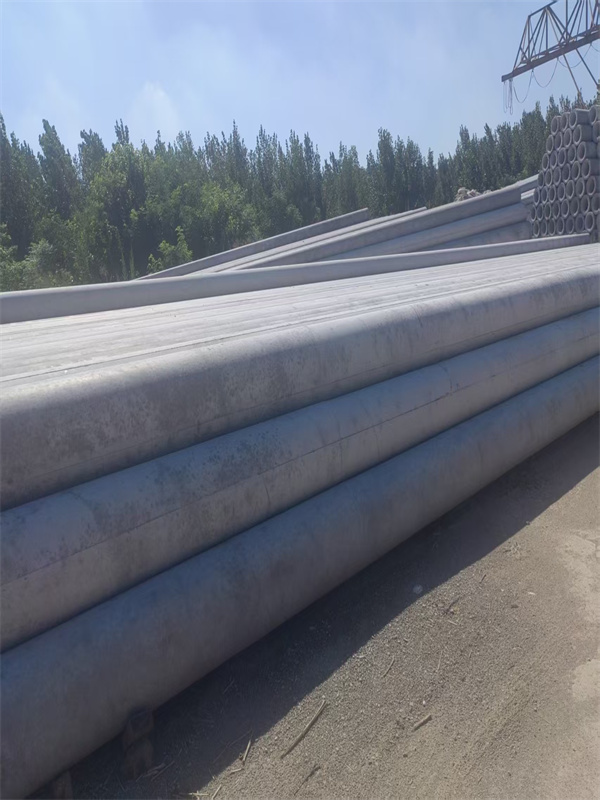
1. Manufacturing Stage: Improper Curing Is the Source of Hidden Risks
Cracks in concrete poles are often seeded before the product leaves the factory. After centrifugal forming, concrete must undergo steam curing to achieve sufficient strength and density. If the steam curing temperature curve is improperly controlled—heating too fast, insufficient constant temperature, or cooling too rapidly—the temperature difference between the inside and outside of the concrete becomes too large, surface shrinkage is constrained, and thermal cracks form. In addition, an unreasonable centrifugation regime—such as insufficient speed leading to inadequate density, or excessive speed causing aggregate segregation—also weakens the crack resistance of the pole body.
Raw material proportions are also critical. An excessively high water-cement ratio increases concrete shrinkage, while excessive cement content causes concentrated release of hydration heat; both can trigger shrinkage cracks in the later hardening stage. Therefore, strictly executing the centrifugation regime and steam curing regime is the first line of defense for controlling "inherent cracks" in poles.
2. Transportation and Construction: External Impact Cannot Be Ignored
From factory delivery to pole erection, a pole undergoes lifting, transportation, loading and unloading, and other stages. If lifting points are improperly selected, supports are uneven, or severe jolting occurs during transport, the pole body bears bending moments and impact loads, making it highly prone to transverse cracks. During construction and installation, inadequate pit treatment, non-standard installation of retaining plates, or uneven forces during pole lifting can also cause damage to the pole body. Such cracks often appear shortly after installation and are typical "acquired external injuries."
3. Operational Stage: Long-Term Effects of Environment and Loads
After being put into operation, poles bear the long-term repeated effects of conductor self-weight, wind loads, ice loads, and temperature changes. In regions with large temperature differences, concrete repeatedly expands and contracts, and micro-cracks gradually propagate. In corrosive environments such as saline-alkali land and high humidity, moisture and chloride ions penetrate into the concrete interior, corroding the reinforcement; the volume expansion of corrosion products in turn splits the concrete, forming a vicious cycle. In addition, additional bending moments caused by pole inclination and slack guy wires also accelerate crack development.
4. How to Respond and Prevent?
For minor cracks, epoxy resin injection repair can be used; for exposed reinforcement, rust must be removed before applying high-strength mortar; carbon fiber wrapping reinforcement is suitable for strengthening weak sections. But more importantly, control from the source—choose pole products with standardized curing processes and scientifically proportioned raw materials, and strictly follow operating specifications during transportation and construction.
We are located in Qufu, Shandong, and are a national high-tech enterprise integrating R&D, design, production, and global supply of large-scale concrete power products. We are committed to solving the complex coordination challenges in pole-tower supporting systems for global power and communication projects, creating a "full-category, one-stop" procurement platform from national-standard poles to specialized components. Our products are exported in bulk to Indonesia, Senegal, Burundi, and other countries along the Belt and Road Initiative, with our business footprint spanning Southeast Asia, Africa, the Middle East, and South America. With strong production capacity and stable batch quality, we have earned the trust of multiple state-owned power enterprises through long-term repeat purchases. We continue to contribute the strength of "Made in China" to global infrastructure development.
