
- Publisher:mzadmin
- Published on:2026-09-10
- Pageviews:3799
Guy Wire Installation for Concrete Utility Poles
In power transmission and distribution lines, the stability of concrete utility poles depends not only on the coordination of the foundation and Three-Plates, but the guy wire system is also an important component ensuring safe line operation. Especially at angle poles, tension poles, terminal poles, and other positions with complex forces, the scientific installation of guy wires directly determines whether poles can withstand wind loads, conductor tension, and uneven loads over the long term. As a concrete pole manufacturer, we combine years of production and supporting experience to explain the professional key points of guy wire installation.
I. The Role and Setup Principles of Guy Wires
Guy wires transfer the unbalanced tension on poles to ground anchor points through steel strands, thereby maintaining force balance on the pole structure. Their core functions include: resisting unilateral conductor tension, balancing angle resultant forces, enhancing pole wind resistance, and preventing pole tilting or breakage.
Guy wire setup should follow the principles of "corresponding force, accurate direction, reasonable angle." Typically, guy wires for angle poles should be set on the bisector of the outer angle; guy wires for terminal poles should align with the line direction; for tension poles, the direction and number of guy wires are determined by the tension difference between both sides.
II. Key Technical Points of Guy Wire Installation
1. Control of Guy Wire Angle
The angle between the guy wire and the pole is generally optimal at 45°, with a maximum not exceeding 60° and a minimum not less than 30°. An excessive angle increases guy wire tension, while too small an angle occupies too much ground space and reduces anchoring effectiveness. During construction, the guy wire length should be precisely calculated based on terrain and pole height.
2. Proper Coordination of Guy Wire Rod and Anchor Plate
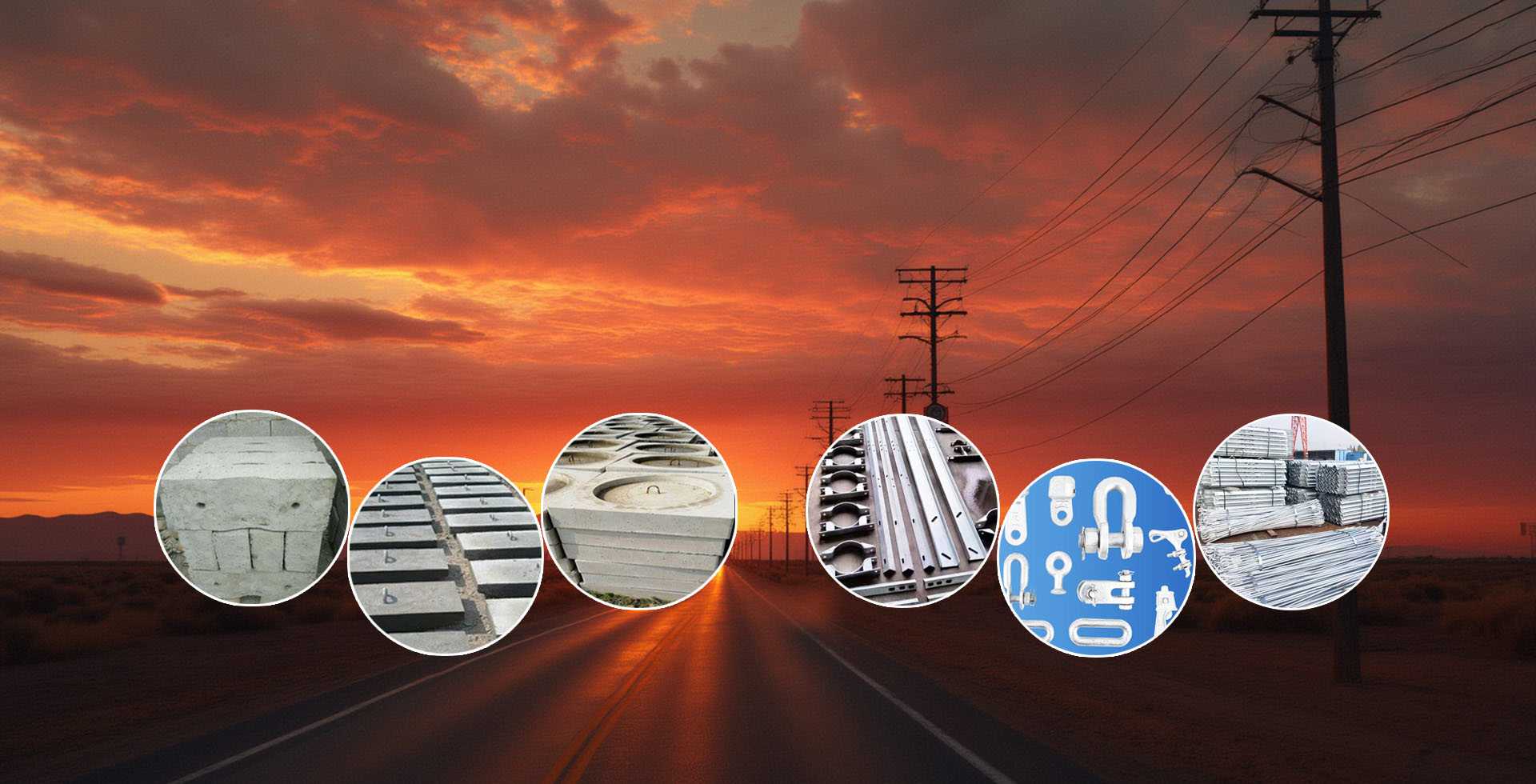
The guy wire rod is a key component connecting the guy wire and anchor plate. Its exposed length should be moderate, typically 300–500mm. The anchor plate burial depth must meet design requirements, generally not less than 1.5m, and should be placed perpendicular to the guy wire direction to ensure full pull-out resistance. Backfill soil must be compacted in layers, and unsuitable soils such as silt and debris are strictly prohibited.
3. Guy Wire Fittings and Fastening
Guy wires should use galvanized steel strands, with specifications determined by force calculations. UT clamps, wedge clamps, and other fittings should be installed to standard, with steel strand ends securely bound with aluminum tape or wire. Guy wire fastening should be adjusted using turnbuckles to ensure uniform and moderate tension—neither too loose causing pole swaying, nor too tight causing additional stress on the pole body.
4. Guy Wire Insulation and Protection
For guy wires crossing roads or areas with personnel activity, guy wire insulators and warning tubes should be installed to prevent electric shock accidents. The underground portion of guy wires should be coated with anti-corrosion asphalt to extend service life.
III. Common Problems and Prevention
In actual construction, loose guy wires, angle deviation, and anchor plate pull-out are common hidden dangers. Their causes are mostly inadequate backfill, insufficient guy wire rod burial depth, or non-standard fitting installation. It is recommended to perform force calculations before construction, strictly follow drawings during construction, and conduct regular inspections and tightening after completion.
IV. Conclusion
Although guy wires are an auxiliary system of poles, they are the "lifeline" of line safety. Scientific design, standardized installation, and quality supporting components—all three are indispensable. Our factory has been deeply engaged in concrete poles and supporting products for many years, and can provide a full set of foundation accessories including guy wire rods and anchor plates, helping power projects build safely and efficiently. We welcome inquiries and negotiations.
