

- Publisher:mzadmin
- Published on:2026-09-09
- Pageviews:8791
What Are the Raw Materials of Concrete Utility Poles
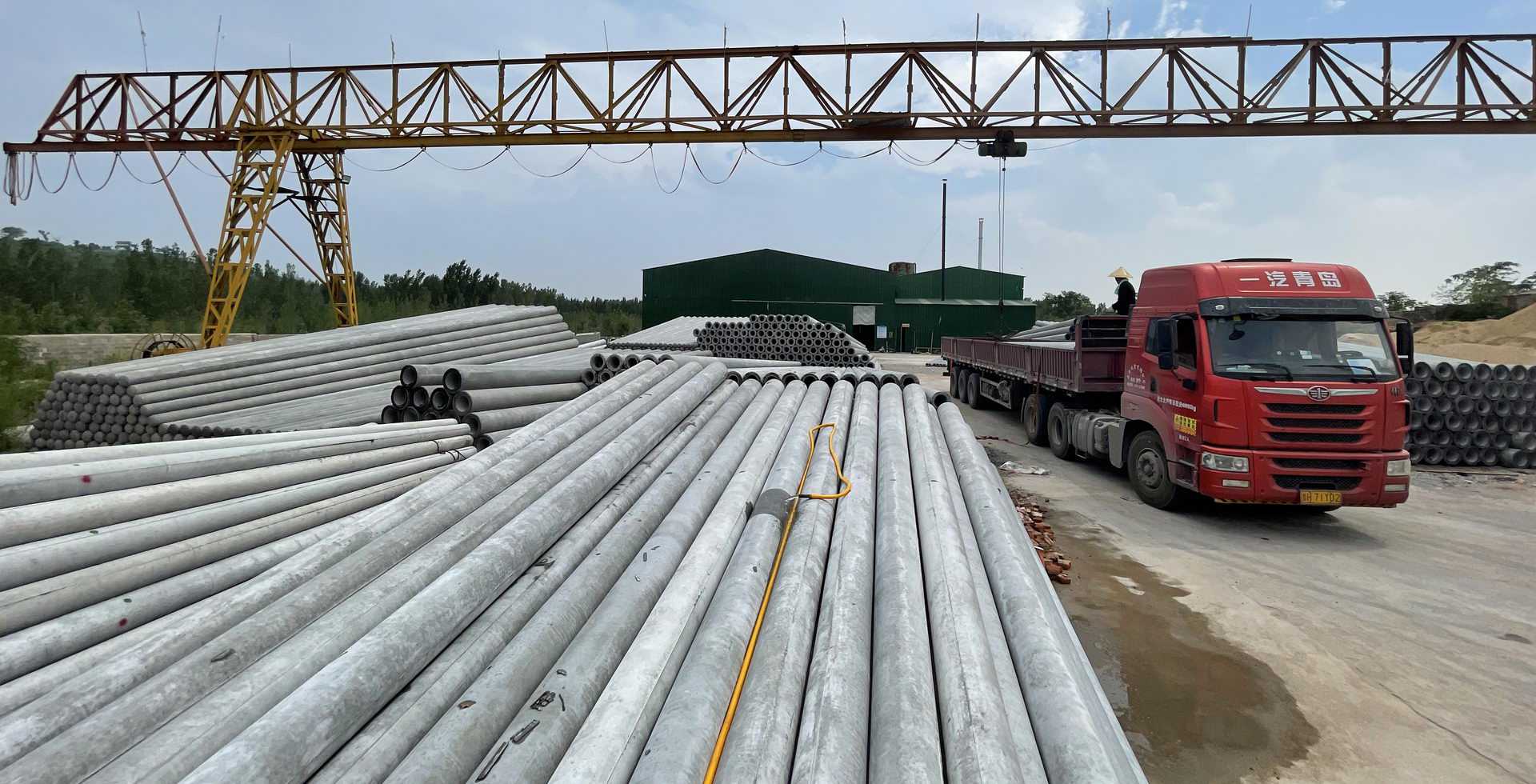
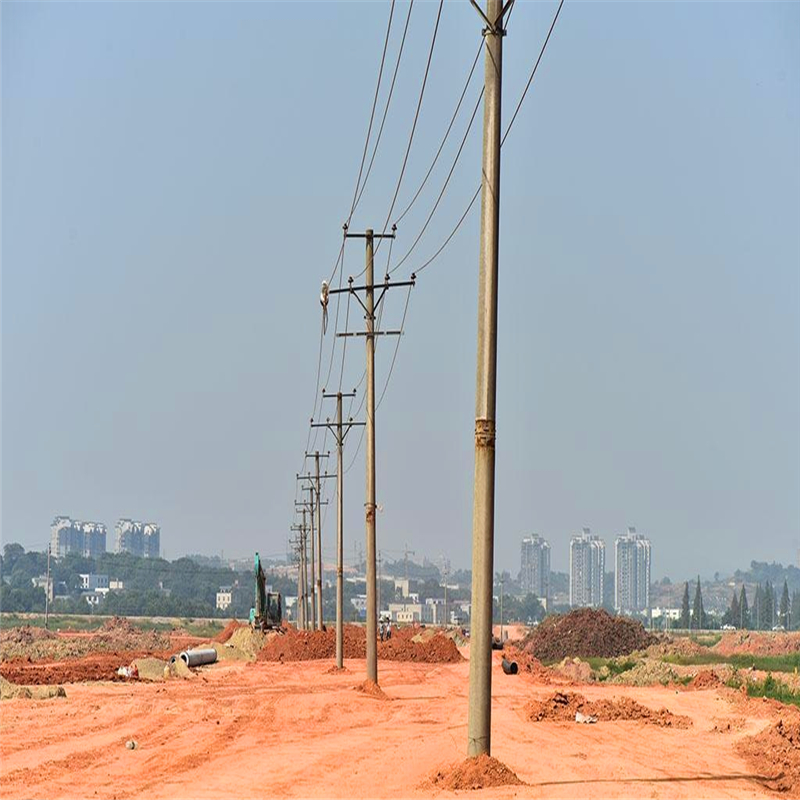
The official name of concrete utility poles is "circular reinforced concrete poles." Their performance first and foremost depends on the foundational materials from which they are made. The raw material system of concrete utility poles is mainly divided into two major categories: steel reinforcement, which serves as the skeleton, and concrete, which serves as the matrix. Concrete itself is carefully formulated from cement, aggregates, water, and admixtures.
Steel reinforcement is the skeleton of the pole and bears the primary load-bearing responsibilities. Depending on the type of pole, different types of steel reinforcement are used. For prestressed poles that need to withstand greater tensile forces, high-strength materials such as cold-drawn steel bars, high-strength steel wires, or steel strands are employed. For ordinary non-prestressed poles, conventional Grade I or Grade II steel bars are commonly used. These steel bars inside the pole function like a human skeleton, endowing the pole with the ability to resist bending and fracture. Concrete is the flesh and blood of the pole; it encases and protects the steel reinforcement, jointly withstanding compressive forces. The quality of its raw materials directly determines the strength and service life of the pole.
As the cementitious material of concrete, the quality of cement is of paramount importance. Pole production typically uses Portland cement or ordinary Portland cement with a strength grade not lower than 42.5 or 52.5. This type of cement ensures that the concrete rapidly achieves its designed strength after centrifugal forming, which is generally required to reach Grade C50, meaning it can withstand a pressure of 50 Newtons per square millimeter. The second category is aggregates, namely sand and crushed stone, which form the "skeleton" of the concrete. The sand should be well-graded medium-coarse sand, while the stone should be hard crushed rock. These materials must be clean and free from excessive clay and impurities, as these can affect the strength and durability of the concrete. In addition, water, as the medium for chemical reactions in concrete, must be clean drinking water. At the same time, small amounts of admixtures, such as water-reducers and early-strength agents, are added to improve concrete performance, enhancing its fluidity and early strength. However, national standards strictly prohibit the addition of chloride-based admixtures, as chloride ions can corrode the steel reinforcement and create potential safety hazards.
What Are the Raw Materials of Concrete Utility Poles
The official name of concrete utility poles is "circular reinforced concrete poles." Their performance first and foremost depends on the foundational materials from which they are made. The raw material system of concrete utility poles is mainly divided into two major categories: steel reinforcement, which serves as the skeleton, and concrete, which serves as the matrix. Concrete itself is carefully formulated from cement, aggregates, water, and admixtures.
Steel reinforcement is the skeleton of the pole and bears the primary load-bearing responsibilities. Depending on the type of pole, different types of steel reinforcement are used. For prestressed poles that need to withstand greater tensile forces, high-strength materials such as cold-drawn steel bars, high-strength steel wires, or steel strands are employed. For ordinary non-prestressed poles, conventional Grade I or Grade II steel bars are commonly used. These steel bars inside the pole function like a human skeleton, endowing the pole with the ability to resist bending and fracture. Concrete is the flesh and blood of the pole; it encases and protects the steel reinforcement, jointly withstanding compressive forces. The quality of its raw materials directly determines the strength and service life of the pole.
As the cementitious material of concrete, the quality of cement is of paramount importance. Pole production typically uses Portland cement or ordinary Portland cement with a strength grade not lower than 42.5 or 52.5. This type of cement ensures that the concrete rapidly achieves its designed strength after centrifugal forming, which is generally required to reach Grade C50, meaning it can withstand a pressure of 50 Newtons per square millimeter. The second category is aggregates, namely sand and crushed stone, which form the "skeleton" of the concrete. The sand should be well-graded medium-coarse sand, while the stone should be hard crushed rock. These materials must be clean and free from excessive clay and impurities, as these can affect the strength and durability of the concrete. In addition, water, as the medium for chemical reactions in concrete, must be clean drinking water. At the same time, small amounts of admixtures, such as water-reducers and early-strength agents, are added to improve concrete performance, enhancing its fluidity and early strength. However, national standards strictly prohibit the addition of chloride-based admixtures, as chloride ions can corrode the steel reinforcement and create potential safety hazards.
Qufu Songli Electric Power Pole Co., Ltd. – China's "concrete utility pole" one-stop intelligent manufacturing hub, empowering global power infrastructure construction. Located in Qufu, Shandong, we are a national high-tech enterprise integrating R&D, design, production, and global supply of large-scale concrete power products. We are committed to solving the complex coordination challenges in pole-tower accessory systems for global power and communication projects, creating a "full-category, one-stop" procurement platform spanning from national-standard poles to specialized components. Our products are exported in bulk to countries along the "Belt and Road" Initiative, including Indonesia, Senegal, and Burundi, with our business footprint extending across Southeast Asia, Africa, the Middle East, and South America. Backed by strong production capacity and stable batch quality, we have earned long-term repeat orders from multiple state-owned power enterprises. We continue to contribute the solid strength of "Made in China" to global infrastructure development.
