



- Publisher:mzadmin
- Published on:2026-09-09
- Pageviews:9025
Methods for Improving Welding Quality of Concrete Utility Poles
Welding quality is a critical factor for the safe operation of concrete utility poles in transmission lines. Due to production and transportation constraints, segmented concrete utility poles are widely used in power transmission and transformation projects. The performance of the on-site welded joints directly determines the load-bearing capacity and service life of the entire pole. However, given the complex outdoor operating environment, fundamentally improving welding quality requires establishing a strict control system across three dimensions: pre-weld preparation, process execution, and post-weld inspection.
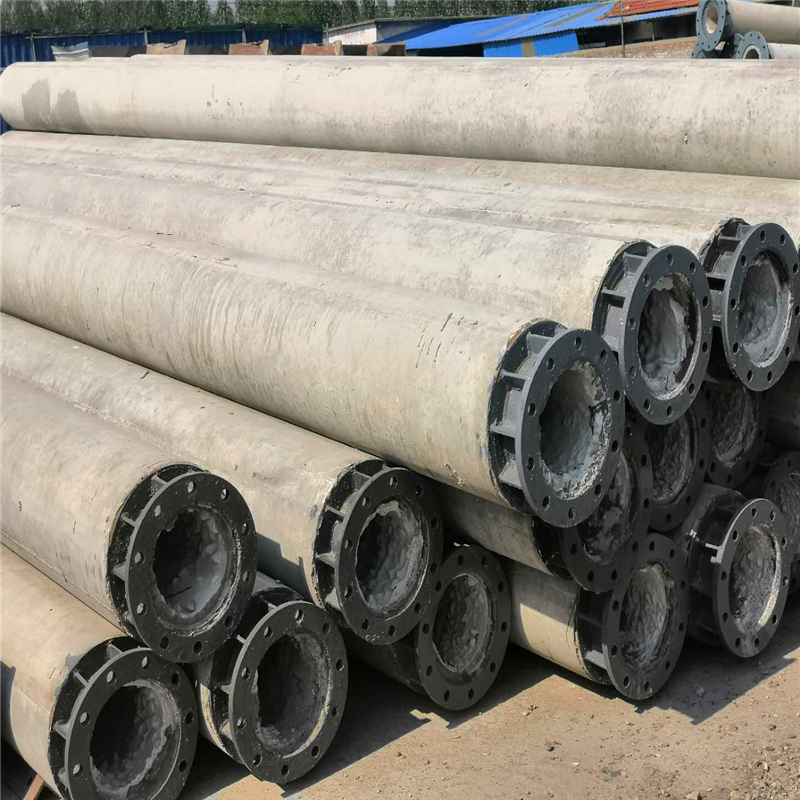
Pre-weld preparation largely determines the success or failure of the welding process. Before alignment, an angle grinder must be used to thoroughly remove rust, oil, and oxide layers on both sides of the steel ring weld. These impurities decompose at high temperatures to produce gases, leading to porosity and slag inclusions in the weld, which become sources of stress concentration and crack initiation. Pole alignment is the core procedure to prevent bending after welding. A theodolite should be used to adjust the coaxiality of the two pole segments, ensuring the misalignment of the steel rings is strictly controlled within 2 mm, and the joint gap is maintained between 2 and 5 mm. This ensures sufficient arc penetration for complete fusion while preventing excessive gaps that could cause weld overlays or burn-through. After alignment, tack welding shall be evenly applied around the circumference for fixation, and the electrodes used must be consistent with those used for formal welding.
The welding process directly determines the internal quality and external appearance of the weld. When the steel ring thickness exceeds 6 mm, a V-groove must be prepared, and multi-layer, multi-pass welding shall be adopted. Each layer should be controlled to approximately 3 mm in thickness, and slag must be thoroughly removed after completing each layer before the next is welded, to avoid interlayer slag inclusion. During welding, a symmetrical cross-welding method should be employed, with two welders striking arcs simultaneously on opposite sides of the pole and using skip-welding in sections. The length of each weld section should be controlled between 100 and 150 mm to disperse heat input, reduce residual stress, and prevent pole bending caused by unilateral overheating. The weld joint of each layer should be staggered from that of the adjacent layer by more than 50 mm, and the arc crater should be filled when closing the arc to prevent fire cracks. Controlling welding deformation is the technical key to ensuring the straightness of the pole. High temperatures cause thermal expansion of the steel ring, and cooling leads to contraction stresses, which can easily bend the pole or even cause spalling at the concrete ends. In addition to using symmetrical skip-welding, pre-deformation or dynamic fine-tuning can also be applied to keep the pole axis within the allowable range throughout the process. National standards stipulate that the overall bending degree of the welded pole shall not exceed 2/1000 of its total length. If this limit is exceeded, the weld must be cut off and re-welded; forced correction is not permissible, as a bent pole will generate additional bending moments during operation, posing a serious threat to safety.
Post-weld inspection serves as the final defense line for quality control. A qualified weld should exhibit uniformly fine fish-scale patterns with a smooth surface, free from cracks, incomplete penetration, undercut, or porosity. The reinforcement height should be controlled between 2 and 3 mm. After welding, spatter shall be cleaned, anti-rust paint applied, and the welder's identification stamp marked for traceability. For critical transmission lines, ultrasonic testing sampling inspections should be carried out proportionally to ensure the absence of internal defects.
