



- Publisher:mzadmin
- Published on:2026-09-07
- Pageviews:7465
Why Is the Top of a Concrete Utility Pole Sealed?
Most concrete utility poles have closed tops. Many people assume this is simply for aesthetic reasons or to keep birds from nesting. But in the fields of power engineering and materials science, this seemingly simple sealing measure is actually a critical safeguard that determines the pole's service life—often spanning decades. If the top of a pole is left open, it may not survive more than a few rainy seasons.
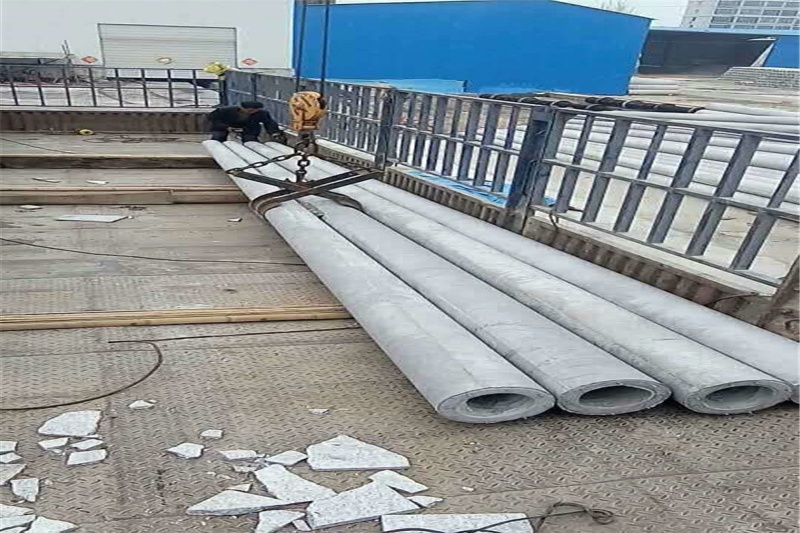
First, we need to understand the manufacturing process of concrete utility poles. The vast majority of these poles are made using the centrifugal casting method—concrete is poured into a steel mold and spun at high speed, which compacts the concrete and forms a hollow annular cross-section. This hollow structure both reduces self-weight and maximizes the flexural performance of the annular section. However, it also means that there is a continuous hollow cavity running from the top to the bottom of the pole. The problem lies precisely in this cavity. Utility poles stand outdoors year-round. If the top is completely open, rainwater and meltwater from snow and ice will pour into this "hollow tube." Once inside, the water does not drain quickly, because the bottom of the pole is usually buried underground or seated on a concrete foundation, and the drainage holes at the bottom are easily clogged by soil and debris. Over time, a damp or even waterlogged enclosed environment forms inside the cavity.
This is the worst "nightmare" for reinforced concrete structures—corrosion of steel reinforcement. The longitudinal load-bearing steel bars inside the pole are normally in a passivated state within the highly alkaline concrete, protected by a dense oxide film on their surface. However, the moisture and dissolved acidic substances in the accumulated water—such as weak acids formed when carbon dioxide and sulfur dioxide from the air dissolve—gradually neutralize the alkalinity of the concrete and destroy the passivation film. Once the steel begins to rust, the rust products expand in volume several times over, generating tremendous internal stress that splits the concrete cover from the inside out. These longitudinal cracks, which originate internally, often render the internal structure severely damaged while the exterior still appears intact. This is a classic "hidden defect"—extremely difficult to detect, yet capable of causing the entire pole to suddenly snap during a typhoon or freezing weather.
So, is sealing just a matter of simply "capping it off"? Far from it. The professional approach uses matching "pole caps" or "waterproof plugs," typically made of weather-resistant engineering plastic or galvanized steel plate, fitted with sealing gaskets. More sophisticated designs also incorporate a "breathing" function—while keeping rain out, they include tiny vent holes or one-way exhaust valves that allow air inside to expand and contract with temperature changes, preventing seal failure due to excessive internal pressure from summer heat, while also preventing condensation from temperature differences between inside and outside. This philosophy of "sealing without completely closing off" perfectly illustrates the subtlety of engineering protection. In some special scenarios, the ingenuity goes even further: in sections where communication cables are laid underground, the top sealing component of the pole is even modified into a reserved interface—it not only keeps water out but also provides a future cable routing channel for mounting small base stations, achieving "one seal, multiple uses."
