


- Publisher:mzadmin
- Published on:2026-09-05
- Pageviews:9331
How to Identify Inferior Quality Concrete Utility Poles
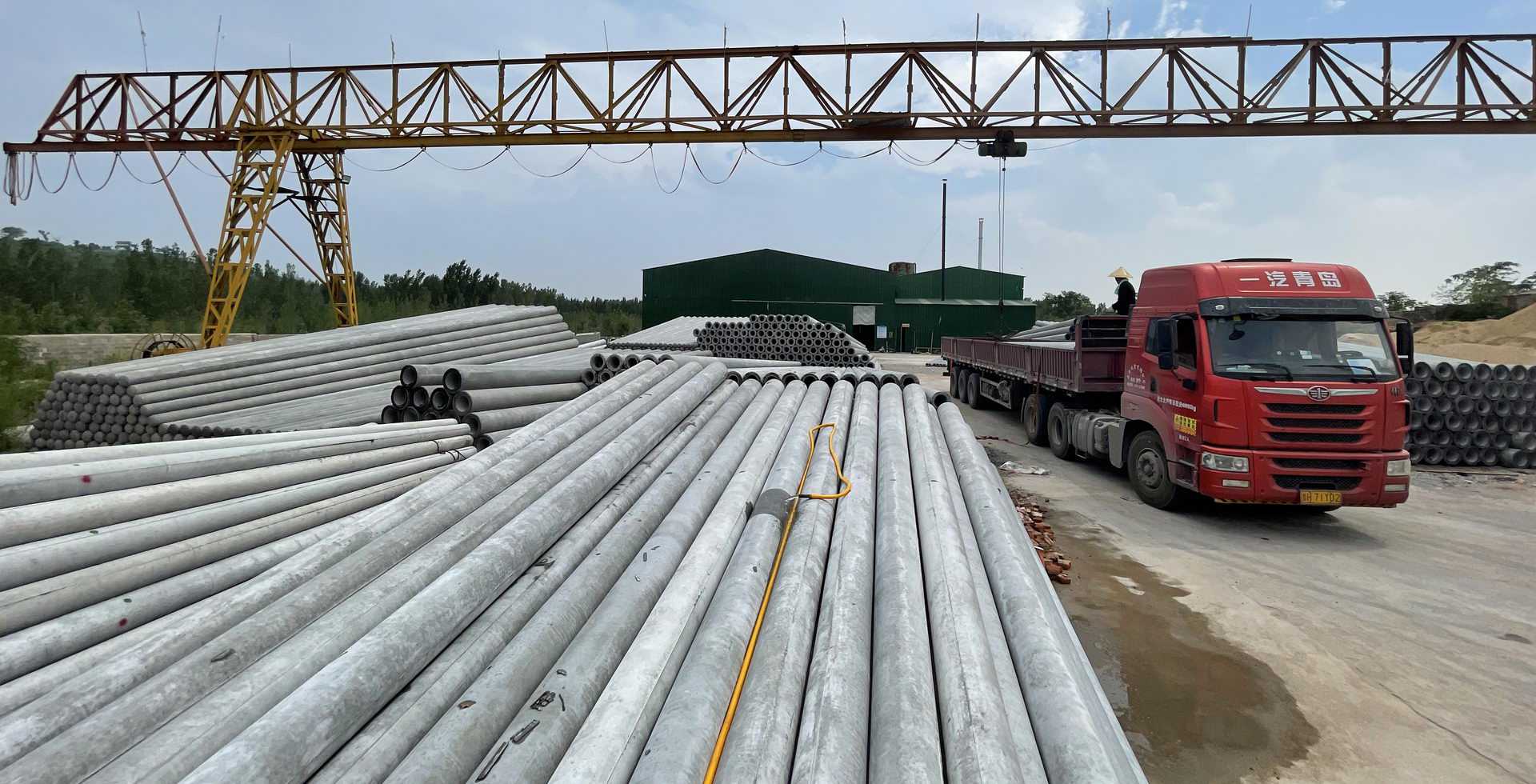
The first step is visual inspection, which is the most intuitive initial screening method. High-quality concrete utility poles should have a smooth and flat surface with a uniform bluish-gray color, indicating proper cement proportioning and adequate centrifugal molding. If the pole surface appears whitish, it often suggests insufficient cement content or inadequate curing, making it difficult to guarantee strength. Carefully examine along the pole body: national standards specify that prestressed concrete poles shall not have any circumferential or longitudinal cracks, while ordinary reinforced concrete poles shall have circumferential cracks no wider than 0.05mm and no longitudinal cracks at all. Obvious grout leakage at the joint seams, with a depth exceeding 10mm or a cumulative length exceeding 10% of the pole length, constitutes a manufacturing defect. Exposed reinforcement on either the internal or external surface, honeycomb-like voids on the outer wall, or concrete collapse on the inner wall are all direct grounds for rejection.
The second step is verifying raw materials and quality documentation, which is the core of distinguishing quality. Due to current environmental policies, prices of cement, steel, sand and gravel have generally risen. Some manufacturers cut costs by using low-quality cement, non-standard rebar, or manufactured sand as substitutes for standard materials. Although the raw material cost difference per pole is only 10 to 30 yuan, the resulting product strength drops significantly and service life shortens drastically. Reputable manufacturers use 42.5R grade Portland cement, national-standard rebar or high-strength prestressed steel wires, high-quality limestone and washed sand. If it is not possible to cut the pole open for direct observation of internal reinforcement, the most reliable method is to request the product certificate and factory test report from the manufacturer. A proper quality documentation package should include the applicable standard number, concrete strength grade, actual reinforcement specifications and quantities, and mechanical performance test results—this complete data set is the most credible legal basis for determining whether a pole is qualified.
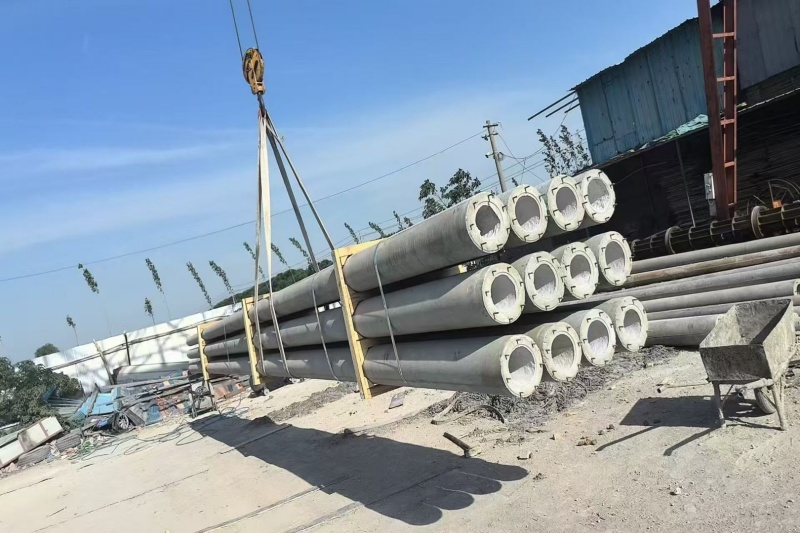
The third step is measuring basic dimensions and assessing feel, serving as an on-site supplementary verification method. Use a tape measure to check the top diameter and bottom diameter. The national standard allows a deviation range of -2mm to +4mm; anything outside this range is dimensionally non-conforming. Wall thickness deviation should fall between -2mm and +10mm—either too thin or too thick will affect structural performance. For prestressed poles of the same specification, the wall is thinner and the self-weight is lighter. If a pole feels abnormally heavy, it may indicate substandard manufacturing processes. Tap the pole body lightly with your fingers: a crisp sound indicates good concrete density, while a dull sound suggests internal voids or loose structure. The safety risks posed by inferior poles far outweigh their purchase price difference—they are prone to cracking during transport, may break during line tensioning, have a service life 5 to 10 years shorter than qualified products, and more critically, can cause pole collapse and line breakage accidents, resulting in regional power outages and economic losses. Therefore, choosing a qualified manufacturer with production capabilities and testing facilities, demanding complete quality documentation, and insisting on on-site random inspections upon delivery—these three steps are indispensable and form the fundamental guarantee for ensuring reliable pole quality and long-term stable operation of power lines.
