

- Publisher:mzadmin
- Published on:2026-09-04
- Pageviews:4068
Selection and Installation of Cement Power Pole Clamps
Cement power pole clamps are indispensable connecting fittings in the erection of electric power and communication lines. Their function is to securely fasten cross-arms, guy wires, anchor rods, and other components to the pole. Improper selection or non-standard installation may not only compromise the fixing effect of equipment but also, in severe cases, cause component slippage or even damage to the pole itself. As a professional manufacturer of cement power poles, we would like to briefly outline the key points for the selection and installation of clamps.
The primary basis for selecting a clamp is the actual diameter of the pole at the installation position. Cement power poles are mostly tapered, with different tip diameters and base diameters. The diameter varies at different heights, so the clamp specification must precisely match the pole diameter at the installation location. Commonly used cross-arm clamp specifications include 195mm, 245mm, and 355mm, while guy-wire clamps come in models such as 155mm, 195mm, and 360mm. The specific choice should be determined based on the pole's tip diameter and installation height. If the clamp size is too large, it will not fit snugly against the pole body after installation, requiring iron shims to be inserted into the gaps for tightening. If the clamp is too small, it simply cannot be installed at all. An accurate calculation method is: given the pole's tip diameter and length, using the taper ratio of 1:75, the actual diameter at any given height can be calculated, enabling precise clamp matching. In addition, clamps can be categorized by purpose into cross-arm clamps, guy-wire clamps, anchor clamps, etc., each with corresponding specifications and load-bearing requirements. The selection must be made according to the actual function. In terms of material, hot-dip galvanized clamps are preferred for outdoor environments, as their anti-corrosion performance is reliable, effectively resisting wind and rain erosion and extending service life.
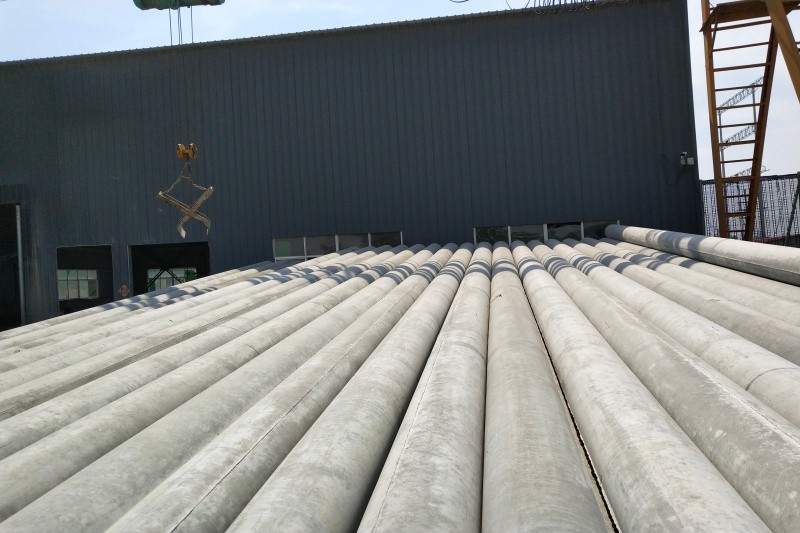
The installation process is equally critical. Before installation, the surface of the pole should be cleaned of cement residue, burrs, or oil stains to ensure close contact between the clamp and the pole face. During positioning, the elevation location must be strictly determined according to the design drawings. The clamp heights on the same pole or tower should be uniform and horizontally aligned, while also avoiding cracks or damaged areas on the pole body. When tightening bolts, they should be tightened alternately in a diagonal sequence and in multiple stages to prevent deformation of the clamp or localized overstress on the pole caused by locking one side completely at once, which could lead to cracking. For critical positions, it is recommended to use a torque wrench to tighten to the design torque value and to apply anti-loosening marks. Between the clamp and the concrete pole body, rubber cushion pads may be added to provide vibration damping, anti-slip protection, and protection of the galvanized layer.
