



- Publisher:mzadmin
- Published on:2026-09-02
- Pageviews:1154
Method for correcting the inclination of cement electric poles
Cement poles are exposed to the wild for a long time, experiencing erosion from wind and rain, geological changes, and tilting problems from time to time. If not dealt with in a timely manner, it may affect the balance of the line's stress, and in severe cases, it may cause serious safety accidents such as wire breakage and pole collapse. Therefore, scientific and timely correction of tilted poles is not only a key measure to ensure the safe operation of power lines, but also an important prerequisite for extending the service life of poles. As a professional manufacturer of cement electric poles, we have compiled the following mainstream and efficient calibration methods based on years of production and on-site service experience.
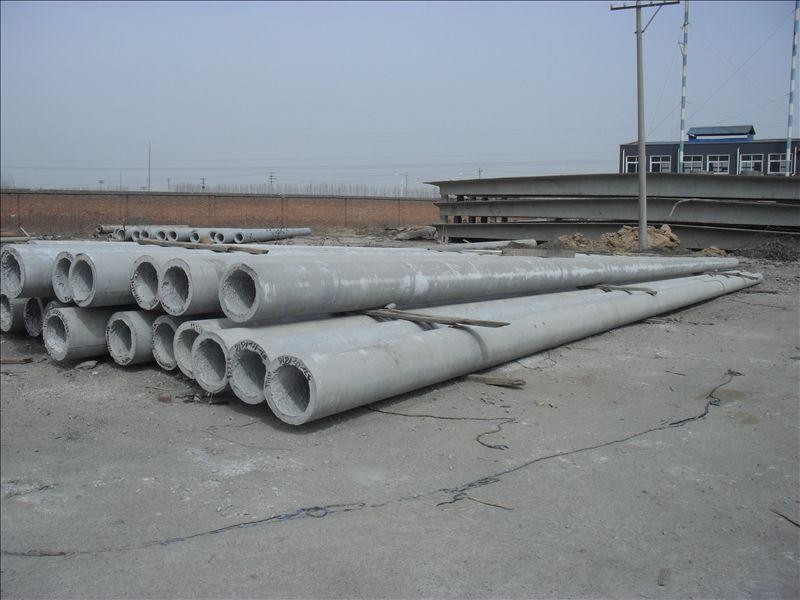
The primary task before starting the correction is to accurately determine the cause of the tilt. Common causes include: insufficient compaction of backfill soil in pole pits leading to foundation subsidence, long-term erosion by rainwater causing soil loss at the roots, freeze-thaw cycles in frozen soil areas causing foundation deformation, or external force collisions and uneven tension on cables. During on-site investigation, it is necessary to focus on observing the tilt direction, tilt angle, soil conditions around the foundation, and whether there are cracks or damage to the pole itself. For poles with relatively light inclination and stable foundation, a dedicated straightening device can be used to fix them in a suitable position on the upper part of the pole with clamps, connect the double hook wire clamp to the ground anchor, apply continuous and stable tension in the opposite direction of inclination, and cooperate with a theodolite or laser rangefinder to monitor changes in verticality in real time. This method does not require power outages, has controllable traction, and causes minimal damage to the pole body, making it particularly suitable for complex areas such as farmland and mountain slopes that are difficult for large machinery to access.
For poles with severe tilting or significantly loose foundations, more systematic treatment is needed. The hydraulic straightening device widely used in the industry is supported firmly on the ground by a base, and uses the coordinated action of lifting and pulling hydraulic cylinders to apply progressive and adjustable correction force to the electric pole. At the same time, it uses a built-in tilt sensor to provide real-time feedback on the posture of the pole until it fully returns to a vertical state. The entire process is smooth and controllable, which not only avoids the damage of impact loads to the rod body, but also greatly improves the work efficiency. After the calibration is completed, it is necessary to maintain the support and traction state for a period of time in order to carry out foundation reinforcement.
The final step of the calibration work is to reinforce the foundation. If only the shaft is straightened and the foundation treatment is ignored, it is highly likely to tilt again after rainwater infiltration or soil disturbance. For the backfill soil area, it is necessary to use the method of layered backfilling and mechanical compaction layer by layer to ensure that the compactness of each layer meets the standard; For areas with particularly soft soil or high groundwater levels, it is recommended to use concrete sleeve foundations or cast-in-place concrete bases to effectively resist uplift and lateral pressure by increasing the foundation's load-bearing area, fundamentally improving the anti overturning ability of the poles. If necessary, directional tension lines can be added based on force analysis to further balance the loads in all directions. It should be emphasized that the entire calibration process must always pay attention to the status of the pole body. Although cement electric poles have high compressive strength, their bending and tensile properties are relatively limited. If abnormal noise or new cracks are found on the pole body during operation, the operation should be stopped immediately and the plan should be re evaluated. For poles with heavy cracks or corroded steel bars, it is not advisable to forcibly correct them, but to replace them decisively.
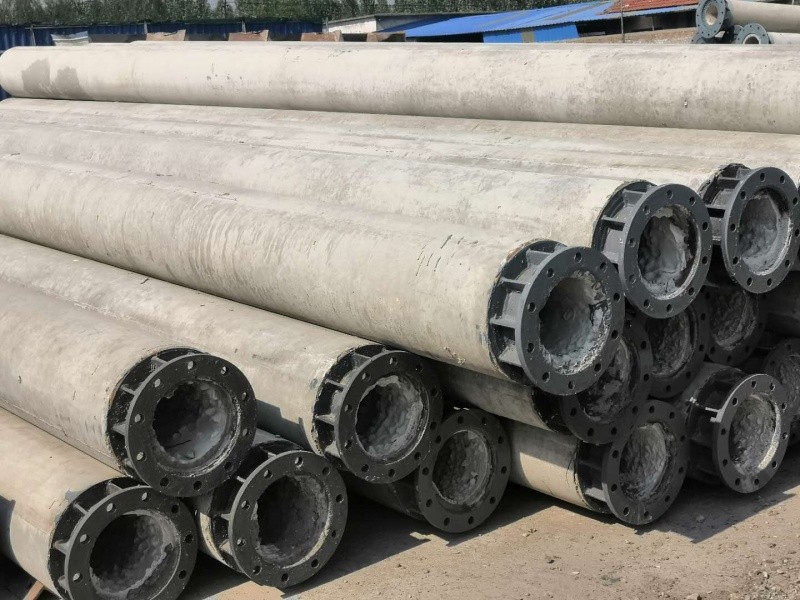
Qufu towering power tower Co., Ltd. - a one-stop intelligent manufacturing base for "cement power poles" in China, empowering global power infrastructure construction. We are located in Qufu, Shandong, and are a national high-tech enterprise that integrates the research and development, design, production, and global supply of large-scale concrete power products. We are committed to solving the tedious coordination problems in tower supporting systems for global power and communication engineering, and creating a "full category, one-stop" procurement platform from national standard poles to specialized components. The products are exported in batches to Indonesia, Senegal, Burundi and other countries along the "the Belt and Road", with business covering Southeast Asia, Africa, the Middle East and South America. With strong production capacity reserves and stable batch quality, we have won the trust of multiple state-owned power enterprises for long-term repurchase. We continue to contribute the solid strength of 'Made in China' to global infrastructure construction.
