

- Publisher:mzadmin
- Published on:2026-08-29
- Pageviews:5677
Why Are Most Utility Poles Cylindrical?
Walking through cities and countryside, utility poles are the most common power infrastructure. Although materials have evolved from wooden poles and steel towers to today’s reinforced concrete poles, the “cylindrical shape” has always remained the absolute mainstream. This is no coincidence, but the optimal solution driven by mechanics, materials science, manufacturing processes, and economic benefits. As a concrete pole manufacturer, we will break down the science behind this from a professional perspective.
1. The “All-Rounder” in Mechanical Performance
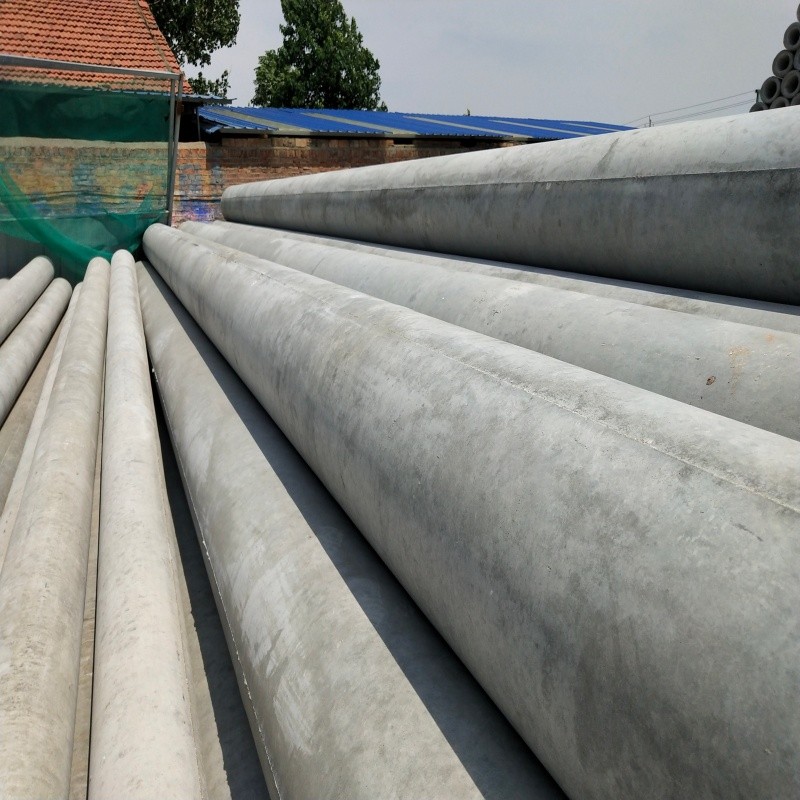
The circular cross-section possesses unparalleled symmetry: regardless of the wind direction, the drag coefficient of a cylindrical pole is relatively low and stable, and the force calculation is the most balanced. In contrast, square or I-shaped poles exhibit significant differences in wind resistance from different directions, easily generating large bending stresses. More importantly, the moment of inertia of a circular cross-section is equal in any direction, providing the same bending resistance against horizontal loads from any angle—which is the safest and most reliable choice for complex, multi-directional wind conditions in the field. Concrete poles manufactured by the centrifugal forming process have dense and uniform concrete under high-speed rotation, with symmetrically tight reinforcement cages, allowing for coordinated stress distribution under bending moments and reducing the risk of local instability.
2. “Ultimate Savings” in Material Utilization
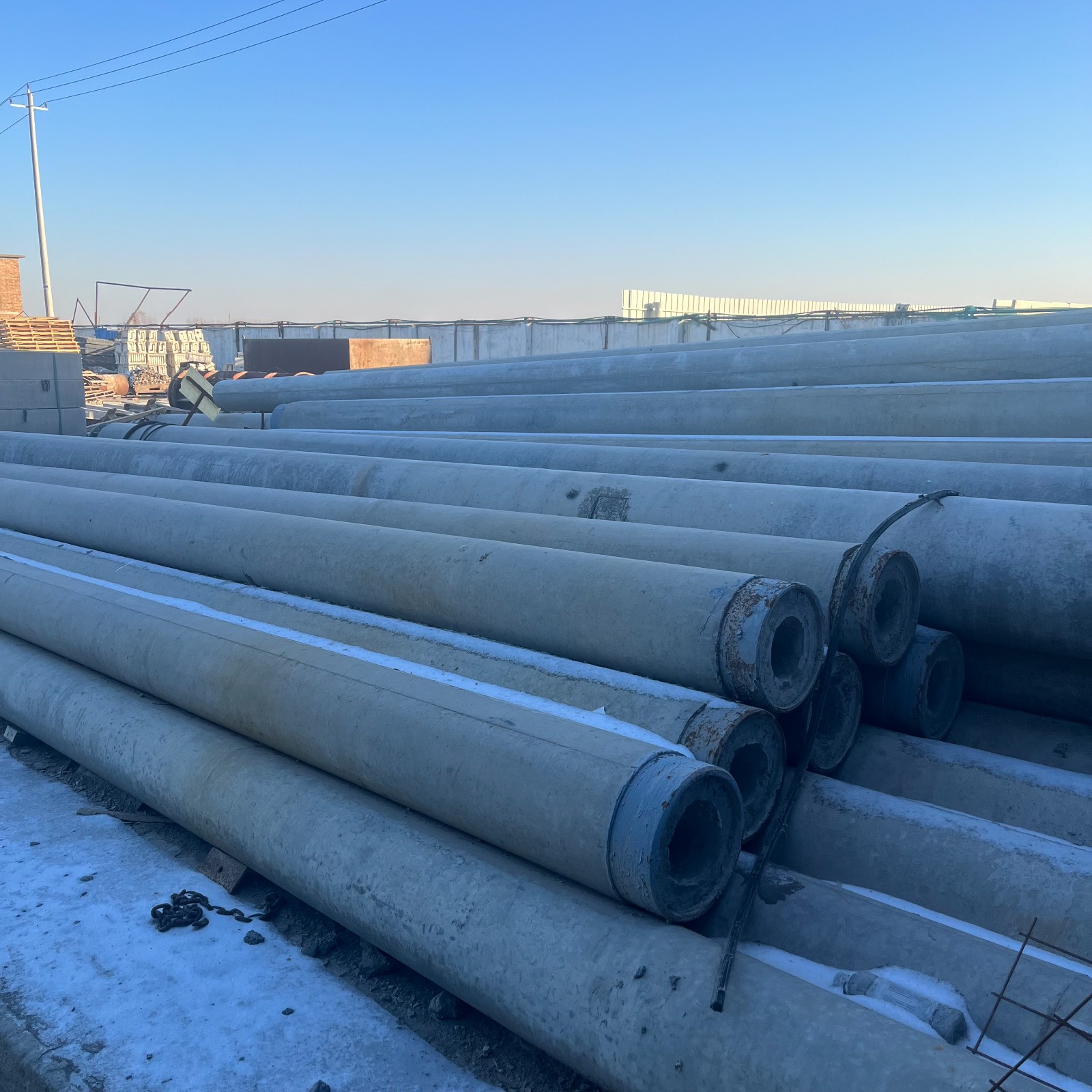
For the same cross-sectional area, a circular shape has a larger section modulus than square or rectangular shapes. To achieve the same bending strength, the circular cross-section requires the least material. Concrete and steel are the main cost drivers; the circular design allows for thinner walls and optimized diameters while ensuring safety, significantly saving raw materials and directly translating into cost advantages. At the same time, in circular poles, the main reinforcement bars are evenly distributed along the circumference, and spiral stirrups are tightly wound, forming a perfect “cage” skeleton that performs excellently under torsion and hoop stress—especially suitable for long-span and high-moment transmission lines. Less material and lighter weight also reduce transportation and erection costs.
3. A “Natural Ally” of the Manufacturing Process
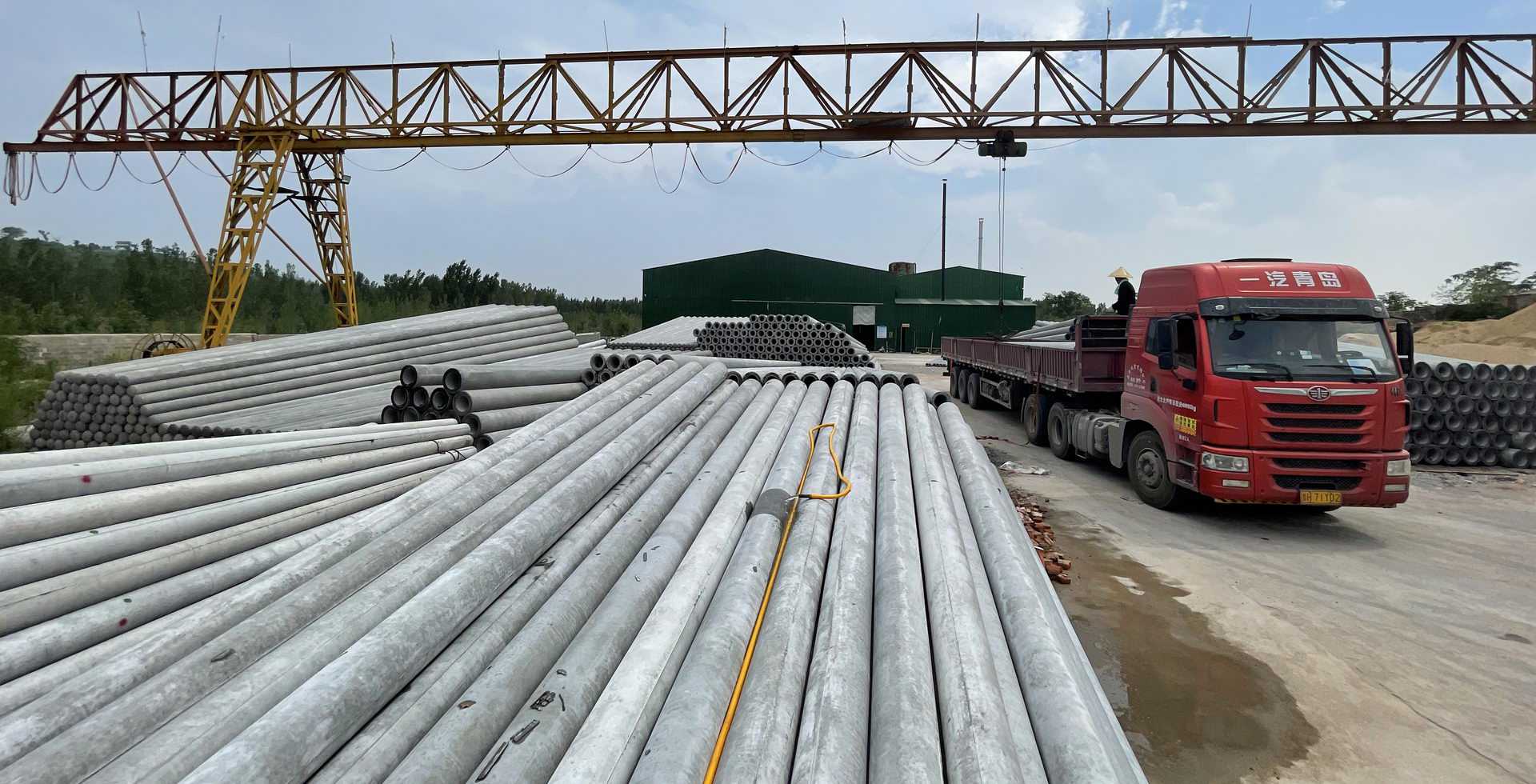
The circle is the “soul shape” of the centrifugal forming process. Our factory uses fully automated centrifugal pole production lines: after concrete is injected into the steel mold, it is rotated at high speed, forcing the concrete to cling tightly to the mold wall while excess water is expelled, forming a tubular structure with a smooth inner surface and dense texture. This process can only be perfectly achieved with a circular mold—centrifugal force acts uniformly around the circumference, ensuring consistent strength in all directions. Achieving the same density with square or special-shaped poles would require more complex vibration or extrusion processes, which are less efficient and harder to guarantee quality stability. Circular pole steel molds are mature, standardized, easy to demold, and produce finished products with high surface finish, ensuring a high pass rate and fast delivery.
4. A “Friendly Partner” in Construction and Maintenance
During installation, cylindrical poles can be rolled to reduce friction during lifting and transport, making handling easier. In the field, regardless of the hoisting method, the cylindrical shape adapts well to various clamps and is less prone to surface damage. When working on the pole, climbers and safety belts can be securely fastened from any angle, offering great convenience for maintenance workers and cross-arm installation without directional restrictions. In terms of weather resistance, round poles have no sharp edges, so rainwater and dust do not easily accumulate, and coating protective layers adhere more uniformly and durably, providing better self-cleaning performance than multi-edged pole shapes.