

- Publisher:admin
- Published on:2026-08-28
- Pageviews:3353
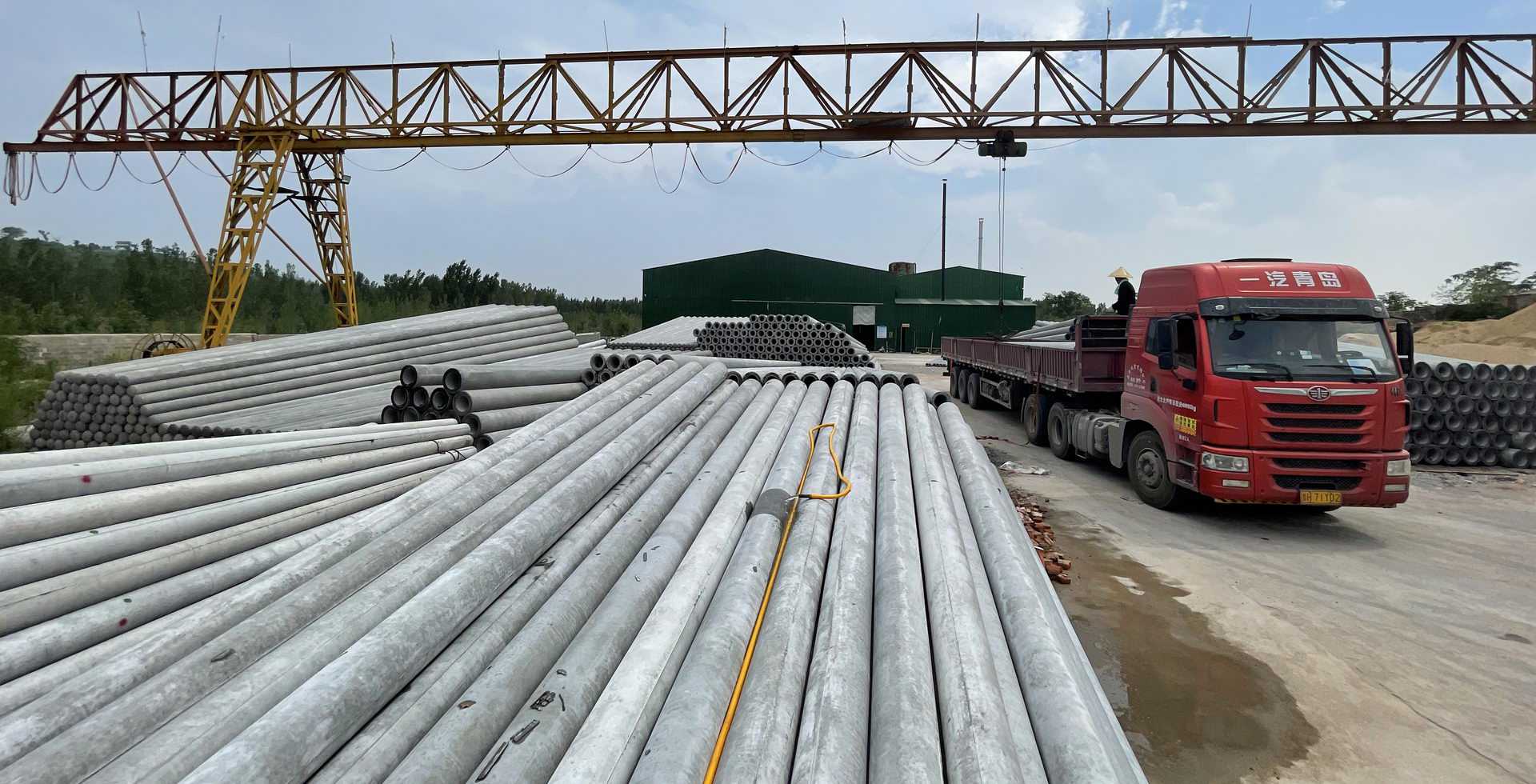
If the power grid is the lifeblood of modern society, then the concrete utility poles standing tall across fields and cities are the sturdy backbone that sustains this lifeblood. Silent yet indispensable, they bear the immense responsibility of delivering light and information. As a professional pole manufacturer, we understand that every pole is not merely a casting of steel and concrete—it is forged for a specific battlefield, destined to fulfill its unique mission. From the perspective of application, concrete poles are like elite "special forces," each with its own role, together composing the orderly blue sky above us.
I. Loyal Guardians of Power Transmission
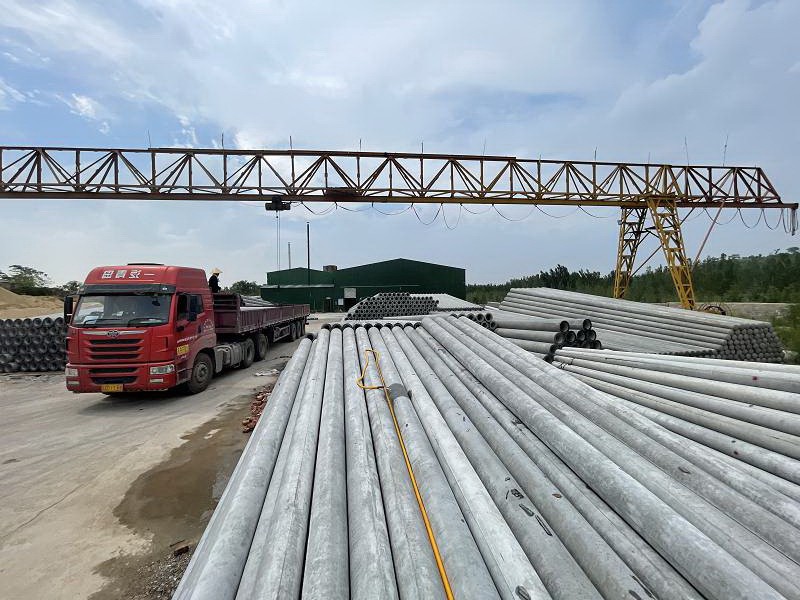
In the vast landscape of electric power, concrete poles are the undisputed protagonists. Based on their specific "posts" in transmission lines, they can be subdivided into several key roles:
Tangent poles are the most common and widely used type. Like upright soldiers in formation, they stand in a straight line along the route, primarily bearing the vertical weight of conductors and environmental loads such as wind, frost, rain, and snow. They are the mainstay that maintains the horizontal alignment of the line.
When lines need to cross rivers, valleys, or roads—or to limit the scope of accidents—tension poles come into play. Stronger than tangent poles, they must not only bear vertical loads but also resist the tremendous differential tension from conductors on both sides, serving as anchors and segmentation points to prevent a single toppled pole from crippling the entire line.
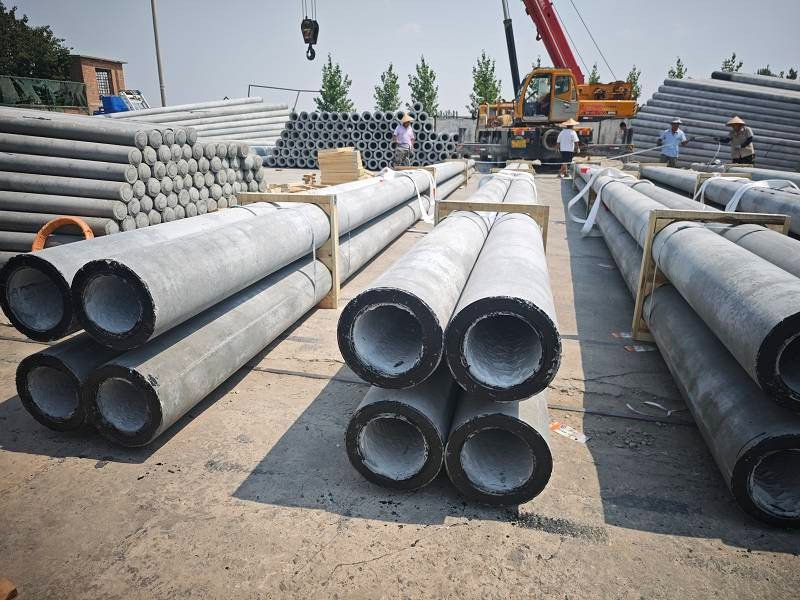
Furthermore, where the line changes direction, angle poles are deployed to balance the resultant forces from conductors in different directions, ensuring smooth turns. At the beginning and end of a line, dead-end poles bear the unidirectional conductor tension. When a branch line is tapped from the main route, branch poles serve as the pivotal hub for line divergence. It is the perfect coordination of these five types of power poles that weaves the intricate, cross‑crossing power network.
II. Silent Cornerstones of the Information Age
Beyond transmitting powerful electric currents, the delicate optical signals of the information age also rely on the support of concrete poles. In the telecommunications sector, concrete poles are widely used to suspend communication optical cables and copper cables, forming the physical foundation for telephony, the internet, and mobile communications. Compared to power lines, communication lines have slightly different load requirements for poles, placing greater emphasis on stability and height to ensure unimpeded signal transmission. Especially in vast rural areas and remote mountain regions, concrete poles remain the backbone of communication infrastructure construction, thanks to their cost advantages and durability.
III. Steel Backbones in Specialized Fields
The applications of concrete poles extend far beyond these. Along electrified railways, they transform into catenary support masts, upholding the high‑voltage overhead contact lines that power trains, withstanding the intense vibrations and wind pressures generated by high‑speed trains. In oilfields and mining areas, they serve as lifelines delivering electricity to drilling rigs and various equipment. They are also ubiquitous in urban road lighting, municipal surveillance, and other engineering projects.
Professional Selection, Tailored to Needs
Precisely because of the vast diversity in applications, we adjust the mechanical properties of poles during design and production to meet specific demands. For instance, tangent poles used in distribution lines often adopt cost‑effective prestressed concrete poles, which leverage prestressing in steel to enhance crack resistance and save steel. For tension, angle, and dead‑end poles that bear greater loads, non‑prestressed or partially prestressed concrete poles are required, featuring stronger reinforcement and higher load‑bearing capacity to cope with complex and variable stress conditions.
Every concrete utility pole is the crystallisation of technology and craftsmanship, as well as a carrier of responsibility and safety. As a manufacturer, we deeply understand the thousands of homes, lights, and communication links that each pole supports behind the scenes. With craftsmanship and dedication, we forge quality into every pole, ensuring that each one sent to its post becomes a resilient backbone that stands the test of time.
Located in Qufu, Shandong, we are a national high‑tech enterprise integrating R&D, design, production, and global supply of large‑scale concrete electrical products. We are committed to solving the cumbersome coordination challenges in pole‑tower supporting systems for global power and communication projects, creating a "full‑category, one‑stop" procurement platform ranging from national‑standard poles to specialised components. Our products are exported in bulk to Belt and Road countries such as Indonesia, Senegal, and Burundi, with our business footprint spanning Southeast Asia, Africa, the Middle East, and South America. Backed by strong production capacity and stable batch quality, we have earned the trust of multiple state‑owned power enterprises through long‑term repeat orders. We continue to contribute the solid strength of "Made in China" to global infrastructure development.
