



- Publisher:admin
- Published on:2026-08-28
- Pageviews:7236
In the lifeblood of power transmission, uniform-diameter concrete poles are silent yet steadfast guardians. Standing on open fields and mountain ridges, they weather wind, frost, rain, and snow, supporting the bright lights of countless households with their reinforced concrete frames. However, everything follows a life cycle. Under prolonged sun exposure, rain, freeze-thaw cycles, and industrial atmospheric corrosion, even seemingly indestructible concrete poles cannot avoid weathering, cracks, and rust damage.
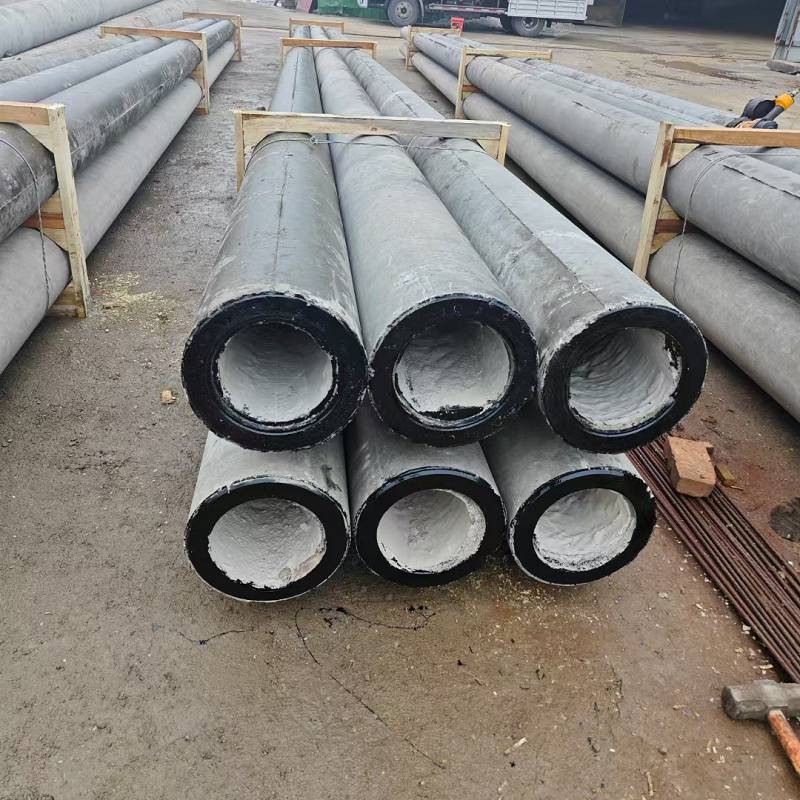
As a professional concrete pole manufacturer, we fully understand that extending the service life of a pole is not only about the safe operation of power grids but also a sign of respect for resources. Today, we will provide you with an in-depth professional analysis of strengthening and anti-corrosion methods for uniform-diameter concrete poles.
Hazard Diagnosis: Detecting the "Aging" Signals of Poles
During service, the common "lesions" of uniform-diameter poles manifest in two main areas: first, surface concrete weathering and cracking; second, corrosion at the segment joints (welded joints) and internal steel reinforcement.
Under long-term unbalanced tension and thermal expansion/contraction, poles often develop shallow surface cracks. These cracks may seem minor but are fatal entry points. Once rainwater and moist air penetrate, the internal rebar begins to rust. The volume expansion of rust, in turn, aggravates concrete cracking, forming a vicious cycle that, in severe cases, leads to exposed rebar and spalled, brittle pole bodies. Moreover, uniform-diameter poles are usually assembled by welding multiple sections. If the welded joints are not adequately protected against corrosion, they become highly vulnerable weak spots.
Anti-Corrosion Process: An "Immunity Barrier" from Inside Out
To address these risks, we employ a rigorous "treat both symptoms and root causes" anti-corrosion system.
Step 1: Substrate preparation and rebar "derusting and conditioning." Our crew first chisels away loose, damaged concrete layers until a sound substrate is exposed. Exposed rebars are ground with specialized tools to remove surface rust, then coated with deeply penetrating rust-removing fluids and rust-inhibiting epoxy resins, forming a dense passive film on the rebar surface that completely halts oxidation.
Step 2: Filling the "body" with high-strength materials. After internal rust prevention is completed, we repair the pole using high-crack-resistance mortar mixed with steel fibers or polymer emulsions. This material offers strong adhesion and excellent shrinkage resistance, tightly bonding to the original pole body and restoring its original structural profile.
Step 3: Covering the entire pole with a "corrosion-proof armor." After repairs, we apply a "breathable" cementitious capillary crystalline material or high-performance polymer cement coating on the pole's exterior. These materials penetrate deep into concrete capillaries and react chemically to block pores, not only providing waterproofing and anti-corrosion properties but also equipping the pole with resistance to saline-alkali and industrial corrosive environments.
Strengthening Technologies: "Safety Locks" for Reinforcing the Structure
When cracks are deeper or the structural load-bearing capacity declines, simple "repair" is insufficient — "strengthening" becomes necessary.
Carbon fiber strengthening is known as a "flexible cardiac tonic." By impregnating high-strength carbon fiber sheets with specialized resin and tightly wrapping them around the damaged sections, a super-strong composite layer forms upon curing. Carbon fiber offers high tensile strength, acid and alkali resistance, and almost zero added dead weight, making it especially suitable for restoring uniform-diameter poles that demand high load-bearing and crack-resistance performance.
External steel jacket strengthening is applicable for severe reinforcement at the base or joints. By installing steel rings or jackets around the pole and grouting with high-strength filler, it essentially equips the pole with an "iron exoskeleton." This method significantly enhances the pole's overall rigidity and bending resistance, with a short construction period and immediately visible results.
Our Commitment
Extending the service life of concrete poles is an effective path to energy savings and cost reduction. We not only supply high-quality new poles but also dedicate ourselves to providing professional "full-scale rehabilitation" for your aging lines. Whether in high-salt-fog coastal tidal flats or heavily polluted industrial zones, we tailor our precise strengthening and anti-corrosion solutions to local conditions, reviving old poles so they can continue to safeguard the stability of power grids.
We are located in Qufu, Shandong, and are a national high-tech enterprise integrating R&D, design, production, and global supply of large-scale concrete electrical products. We are committed to solving the complex coordination challenges in pole-tower supporting systems for global power and communication projects, creating a "full-category, one-stop" procurement platform ranging from national-standard poles to specialized components. Our products are exported in bulk to countries along the "Belt and Road," including Indonesia, Senegal, and Burundi, with our business footprint spanning Southeast Asia, Africa, the Middle East, and South America. With strong production capacity and stable bulk quality, we have earned the trust of multiple state-owned power enterprises through long-term repeat orders. We continuously contribute the solid strength of "Made in China" to global infrastructure development.
