



- Publisher:admin
- Published on:2026-08-28
- Pageviews:6320
In the grand narrative of power grid construction, the cement pole often plays the quietest role. It does not occupy the technological spotlight like a transformer, nor does it exude the futuristic appeal of a smart meter—yet it serves as the “backbone” of transmission lines. An ill‑chosen pole can cause a project designed to last a century to fail at the very starting line. As a professional cement pole manufacturer, we understand deeply that selection is never a simple transaction; it is the first critical balancing act among safety, cost, and service life.
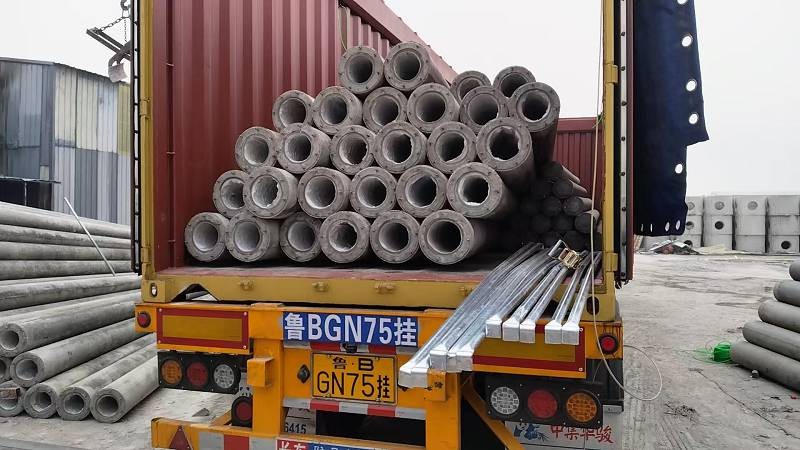
Quality: The Overlooked “Hidden Costs”
Many purchasers initially focus only on unit price, ignoring the high hidden costs behind quality. A substandard pole, with concrete strength below the national requirement of C40, may develop surface spalling and rebar corrosion within just a few years of installation. More critically, if the pole contains longitudinal cracks or internal honeycombing invisible to the naked eye, its cracking moment capacity will drop sharply under extreme weather, and the risk of collapse increases significantly.
Choosing high‑quality poles is, in essence, choosing a long‑term insurance policy. Poles made with C50 high‑strength concrete and proper reinforcement may have a slightly higher unit cost, but their ultimate bending moment capacity can be several times that of ordinary products. They can withstand typhoons, ice‑loading, and other harsh conditions, minimising lifecycle maintenance costs. This is akin to the mortise‑and‑tenon joints in ancient architecture—simple in appearance, yet they have borne centuries of wind and rain.
Process: The Context‑Based Choice Between Prestressed and Non‑Prestressed Poles
The essence of selection lies in “adaptation.” Prestressed poles, which induce compressive prestress in concrete through tensioned steel, offer excellent crack resistance and are particularly suitable for urban‑rural fringe areas subject to frequent external impacts. Non‑prestressed poles, with more uniformly distributed reinforcement, tend to have longer corrosion‑resistant service lives in highly corrosive environments such as saline‑alkali lands and irrigation areas. There is no absolute “best”—only the “most appropriate” based on operating conditions.
For example, in coastal saline areas or chemical parks, blindly using ordinary prestressed poles may turn their tensioning ends into entry points for corrosion. In contrast, non‑prestressed poles with sulfate‑resisting admixtures and optimised reinforcement can operate stably for over thirty years. Such subtle process differences determine whether a project is a “temporary fix” or a “century‑long legacy.”
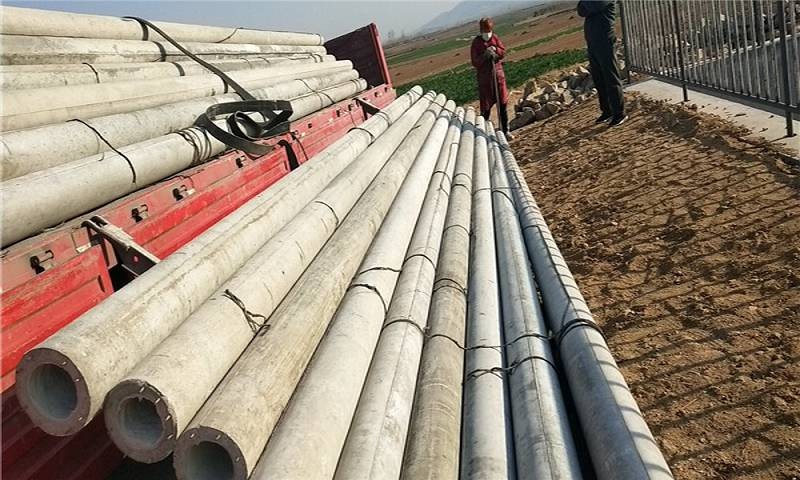
Ancillary Components: The Synergy Between Base Plates and Burial Depth
“A weak foundation shakes the earth.” The stability of a pole depends not only on the shaft itself, but also on the base plate and anchor plates buried underground. The dimensions, thickness, and reinforcement ratio of the base plate directly affect the pole’s resistance to overturning. In one grid‑upgrading project in southern China, the use of under‑specified thin base plates led to dozens of poles tilting after the rainy season, causing rework costs exceeding one million yuan and severe schedule delays.
A professional selection must include a site investigation of ground conditions. Soft soils require larger base plates, and windy regions demand greater burial depths (for instance, a 10‑metre pole should be buried at least 1.7 metres deep). These seemingly tedious data points are, in fact, the last line of defence for project safety.
Conclusion
Selecting cement poles is a comprehensive consideration of materials science, structural mechanics, and cost control. As manufacturers rooted in this industry, we firmly believe that every pole we deliver should not be merely cold reinforced concrete, but a guardian carrying the responsibility of bringing light to countless homes.
Choosing a professional manufacturer is not only choosing compliant products, but also choosing comprehensive support spanning survey, production, transportation, and after‑sales service. In the grand blueprint of power infrastructure, may every foundation stone stand the test of time.
Corporate Strength Connection
