



- Publisher:mzadmin
- Published on:2026-08-27
- Pageviews:2493
Curing of Concrete Poles: From Masterful Craftsmanship to Robust Qualit
In the vast fields and across urban and rural landscapes, concrete electric poles stand like silent guardians, shouldering the vital task of power transmission. Braving wind and rain, enduring scorching heat and freezing cold, their durability and sturdiness stem not only from scientific mix design and centrifugal molding but also from a crucial yet easily overlooked process—curing. Curing is the shaper of concrete’s vitality and the key determinant of pole strength and service life.
I. The Essence of Curing: Bestowing "Vitality" upon Concrete
The curing of concrete poles is fundamentally about providing an ideal temperature and humidity environment for the hydration reaction of concrete. Hydration refers to the chemical reaction between mineral components in cement and water, generating gelatinous hydration products that gradually fill pores, coat aggregates, and thus develop strength. This reaction continues throughout the pole’s "infancy," and ambient temperature and humidity directly affect the hydration rate and ultimate strength. Improper curing causes surface moisture loss, leading to dusting and cracking, while inadequate internal hydration results in insufficient strength and even hidden risks of steel corrosion. Therefore, scientific curing is not an optional step but an essential pathway from the "plastic state" to the "peak of strength."
II. Mainstream Curing Methods: Traditional Natural Curing and Modern Steam Curing
Depending on production scale and efficiency needs, pole curing is primarily divided into natural curing and steam curing. Natural curing is the most traditional method. After demolding, poles are left in open yards to rely on ambient temperature, supplemented by regular water spraying for moisture retention, reaching design strength in about 28 days. This method has low energy consumption and simple equipment, but the long cycle and low mold turnover make it unsuitable for large-scale industrial production—now used only in small workshops or special climates. Steam curing is the core technology in modern pole manufacturing. Poles are placed in enclosed curing pits or kilns and exposed to high-temperature steam, artificially creating a hot and humid environment to significantly accelerate hydration. Steam curing must strictly follow the four-stage regime of "pre-steaming – heating – constant temperature – cooling." The pre-steaming stage allows initial setting; heating and cooling rates must be controlled (typically ≤20°C/h) to prevent thermal stress cracks from excessive temperature differentials; the constant-temperature stage sets the maximum temperature based on cement type (≤80°C for Portland cement, 85°C for ordinary Portland, and up to 95°C for slag Portland). This precise control ensures rapid strength development while minimizing quality defects.
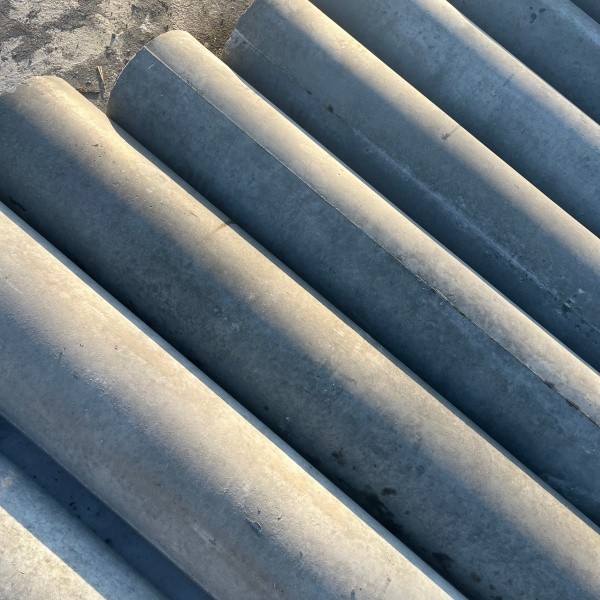
III. Pit-Type and Kiln-Type Curing: The Mainstream Choice for Modern Large Factories
Among various steam-curing methods, pit-type and kiln-type curing have become the mainstream choice for large pole plants due to their outstanding energy efficiency and stability. Curing pits or kilns act as giant insulated boxes, using polyurethane insulation layers and sealed expansion joints to maximize steam heat retention, reduce heat loss, and ensure uniform temperature across all parts of the poles. This shortens the curing cycle, accelerates steel mold turnover, and boosts overall production efficiency. Meanwhile, advanced temperature-control systems monitor and adjust temperature curves in real time, ensuring every batch undergoes optimal curing—a hallmark of quality assurance in professional manufacturing.
IV. The Profound Impact of Curing Quality on Pole Service Life
Curing quality affects not only demolding strength but also long-term durability. Improper temperature and humidity control can generate micro-cracks inside the concrete. During service, these micro-cracks become pathways for moisture ingress. In northern cold regions, freeze-thaw cycles progressively enlarge cracks; in coastal or saline-alkali areas, corrosive agents like chloride ions accelerate steel corrosion, ultimately reducing bearing capacity and causing premature failure. Thus, scientific curing is the fundamental safeguard for poles to withstand harsh environments and achieve extended longevity, and it is a responsible commitment to engineering safety and public interest.
V. Our Commitment: Full-Chain Quality Control, Delivering Every Reliable Pole
As a professional pole manufacturer, we regard curing as the most patient and craftsman-like step in the entire production chain. From incoming raw material inspection, steel cage fabrication, concrete mixing, centrifugal molding, and scientific steam-curing temperature control, to rigorous demolding inspection and factory mechanical performance testing, every step is supported by a comprehensive quality traceability system. We deeply understand that a qualified pole delivers not only immediate strength but also decades of reliable service in wind and rain.
Conclusion
Curing is the elevating stroke that transforms concrete poles from "manufacturing" to "quality manufacturing." It embodies the integrated wisdom of materials science, process control, and quality management. With rigorous curing processes and full-process quality control, we are dedicated to ensuring that every standing pole can calmly face nature’s tests and steadfastly guard countless homes and industrial vitality. Choosing us means choosing resilience and trustworthiness that stand the test of time.
