



- Publisher:admin
- Published on:2026-08-25
- Pageviews:2011
Across vast fields and within bustling towns, rows of silently standing utility poles form an indispensable backbone of modern society. They support the intricate networks of power and communication, while their solid bodies withstand the ravages of wind, frost, rain, and snow. At the heart of this backbone lies a material both familiar and unfamiliar to us—concrete.
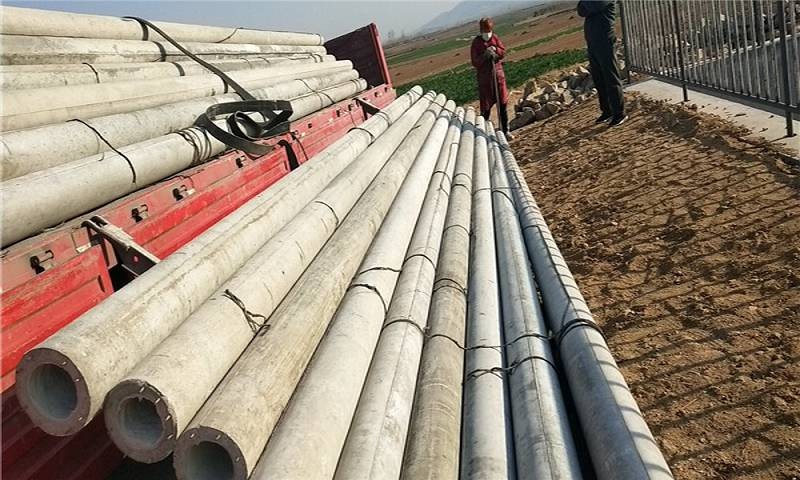
Concrete: A Foundation of Strength and Flexibility
Concrete is not a single raw material, but a meticulously engineered composite. Its "skeleton" consists of well-graded sand and stone aggregates—typically hard medium-coarse sand and crushed stone—which form a stable framework within the concrete, bearing the primary compressive stresses. Its "blood" is high-strength Portland cement, which, upon contact with water, undergoes a hydration reaction, acting like glue to firmly bond the loose sand and stone particles into a cohesive whole.
Yet these three components are not enough. Water serves as the medium for the chemical reaction, while admixtures act as the "magicians" that endow concrete with special properties. For high-quality poles, high-performance water reducers and early-strength agents are common formulations. They effectively improve the concrete's workability for easy molding, significantly enhance early strength, and shorten production cycles. In modern pole manufacturing, moderate amounts of mineral admixtures such as fly ash or ground slag are also incorporated. These fill the voids between cement particles, making the concrete denser and thus more resistant to environmental attack.
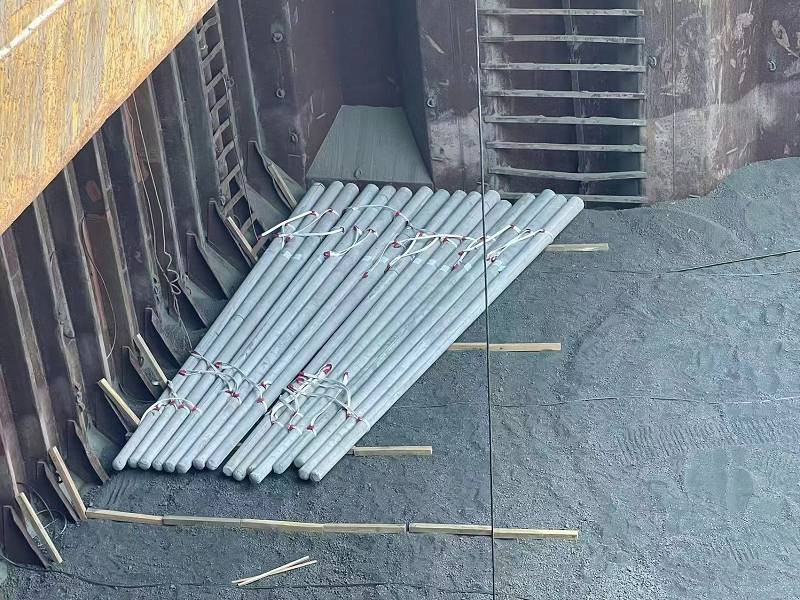
Centrifugal Forming: Forging a Robust Body
Quality raw materials alone are insufficient; precision craftsmanship is essential to shape them. The essence of manufacturing annular concrete poles lies in the centrifugal forming process. Once the concrete is fed into the steel mold, the mold spins at high speed on a centrifuge. The powerful centrifugal force evenly distributes the concrete against the mold wall. This process not only expels excess water and air bubbles but also compacts the aggregates into a highly dense layer on the pole wall, typically achieving strength grades of C40 or even C50—far exceeding ordinary building requirements. Subsequent steam curing accelerates the cement hydration reaction, enabling the poles to reach their required strength in a relatively short time.
Family Classification: Specialized Roles for Every Need
Based on the configuration of reinforcing steel and production techniques, utility poles fall into three main categories, each excelling in different applications.
Ordinary Reinforced Concrete Poles represent the "stable and resilient" branch of the family. They use ordinary hot-rolled ribbed bars (deformed steel) as the main reinforcement, without prestressing. Their production process is relatively simple, and they offer good toughness, making them less prone to brittle fracture. Although their crack resistance is slightly inferior, they perform well in various roles along distribution lines, such as straight-line poles and tension poles, particularly excelling at corners or terminals where large bending moments are encountered.
Prestressed Concrete Poles are the epitome of "cost-effectiveness." During production, the longitudinal prestressing tendons (such as high-strength wires) are tensioned, subjecting the concrete to pre-compression before it bears any load. This technique effectively counteracts tensile stresses that arise during service, resulting in excellent crack resistance, high stiffness, and significant steel savings. They are a common choice for straight-line poles in distribution lines, though their brittleness becomes more pronounced once the ultimate load capacity is exceeded.
Partially Prestressed Concrete Poles combine the advantages of both previous types and are hailed as "all-round performers." Their longitudinal reinforcement consists of a mix of prestressing tendons and ordinary steel bars. They offer both the high stiffness and crack resistance of prestressed poles and the superior ductility of ordinary reinforced poles. They are ideal for complex loading conditions and demanding applications, including both straight-line and tension poles, representing an important direction for recent developments in high-moment pole technology.
From grains of sand and pieces of stone to towering poles that stand proudly skyward, the evolution of concrete materials science and classification technology has not only forged an unyielding industrial backbone but also silently safeguards countless homes with light and information, contributing to the magnificent tableau of modern civilization.
Located in Qufu, Shandong, we are a national high-tech enterprise integrating R&D, design, production, and global supply of large-scale concrete power products. We are committed to solving the complex coordination challenges in pole-and-tower systems for global power and communication projects, offering a "full-category, one-stop" procurement platform—from national-standard poles to specialized components. Our products are exported in bulk to countries along the "Belt and Road," including Indonesia, Senegal, and Burundi, with our business footprint spanning Southeast Asia, Africa, the Middle East, and South America. Backed by strong production capacity and consistent bulk quality, we have earned the long-term repeat trust of multiple state-owned power enterprises. We continuously contribute the solid strength of "Made in China" to global infrastructure development.
