



- Publisher:admin
- Published on:2026-08-25
- Pageviews:6591
Across the vast mountains and plains, in bustling cities and tranquil villages, the upright concrete poles stand not merely as physical infrastructure for communication networks, but as silent sentinels of the information age. With their steel-reinforced frames, they brave wind and rain, weaving together the countless voices of our world. As a professional manufacturer of communication concrete poles, we understand deeply that the superior performance of every pole derives from rigorous technical parameters and an unwavering commitment to manufacturing excellence. Today, let us step into the world of communication poles and, from a professional vantage point, decode the hard-core engineering secrets that bridge the digital divide.
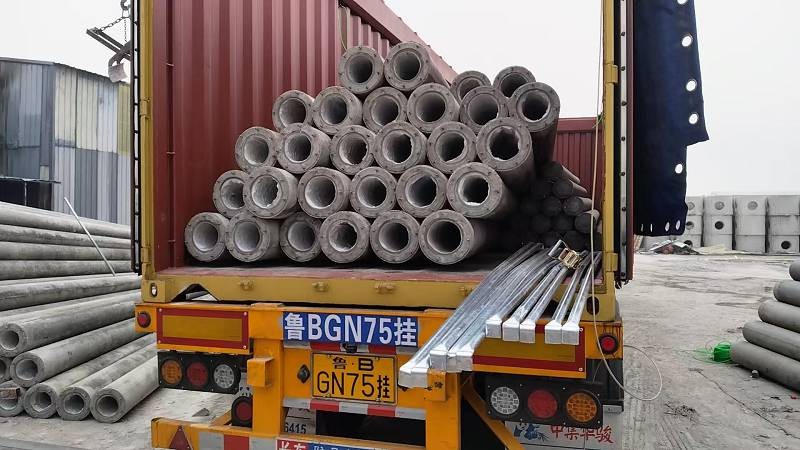
I. Form and Constitution: Basic Geometric Parameters
The "figure" and "physique" of a communication pole are the primary determinants of its load-bearing capacity and application scenarios. The circular concrete poles widely used in China’s communication projects strictly adhere to the national standard GB/T 4623 Circular Concrete Poles and the latest industry specifications.
1. Pole Length and Top DiameterPole length determines the installation height, directly affecting communication signal coverage and line spanning capability. Standard lengths range from 7m, 8m, 9m, 10m, 12m, to 15m. For special river-crossing or complex terrain requirements, we can custom-produce sectional assembled poles of 18m, 21m, or even over 30m. Taking a common 10m communication pole as an example, its top diameter (tip diameter) is typically φ150mm, while the base diameter (root diameter) is approximately φ230mm.
2. Taper and Wall ThicknessTo ensure optimal mechanical performance and bending stiffness, tapered poles universally adopt a 1:75 taper design. This classic ratio ensures a more rational stress distribution under horizontal loads. Meanwhile, wall thickness is critical to strength, with standard values ranging from 30mm to 60mm — for instance, a 10m prestressed pole typically has a wall thickness no less than 40mm.
II. Skeleton and Backbone: Material and Mechanical Properties
If geometric dimensions define the "form" of a pole, then raw materials and mechanical indicators constitute the "soul" that carries vast amounts of information.
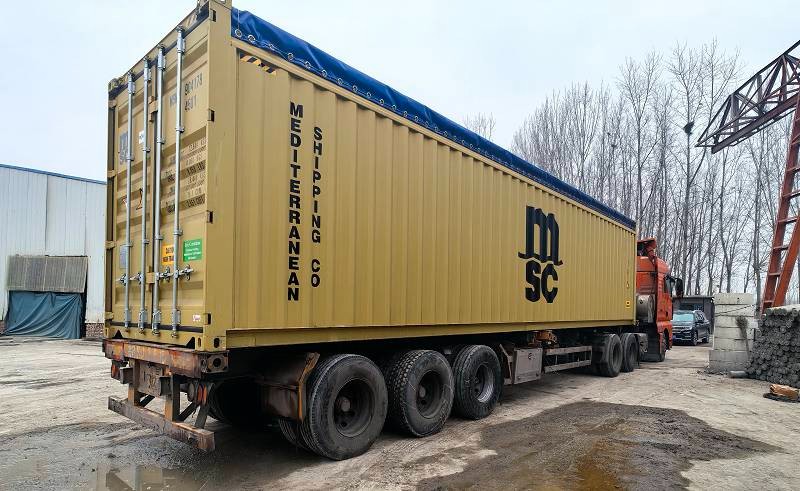
1. Concrete StrengthConcrete is the flesh and blood of the pole. Depending on load requirements, communication poles generally use concrete of grade no less than C40, with high-performance poles reaching C60 or above. High-grade concrete, combined with the centrifugal forming process, endows the pole with a dense internal structure and excellent compressive and corrosion resistance.
2. Reinforcement TechnologySteel reinforcement is the backbone. Communication poles are broadly classified into prestressed and non-prestressed types. Prestressed poles utilize high-strength wires and a tensioning process to induce pre-compression in the concrete before service loads are applied, significantly enhancing crack resistance — ideal for standard-span, light-load routes. Non-prestressed poles employ deformed steel bar cages, offering greater ultimate bearing capacity for long-span, heavy-load, or complex stress scenarios such as angle poles and terminal poles.
3. Core Mechanical IndicatorsMechanical performance is the touchstone of pole quality. Among these, cracking moment and ultimate bending moment are the two critical metrics. The cracking moment ensures that under normal wind pressure and cable tension, no cracks appear that would compromise durability (permissible circumferential crack width is strictly controlled within 0.05mm). The ultimate bending moment, on the other hand, represents the pole’s ultimate safety margin — its measured value is generally required to be no less than 1.5 times the standard test moment, guaranteeing rock-solid stability even in extreme weather conditions.
III. Precision and Detail: Stringent Quality Control Standards
True craftsmanship resides in the unseen details. The manufacturing and acceptance of communication poles impose exacting requirements on dimensional tolerances and surface quality.
1. Dimensional AccuracyLength deviation is controlled between -40mm and +20mm; outer diameter deviation ranges from -2mm to +4mm; wall thickness deviation is kept between -2mm and +10mm. High-precision molds and mature process control ensure perfect on-site assembly of every pole.
2. Surface QualityNational standards mandate that both internal and external surfaces shall have no exposed reinforcement and no honeycombing on the exterior. For prestressed poles, any longitudinal cracks are strictly prohibited. Even minor defects such as grout leakage at joint seams are subject to rigorous repair specifications and acceptance criteria. We firmly believe that a flawless exterior is a direct manifestation of long service life and high reliability.
Erect one pole, safeguard a network. Behind these seemingly simple concrete poles lies the culmination of countless technical standards and process ingenuity. As a dedicated industry veteran, we leverage rigorous digital parameters as our foundation and innovative materials and processes as our wings to deliver communication concrete poles of uncompromising quality and outstanding performance. Let us join hands, building with the most solid physical infrastructure the intelligent thoroughfare that connects all things.
Located in Qufu, Shandong, we are a national high-tech enterprise integrating R&D, design, production, and global supply of large-scale concrete power products. We are committed to solving the complex coordination challenges in pole-tower supporting systems for global power and communication projects, offering a "full-category, one-stop" procurement platform ranging from national-standard poles to specialized components. Our products are exported in bulk to Belt and Road countries including Indonesia, Senegal, and Burundi, with our business footprint spanning Southeast Asia, Africa, the Middle East, and South America. Backed by robust production capacity and consistent batch quality, we have earned the long-term repeat trust of multiple state-owned power enterprises. We continue to contribute the solid strength of "Made in China" to global infrastructure development.
