



- Publisher:admin
- Published on:2026-08-24
- Pageviews:9110
If the crisscrossing power lines are the great arteries of modern society, then the concrete poles standing in the wilderness, mountains, and urban fringes are the solid skeletons that uphold these arteries. They remain silent, yet constantly endure the harsh tests of nature. Especially during thunderstorm seasons, the immense energy accumulated between clouds often seeks the nearest towering conductor to discharge. At that moment, a well-designed lightning-protected concrete pole transforms into a silent guardian protecting the power lines.
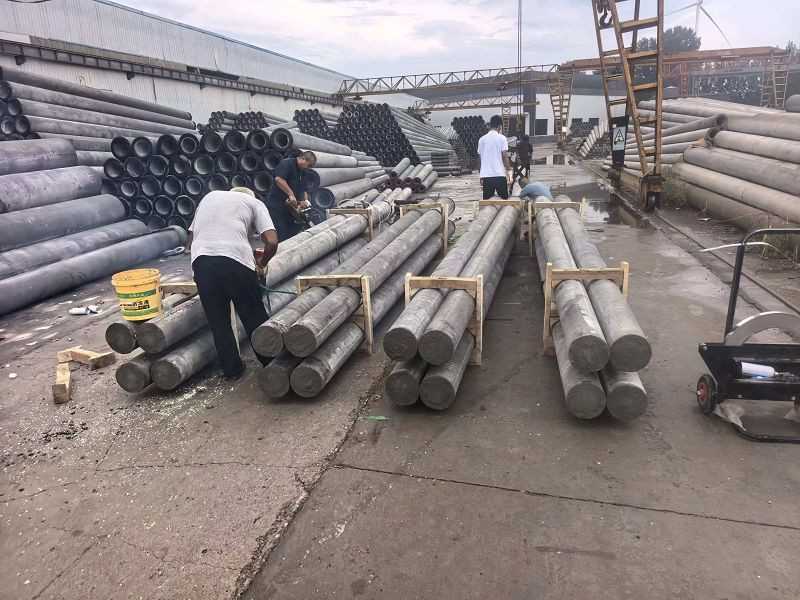
Guiding Lightning into the Earth: From Passive Endurance to Active Diversion
In traditional perception, concrete poles themselves are made of reinforced concrete and seem to possess some conductivity. However, a plain concrete structure cannot form a low-impedance discharge path. If lightning is compared to a raging torrent, a pole without lightning protection is like a fragile dike—easily punctured or triggering "side flashovers," which can cause line tripping, equipment damage, and even endanger passersby.
The core of lightning protection design lies in "guiding lightning into the earth" —providing a safe, controllable release path for the powerful lightning current. The brilliance of modern lightning-protected concrete poles lies in integrating this concept into the pole's structural body. By embedding dedicated metal conductors (typically 4.0mm diameter steel wires) inside the pole shaft, installing an air-termination device connected to a lightning rod at the top, and connecting a grounding device at the base, a complete "capture–conduction–grounding" system is established.
Multiple Defenses: An Evolving and Integrated Technology
In practical applications, lightning protection design is not one-size-fits-all; instead, it adapts to local conditions with multiple protective measures.
First, embedding an "invisible skeleton" in the pole body. Quality concrete pole manufacturers embed metal conductors protected by insulating sleeves inside the pole during production, or even use at least two structural steel bars with a diameter of no less than 12mm as natural down conductors. This not only reduces the risk of external wiring erosion from wind and rain but also ensures long-term stability of the grounding circuit.
Second, installing "metal antennae" on the pole top. A dedicated lightning rod is installed at the top of the pole, tightly connected to the internal conductors via flanges or plug-in connections. When thunderclouds pass overhead, the lightning rod utilizes its corona discharge effect to actively attract cloud charges, ensuring that the lightning strike point lands precisely on the preset air-termination device, thus preventing direct strikes to the main lines.
Third, paving a "discharge channel" to the earth. No matter how good the down conductor is, if the grounding resistance is too high and the lightning current cannot be dissipated rapidly, back-flashover accidents can still occur. To address this, the industry widely adopts grounding disc devices. This device combines the traditional concrete base plate and grounding pipe functions into one, adopting a cage-like or grid-like metal structure. It not only bears the downward pressure of the pole to prevent settlement but also significantly reduces grounding resistance, effectively lowering the counterattack voltage from lightning current. In areas with high soil resistivity, the grounding resistance is ensured to meet design requirements by extending the grounding body length or using resistance-reducing agents.
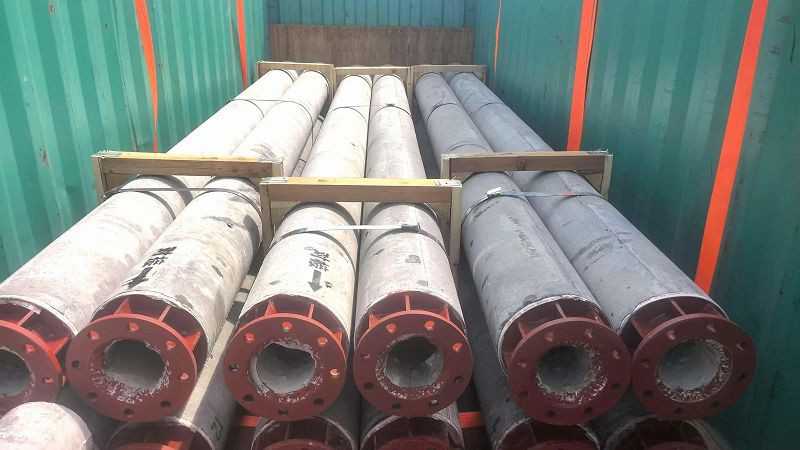
Craftsmanship Guardianship: Safety Proved by Data
The effectiveness of lightning protection ultimately manifests in data and standards. According to relevant national specifications, the underground extension of the lightning protection wire should be buried at a depth of 700mm or more, the lightning protection wire of the concrete pole should protrude 100mm above the pole top, and a 50mm discharge gap must be set at crossings with high-voltage lines. These seemingly stringent process parameters are the culmination of countless lightning strike simulation tests.
As manufacturers of concrete poles, we understand deeply that every pole delivered to our customers carries not only the weight of cables but also the brilliance of thousands of households. What we provide is not merely a high-strength concrete product, but a comprehensive safety solution integrating structural mechanics, electrical engineering, and meteorological protection. Through built-in pre-embedded components and optimized grounding techniques, we are committed to integrating lightning protection equipment with the pole body itself, endowing these massive structures with sensitive "nerve endings" that dissolve nature's violent energy into nothingness.
Between the vast fields and bustling cities, these seemingly ordinary concrete poles, with their profound internal design and solid construction techniques, silently guard the lifelines of modern civilization. Lightning protection lies in technology, and even more so in responsibility.
Located in Qufu, Shandong, we are a national high-tech enterprise integrating R&D, design, production, and global supply of large-scale concrete power products. We are dedicated to solving the cumbersome coordination challenges in pole and tower supporting systems for power and communication projects worldwide, offering a "full-category, one-stop" procurement platform—from GB-standard poles to specialized components. Our products are exported in bulk to Indonesia, Senegal, Burundi, and other countries along the "Belt and Road," with business spanning Southeast Asia, Africa, the Middle East, and South America. Thanks to our robust production capacity and consistent batch quality, we have earned long-term repeat orders from multiple state-owned power utilities. We continue to contribute "Made in China" strength to global infrastructure development.
