

- Publisher:mzadmin
- Published on:2026-10-31
- Pageviews:4830
- Source:
On rainy days, do concrete utility poles conduct electricity? The truth is different from what you might think.
When walking on the street during a rainstorm, many people subconsciously avoid those thick concrete utility poles. This caution is correct, but the reason may be different from what you think. Many people believe that "concrete utility poles are made of concrete, concrete conducts electricity, and getting wet in the rain makes them even more dangerous," while others think that "concrete is an insulator, so a little rain is no big deal." Both views are widely circulated, yet neither is accurate enough.
The truth is: a concrete utility pole itself does not normally become a "conductive rod" simply because of rain, but it can indeed become a dangerous carrier. The key to the problem is not the concrete, but those details invisible to the naked eye.
Concrete itself does not conduct electricity, but the pole "has bones." To understand this, we first need to look at what is actually inside a concrete utility pole. A concrete utility pole is not a solid lump of concrete; its formal name is "reinforced concrete pole." As the name suggests, its skeleton is steel rebar, and concrete is merely the protective layer wrapping the rebar. Steel rebar is an excellent conductor, while concrete in a dry state has a very high resistivity and can indeed be regarded as an insulating material. What about rainy days? After the concrete layer is soaked by rainwater, its surface resistance will decrease somewhat, but more importantly, it is difficult for moisture to penetrate to the location of the rebar within a short time. Under normal circumstances, an intact concrete protective layer is sufficient to isolate the rebar from the outside world. Therefore, an intact concrete utility pole will not become entirely electrified in the rain simply because it "got wet." Popular science information from power supply departments also clearly points out that the concrete utility pole itself does not conduct electricity, and the rebar in the pole is buried deep underground, which can actually serve a grounding function. But there is a prerequisite: intact and undamaged.
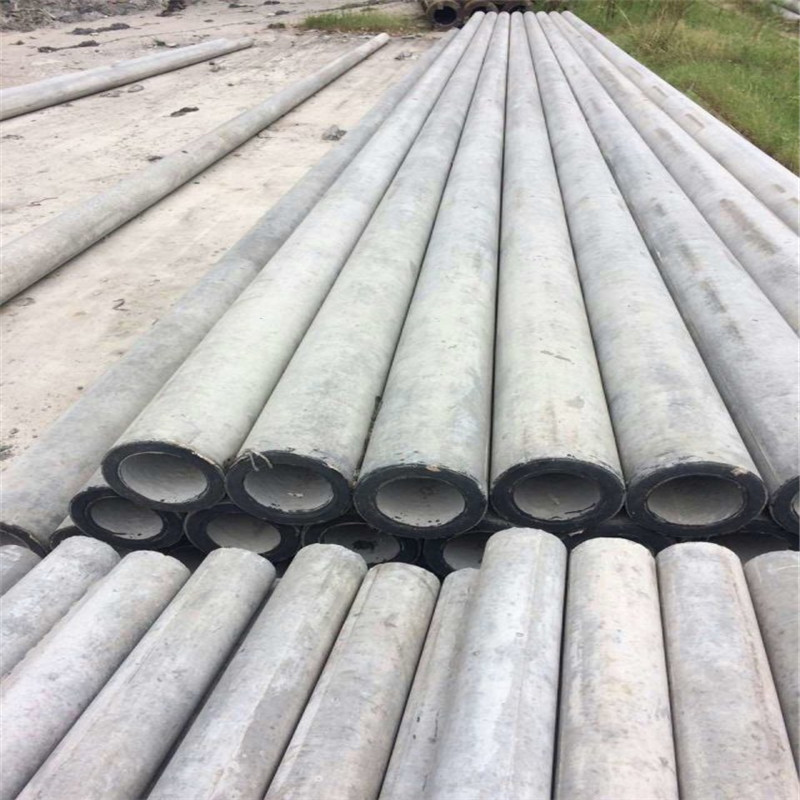
What is truly dangerous is not the concrete, but damage and "bypass paths." Concrete utility poles, exposed outdoors year-round to wind, sun, and thermal expansion and contraction, almost inevitably develop fine cracks on the surface. Patent documents have even specifically designed "self-repairing" structures to address the problem of concrete layer cracking, which shows that cracks are a common working condition for concrete utility poles. When cracks reach the internal rebar and rainwater seeps in, the rebar becomes connected to the humid environment, and the potential on the surface of the pole is no longer a safe zero potential. What deserves more vigilance than the pole body itself are the auxiliary facilities on the pole. The conductors, insulators, hardware fittings installed at the top of utility poles, and the guy wires used to secure the poles are the high-incidence points of electric shock risk in rainy days. Multiple popular science articles from power supply departments and emergency management agencies repeatedly emphasize the same reminder: do not approach the guy wire of utility poles. The upper end of the guy wire is very close to the conductors. In severe weather, if the insulation layer of the conductor is damaged or discharge occurs, the guy wire may become electrified. The guy wire is metal and directly connected to the concrete utility pole. At this time, if you support yourself against the pole or pull the guy wire, danger occurs. There is also an easily confused fact: in many news reports about "utility pole leakage," post-incident investigations found that the pole involved was actually a streetlight pole or traffic signal pole, not a concrete utility pole of the power company. Metal streetlight poles have internal wiring, and the risk of short circuits due to water ingress in rainy days is far higher than that of concrete utility poles. Treating all "poles" as concrete power poles is itself a cognitive bias.
The real safety rules for rainy days: do not touch, do not lean, do not wade. Once the principles are clear, the action recommendations are simple. When passing by concrete utility poles on rainy days, there is no need to panic, but it is worth keeping a distance. This distance is not out of fear of concrete, but out of reverence for "what if": what if a conductor breaks and falls on the pole, what if the guy wire becomes electrified, what if there is a downed wire near you that you cannot see. If you find a wire broken and fallen on the ground or in standing water ahead, remember not to run. The correct approach is to hop away on one leg or with both feet together, at least eight meters away. This action is to avoid "step voltage"—when both feet stand on ground at different potentials, current flows in through one leg and out through the other. The faster you run, the larger your stride, and the more dangerous the voltage difference becomes. As for those intact concrete utility poles, they stand by the roadside day after day, holding up the lights of countless homes. On rainy days they will not suddenly "go bad," but in severe weather, the probability of line faults does indeed increase. So, keeping a little distance and not leaning or relying on them is the most worry-free protection for yourself. Next time you see a concrete utility pole standing quietly in the rain, you will know what to do: there is no need to fear it, but there is also no need to test it.
