



- Publisher:mzadmin
- Published on:2026-10-21
- Pageviews:7480
- Source:
Ultrasonic Testing for Cracks: How to Find Internal Defects in a Concrete Utility Pole
Cracks, voids, and honeycomb-like loose areas inside a concrete utility pole often cannot be seen from the outside. By the time obvious surface cracks appear or the pole begins to tilt, the internal damage has usually developed to a significant degree. Is there a way to "see" what is happening inside without damaging the pole? Ultrasonic testing is a commonly used answer in engineering practice.
Ultrasound refers to sound waves with frequencies above the upper limit of human hearing. A testing instrument sends a beam of ultrasound into the concrete, and the wave travels through the material before being "heard" by a receiving transducer on the other side. Concrete is not a uniform material; it contains aggregate, mortar, and tiny pores. In normal, dense concrete, ultrasound travels through in a relatively stable straight line. Once a crack, void, or loose area appears along the propagation path, the situation changes: the ultrasound is either forced to travel a longer path around the defect, or it is heavily reflected and scattered at an air interface, causing a clear loss of energy. What inspectors look for is exactly this change in the way the wave "walks" through the material. The three most commonly used indicators are acoustic velocity, amplitude, and waveform. When a defect is present, the acoustic velocity usually decreases, the amplitude of the first arrival drops, and the originally clear and regular waveform may become sluggish or distorted. By linking the data from individual test points together, anomalous areas emerge like "depressions" on a map.
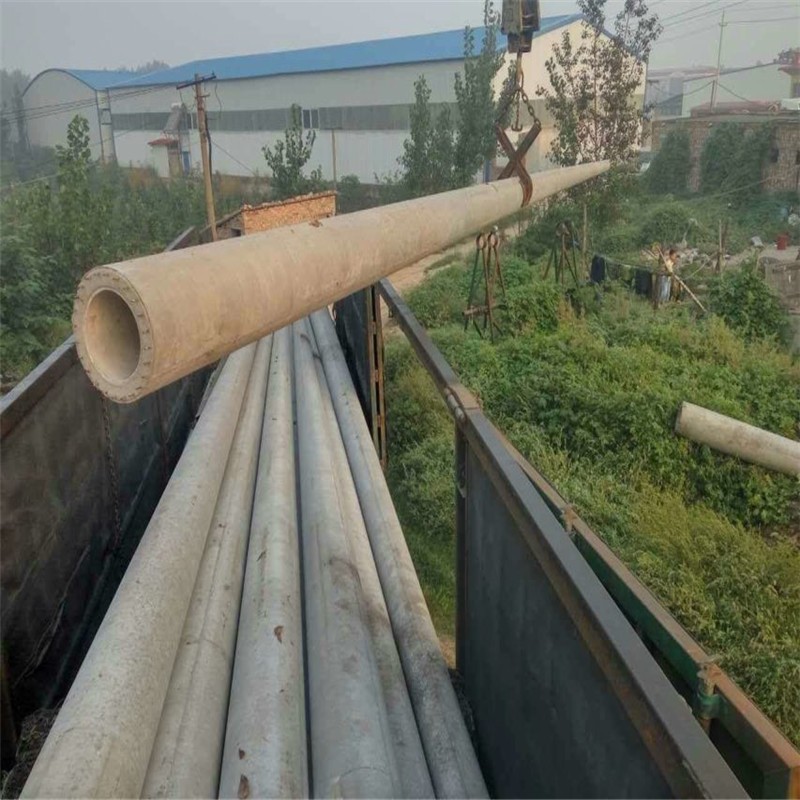
A concrete utility pole has a special shape: it is a hollow annular section, and its surface is often uneven, so testing cannot rely on only one setup. In practice, several practical methods are used depending on how the transducers are arranged. The through-transmission method is suitable when two opposite test surfaces can be found. For example, transmitting and receiving transducers are placed on two opposite sides of the pole so that ultrasound passes directly through the pole wall. Before testing, a grid is usually marked on the pole surface at a certain spacing, and acoustic transit time, amplitude, and frequency are recorded point by point. This method has a clear path and produces intuitive data, but it has certain requirements for the test surface conditions. The oblique transmission method is more flexible. When the two transducers can only be placed on adjacent surfaces, or when a particular suspected crack needs to be targeted, the transmitting and receiving transducers can be placed not in the same straight line, forming an oblique crossing angle. Ultrasound passes obliquely through the pole wall, which is especially useful for judging construction joints, repair interfaces, and crack depth. For an annular member such as a concrete utility pole, oblique transmission can cover areas that are difficult to reach by through-transmission. Another approach is the single-surface flat testing method. When the cross-section is large and through-transmission is not possible, or when only the depth of a shallow crack needs to be estimated, both transmitting and receiving transducers can be placed on the same surface. By changing the distance between the two transducers and observing how acoustic parameters change with distance, the extent of the crack can be inferred.
After obtaining a set of acoustic velocity, amplitude, and waveform data, the judgment is not simply a matter of identifying a defect whenever a number is low. Concrete itself has natural variability; aggregate size, age, and moisture condition all affect acoustic parameters. Therefore, the standard practice is to compare data from the suspected area with data from a normal, dense area on the same pole, looking for sudden changes rather than absolute values. If the acoustic transit time at a certain test point is clearly longer, the amplitude drops sharply, and the waveform loses the crisp first-arrival onset typical of normal concrete, and several indicators point to the same location, then the existence of a defect can be judged with reasonable confidence. For cracks, there is a more direct approach: when ultrasound travels around the crack tip, the path becomes longer and the arrival time is delayed. By measuring changes in acoustic transit time at different test distances, the approximate depth to which the crack has penetrated the pole can be inferred. For voids and honeycombing, reflection and scattering at the defect interface cause a clear reduction in received signal energy, and a drop in amplitude often gives an earlier signal than a change in acoustic velocity.
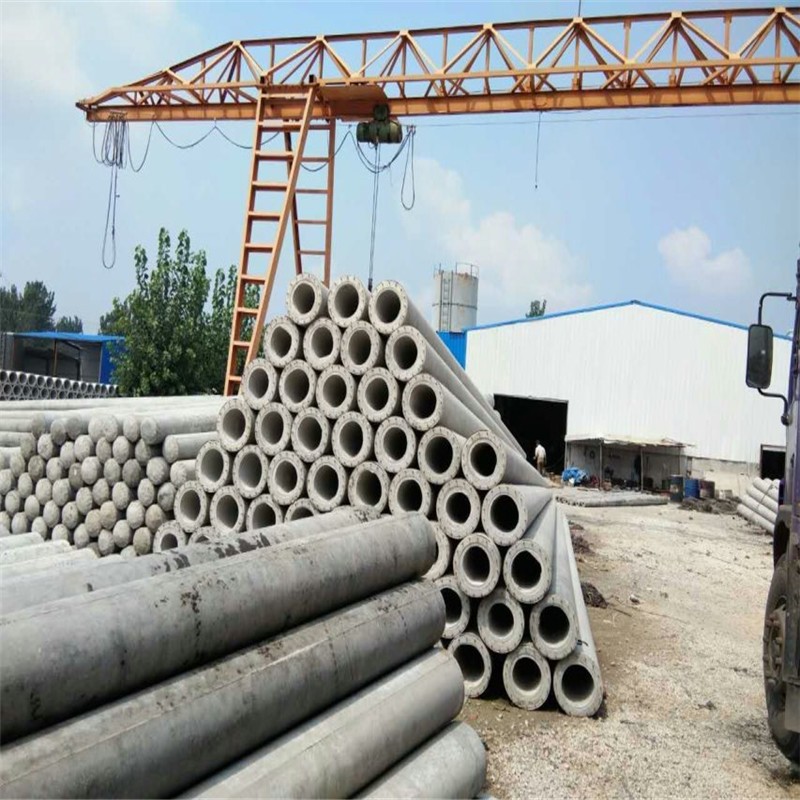
The biggest advantage of ultrasonic testing is that it does not damage the pole. After testing, no repair is needed, and continued use is not affected. The equipment is relatively portable, and on-site operation is straightforward, allowing a rapid judgment of the internal uniformity of a concrete utility pole without major disruption. In the past, inspectors had to record data manually point by point and then compare it indoors. Now, some on-site systems integrate transducers, positioning, and data acquisition, and can directly generate three-dimensional inspection maps on screen, marking anomalous locations inside the pole in a more intuitive way. Deep learning is also being tried to automatically classify large numbers of ultrasonic signals, helping to narrow the range that requires manual interpretation. These changes have not altered the basic logic of ultrasonic testing—listening to the inside by sound—but they have gradually made the process faster and more traceable than work based solely on the experience of veteran technicians.
A concrete utility pole cannot speak, and when something goes wrong inside, it will not cry out in pain. The value of ultrasonic testing is that it gives maintenance personnel a pair of ears that can reach inside the material. Without dismantling or hammering, it first clarifies whether there are voids or breaks that should not be there, and then decides what to do next. For the many concrete utility poles scattered outdoors and quietly carrying loads over long periods, this gentle and effective screening method is itself a practical form of protection.
