



- Publisher:mzadmin
- Published on:2026-09-28
- Pageviews:2746
- Source:
Concrete Pole Selection Guide: G, Y, and BY Types Explained
On concrete utility pole procurement lists, line design drawings, and product nameplates, G, Y, and BY are the three most common codes. They may look like simple letter differences, but behind them are three different reinforcement methods and structural load-bearing logics. For designers, buyers, and construction personnel, understanding these three codes is more important than simply comparing prices.
G Pole: Letting Steel Reinforcement Carry the Load Directly
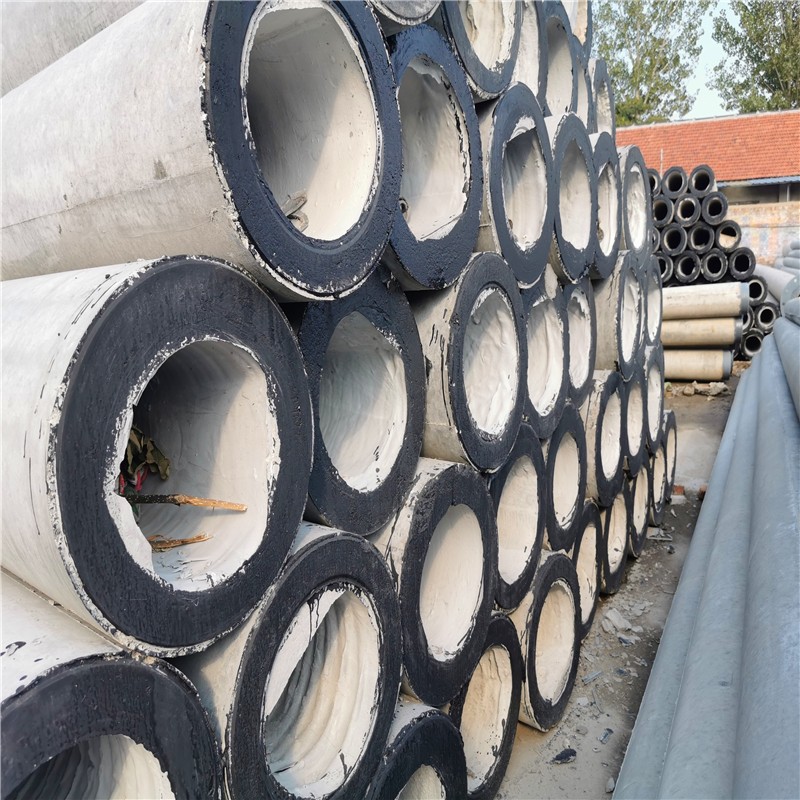
G stands for reinforced concrete utility pole, also called a non-prestressed concrete pole. Its structure is relatively simple: longitudinal ordinary reinforcement plus spiral reinforcement, with concrete cast outside. External loads are mainly borne by the longitudinal ordinary reinforcement, making it an ordinary reinforced concrete member. The biggest advantage of the G pole is good ductility—in plain terms, it bends rather than breaks. When the load exceeds the design value, the ordinary reinforcement yields first, and the pole bends and deforms, but it does not break immediately. This gives operation and maintenance personnel time to discover and replace it. At angle poles, terminal poles, and other positions that bear unbalanced conductor tension, this ductility is very important.
In actual operation, after some lines have been in service for several years, some concrete utility poles develop circumferential or longitudinal cracks. Once cracks form, rain and moisture can easily penetrate to the reinforcement, followed by corrosion, making durability a long-term weakness of G poles. Therefore, G poles are suitable for applications that require high ductility and allow regular inspection, but in corrosive environments, additional anti-corrosion measures or other protection are needed.
Y Pole: Pre-compressing the Concrete Before It Is Put into Service
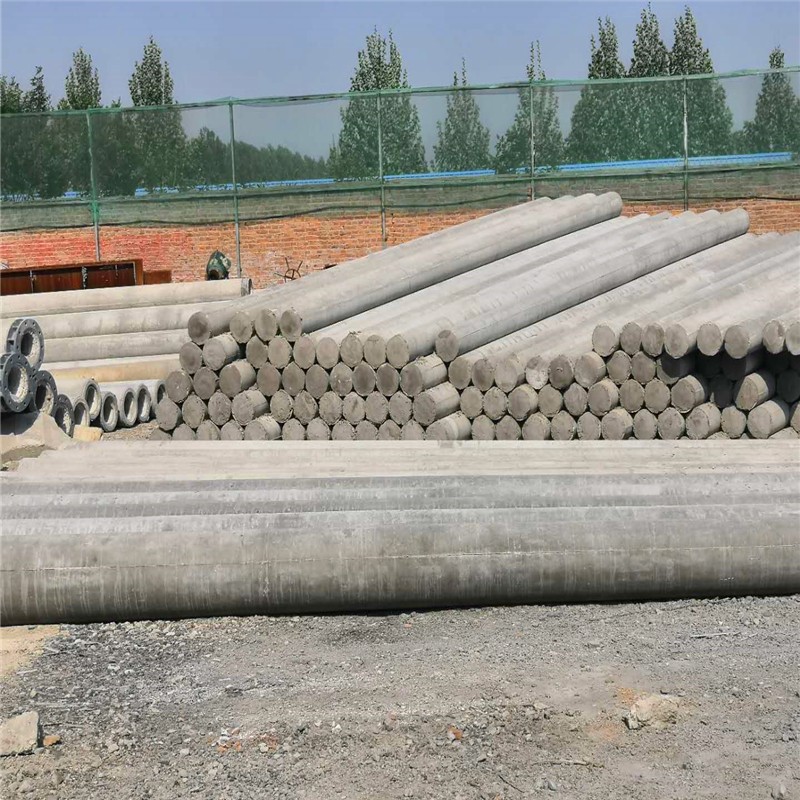
Y stands for prestressed concrete utility pole. During manufacturing, high-strength steel wires or strands are first stretched to the design tension, then concrete is poured and centrifugally formed. After steam curing reaches the specified strength, the reinforcement anchoring heads are cut. When the reinforcement retracts, it applies a pre-compressive stress to the concrete. When the concrete utility pole bears wind load, conductor tension, or ice load, this pre-compressive stress can offset part of the tensile stress, thereby improving crack resistance. Compared with G poles, Y poles can save steel, are lighter, and can be made with thinner walls, making transportation and installation relatively convenient. In tangent poles, the bending moment caused by conductor self-weight and wind load is relatively small, so the high crack resistance and lightweight advantages of Y poles are easy to realize. They are therefore often used in 10 kV and below distribution lines, especially in sections with smaller conductor diameters and shorter spans.
However, the weaknesses of Y poles are equally clear. Limited by pole wall thickness and concrete strength grade, the amount of prestressing reinforcement is limited, and the load-bearing capacity is relatively low. In some standard product specifications, the maximum load grade of prestressed concrete utility poles is limited, and they are generally not suitable for large-bending-moment load-bearing poles. More critically, there is the risk of brittle fracture. When encountering external forces far exceeding the design value, such as strong winds, collisions, or broken-conductor impact, the prestressing reinforcement may suddenly snap, and the pole may break with almost no obvious warning. In addition, the tensioning end of a prestressed concrete utility pole is a weak point for corrosion protection. Near saline-alkali land, coastal areas, or chemical parks, chloride ions pose a major corrosion threat to the reinforcement, and durability may be lower than that of non-prestressed concrete utility poles.
BY Pole: Letting Two Types of Reinforcement Do Their Own Jobs
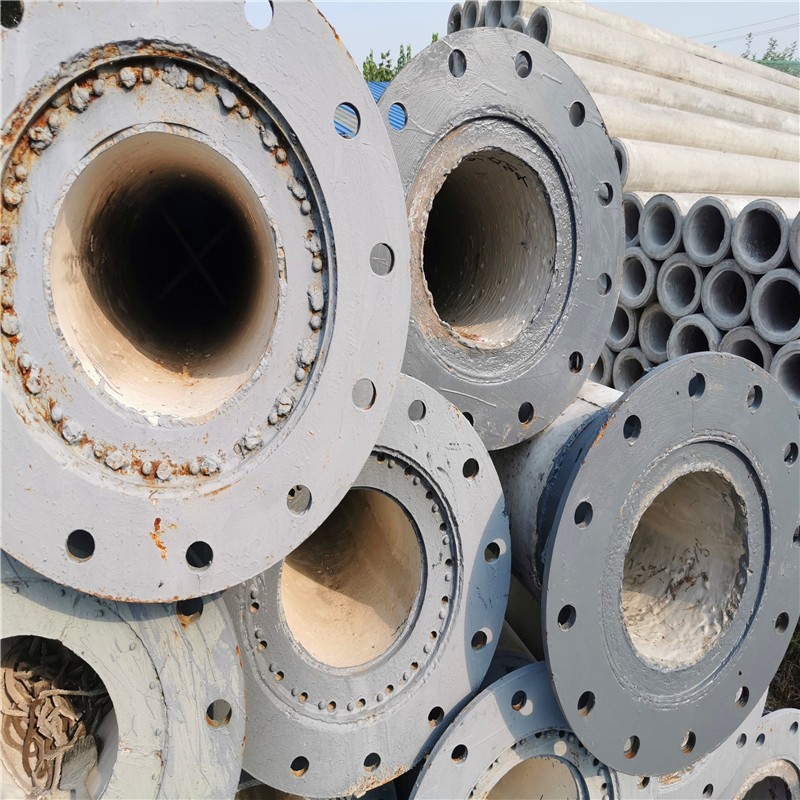
BY stands for partially prestressed concrete utility pole. Its longitudinal main reinforcement consists of two parts: prestressing reinforcement is responsible for crack resistance, while non-prestressed reinforcement is responsible for load bearing and providing ductility. From the top to the bottom of the pole, the reinforcement ratio can be increased section by section, so that the cross-sectional area, reinforcement ratio, and load-bearing capacity match the bending moment generated by external forces, achieving reinforcement as required. The performance of BY poles sits between G poles and Y poles. Compared with a structure in which prestressing reinforcement is arranged over the entire length, BY poles can save a certain amount of steel. They retain the crack resistance advantages brought by prestressing reinforcement while improving the failure mode through non-prestressed reinforcement, avoiding the brittle fracture risk of pure prestressed poles.
The true value of BY poles is best demonstrated in high-voltage lines. 10 kV non-guyed angle poles, terminal poles, and 35 kV to 330 kV transmission lines often need to meet both high crack resistance and high load-bearing requirements at the same time. Pure prestressed poles do not have enough load-bearing capacity, while pure non-prestressed poles are relatively weak in crack control. The hybrid reinforcement of BY poles precisely fills this gap. In recent years, standards and products for large-bending-moment partially prestressed concrete utility poles for high-voltage transmission lines have continued to emerge, confirming this trend. For areas with large spans, large conductor cross-sections, heavy ice coating, or strong winds, BY poles are often a more balanced choice.
Selection: Consider Both Loads and Environment
If only one selection principle is to be remembered, it can be summarized as follows: for tangent poles, give priority to Y poles; for load-bearing poles such as angle poles, terminal poles, and tension poles, give priority to BY poles or G poles. Tangent poles bear small bending moments, so the high crack resistance and lightweight advantages of Y poles can be fully utilized. Load-bearing poles bear unbalanced conductor tension, with large bending moments and complex directions, requiring the hybrid reinforcement of BY poles or the ductility of G poles.
Environmental factors must not be ignored either. Near coastal areas, saline-alkali land, and chemical parks, chloride ions pose a major corrosion threat to the tensioning end of prestressing reinforcement, so G poles or BY poles with special anti-corrosion treatment are more reliable. In windy and ice-coated areas, priority should be given to Y poles or BY poles with good crack resistance to avoid cracks accelerating under freeze-thaw cycles. In areas with large temperature differences and alternating wet and dry conditions, attention should also be paid to concrete cover thickness and crack control grade. The essence of concrete utility pole selection is not comparing whose strength is higher, but matching the failure mode of the pole with the operation and maintenance capability of the line. G poles have good ductility, Y poles have strong crack resistance, and BY poles balance both. Understanding the reinforcement logic behind G, Y, and BY allows for more informed judgments on drawings and procurement lists, and helps find a more suitable balance among cost, durability, and safety.
