

- Publisher:mzadmin
- Published on:2026-09-19
- Pageviews:1791
- Source:
Correct Welding Methods for Concrete Utility Poles
Due to transportation constraints, concrete utility poles often need to be shipped to the site in segments and then welded together. Welding quality directly affects line safety; once a steel ring joint fails, the entire pole may become ineffective. The correct welding method centers on four key steps: alignment, tack welding, symmetrical welding, and inspection plus anti-corrosion protection. Welding should be performed by certified welders, and after completion, the welder's steel stamp should be marked on the specified part for quality traceability. Flammable materials within 5 meters of the site must be cleared. The distance between oxygen cylinders and acetylene cylinders must be greater than 5 meters, and oxygen cylinders must be no less than 10 meters from open flames. These safety bottom lines must not be relaxed due to schedule pressure.
Preparation before welding is often overlooked but is very critical. First, place the two pole sections on level and solid supports, and use a spirit level to align them, ensuring the pole body is straight and the steel ring grooves are aligned, with a 2 to 5 mm welding gap left in the middle. The misalignment of the steel rings must not exceed 2 mm; if it does, the weld will bear force eccentrically. Rust, oil stains, cement slurry, and moisture near the weld must be cleaned thoroughly with a wire brush and emery cloth; otherwise, slag inclusion and porosity are likely to occur. If both ends of the pole have already been sealed, a vent hole must first be chiseled at one end to prevent internal gas expansion during welding heat from causing an accident.
After alignment, do not rush into full welding. First perform tack welding for positioning. Tack weld evenly at three to four points around the circumference of the steel ring, each about 10 mm long, and the electrode grade must be the same as that used for formal welding. Tack welding is used to fix the weld gap and prevent the pole body from bending due to thermal expansion and contraction during subsequent welding. When the steel ring thickness is greater than 6 mm, a V-groove multi-layer weld should be used to ensure penetration. During formal welding, symmetrical cross welding is the most important principle. Do not weld continuously from one point to the end; instead, weld in segments along the circumference and symmetrically, and after finishing one segment, turn to the opposite side and continue. In this way, heat is distributed evenly and welding deformation can be reduced. For multi-layer welding, the starting points of each layer should be staggered, and the slag between layers must be cleaned thoroughly before welding the next layer. When closing the weld, fill the molten pool completely to avoid crater cracks. The weld appearance should be smooth and fine-scaled, without cracks, lack of fusion, undercut, or other defects.
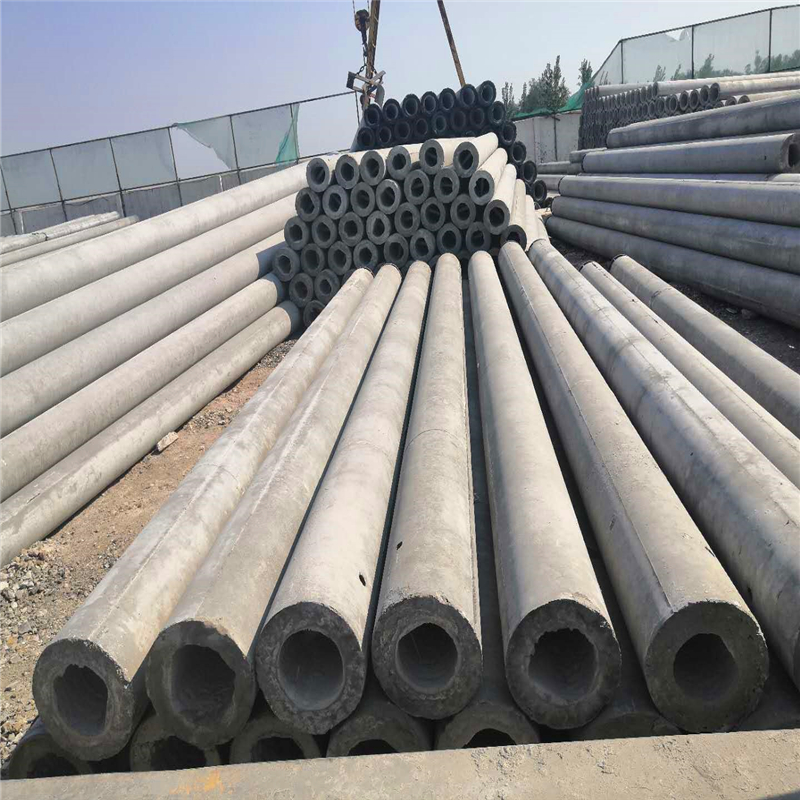
Finishing the weld does not mean the work is done. After the weld cools, check the straightness of the entire pole. When measured on a flat surface, the bending of both the segment and the entire pole should not exceed 2/1000 of the corresponding length. If it exceeds the limit, it must be cut off, straightened, and rewelded. Slag, rust, and oxide layers on the weld surface must be cleaned thoroughly, and anti-rust paint should be applied according to the design. This step is most easily omitted, but without anti-corrosion treatment, the steel ring will soon corrode and become the weakest link of the entire pole.
