

- Publisher:mzadmin
- Published on:2026-09-19
- Pageviews:9488
- Source:
Why are concrete utility pole segments only made in standard lengths of 6 meters and 9 meters?
Many people notice that for concrete utility poles with longer pole lengths, the segment lengths are mostly 6 meters or 9 meters. This is not a random choice, but rather an engineering optimum under the joint constraints of transportation, manufacturing, and structural forces. The 6-meter and 9-meter lengths balance construction convenience, keeping the weight of a single segment within the operable range of a crane or manual gin pole. On site, they are connected with flange bolts or welding, without the need for large lifting equipment, reducing the risk of high-altitude work.
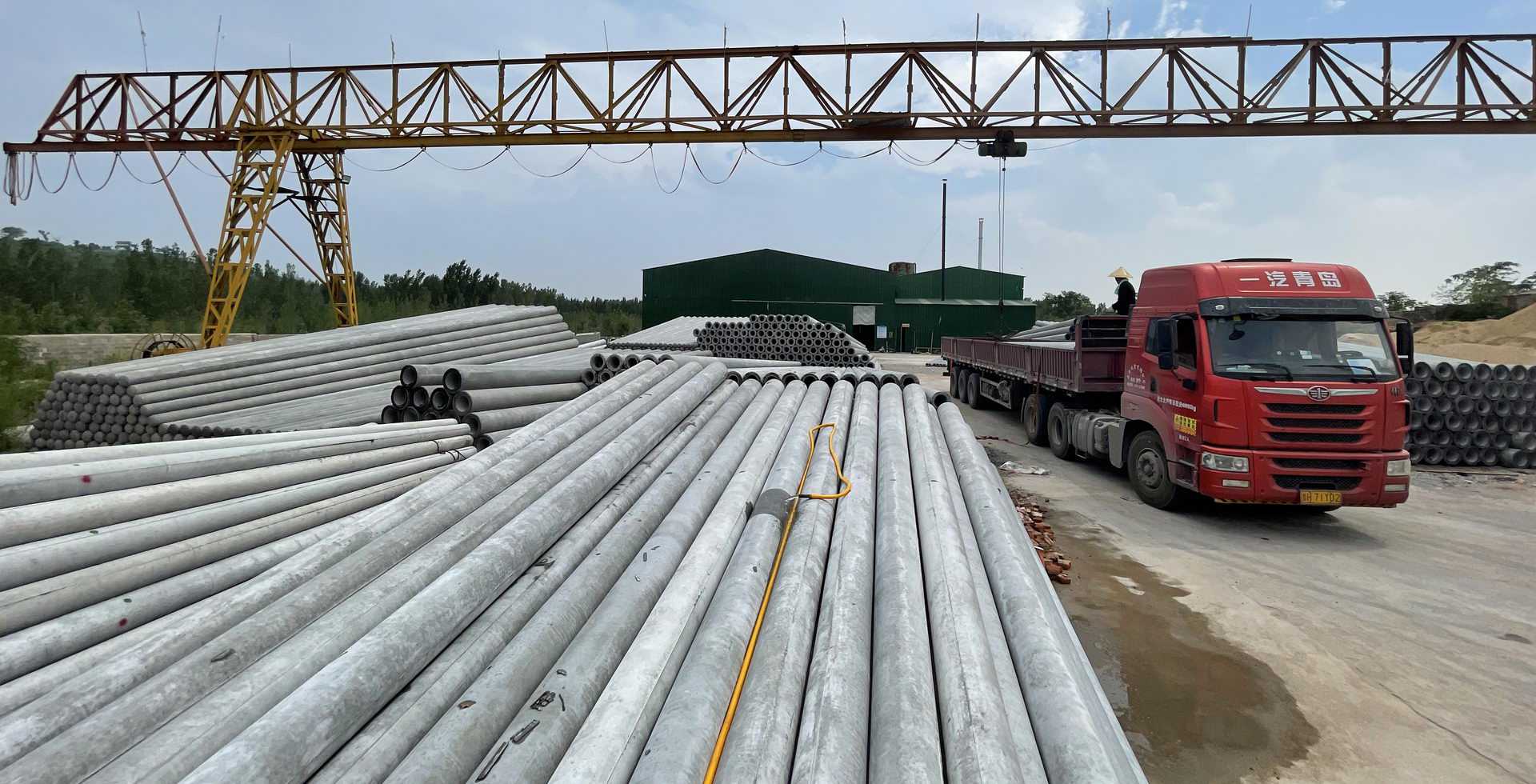
The first constraint is transportation. Concrete utility poles are long and heavy, and transportation depends on ordinary trucks or flatbed trailers. If a pole segment is too long, turning, loading, and road permits all become problems. Regulations require that when a pole segment exceeds 6 meters, support frames must be used, and the center of gravity must be kept at the center of the vehicle bed, with overhang beyond the front and rear baffles not exceeding 2 meters. Segments of 9 meters or less are supported at two points, while those over 9 meters are supported at three points. If a single segment were made even longer, ordinary vehicles could not carry it in compliance, and special equipment would be required, greatly increasing costs. The 6-meter and 9-meter lengths are precisely the balance achieved between what ordinary vehicles can transport and minimizing the number of segments.
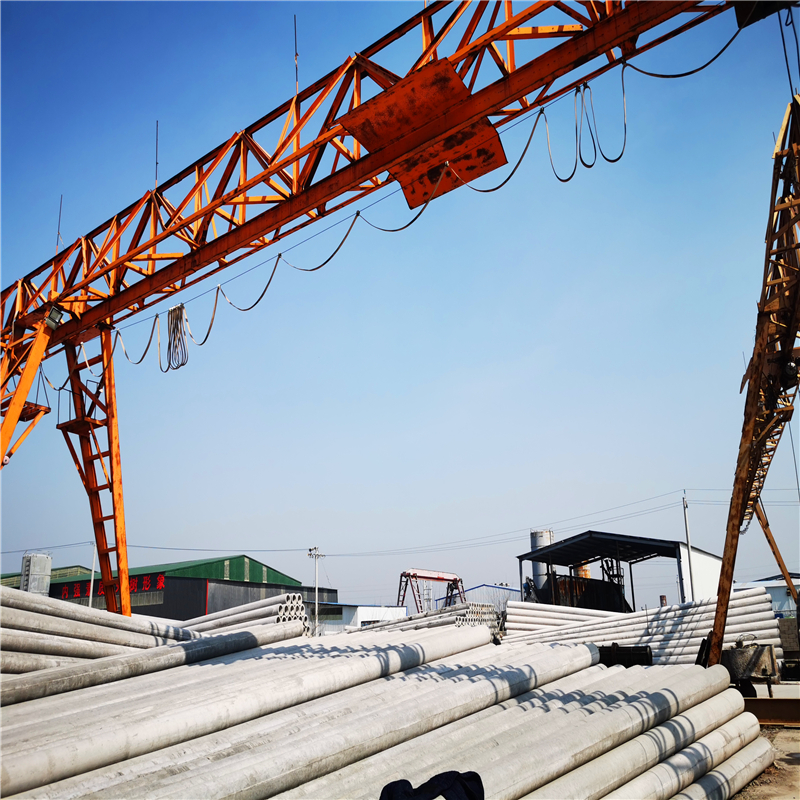
The second factor is the standardization of manufacturing molds. Concrete utility poles are produced by centrifugal casting, which requires steel molds, and the length of the steel mold directly determines how long a pole segment can be produced. In the early days, equal-diameter poles used three specifications: 4.5 meters, 6 meters, and 9 meters. Later, 6 meters and 9 meters became the main segment lengths. Tapered poles have a large cross-section at the base, and their segmentation is limited by molds and joints, so they are not interchangeable top-to-bottom like equal-diameter poles. Using 6-meter and 9-meter segments in combination can produce common pole heights such as 15 meters, 18 meters, and 21 meters, without the need to open a separate mold for each height. This approach of fewer specifications and more combinations greatly reduces mold costs and inventory pressure.
From the perspective of structural forces, the joint position is critical. During operation, concrete utility poles mainly bear bending moments caused by wind loads and conductor tension, which are greatest at the base and gradually decrease upward. The joint is a weak link, and its flexural stiffness differs from that of the integral pole body. Failure often begins with concrete cracking in tension at the joint area. Therefore, the joint must avoid the section with the maximum bending moment. The center of gravity of a tapered pole is approximately at 0.44 times the pole length from the base, and the peak bending moment usually occurs near the ground or near the guy-wire attachment point. Placing joints at 6-meter or 9-meter positions puts them exactly in sections with relatively small bending moments, while also avoiding joints located exactly at the ground or within the burial depth, reducing the risk of corrosion.
