



- Publisher:mzadmin
- Published on:2026-09-15
- Pageviews:8116
- Source:
Technical Requirements for the Installation of the Three Plates of Concrete Utility Poles
In power line engineering, the stability of a concrete utility pole depends not only on the strength of the pole body itself, but also on the scientific setup of its underground foundation. For poles that cannot be deeply buried or that are located in soft soil areas, corners, or terminal sections, it is usually necessary to rely on the "three plates" ?? the base plate, the clamp plate, and the anchor plate ?? to build a reliable foundation system. Each of the three plates serves a distinct function, working together to ensure the stable operation of the concrete utility pole under various working conditions. The base plate is placed at the bottom of the pole pit, directly bearing the vertical downward pressure transmitted by the pole and preventing the pole from sinking due to soft soil. The clamp plate is fixed to the buried section of the pole by means of a U-shaped hoop. Its role is to resist lateral overturning forces and prevent the pole from tilting or falling over. The anchor plate is buried underground and used in conjunction with guy wires to balance the unbalanced tension exerted on the pole by the conductors. It is indispensable especially at line corners, terminals, and tension poles.
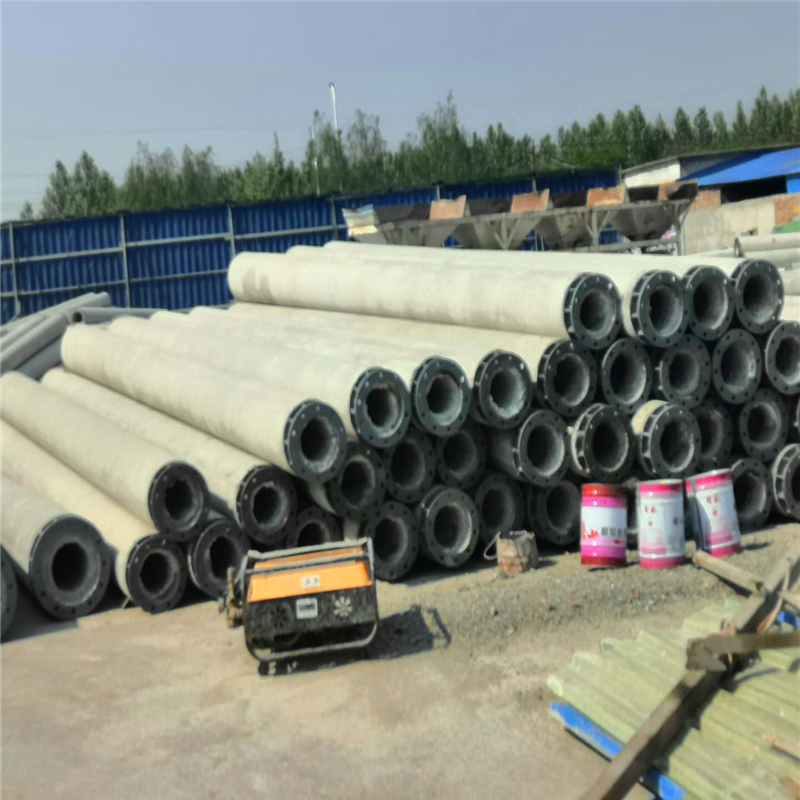
The installation of the three plates is subject to strict technical standards, and any deviation may affect the long-term safety of the line. The base plate must be installed after the foundation pit has passed inspection. Its circular groove surface should remain perpendicular to the axis of the concrete utility pole, and after alignment, soil must be backfilled and compacted up to the surface of the base plate. The installation direction of the clamp plate must be consistent with the design drawings. For straight-line poles, the clamp plate should be parallel to the line and alternately buried on both sides of the pole, while for corner poles, the clamp plate should be installed on the stress side. Its burial depth, measured from the upper edge to the ground surface, is generally not less than 500 mm, with an allowable deviation of plus or minus 50 mm. The burial direction of the anchor plate directly affects the force performance of the guy wire. The left and right deviation along the guy wire direction should not exceed one percent of the horizontal distance from the center of the anchor plate to the center of the pole. The forward and backward displacement should ensure that the difference between the angle of the guy wire to the ground and the design value does not exceed 1 degree. Backfilling and compaction are also key steps in the installation of the three plates. The backfill below the clamp plate must be compacted in layers to ensure that the clamp plate is in close contact with the soil and that its curved surface tightly embraces the pole. The backfill of the anchor pit should be compacted once every 300 mm, and a settlement-prevention soil platform should be built above the ground surface to compensate for the natural settlement of the soil in the later period.
