



- Publisher:mzadmin
- Published on:2026-09-08
- Pageviews:3646
- Source:
The Necessity and Implementation Essentials of Quarterly Maintenance for Concrete Poles
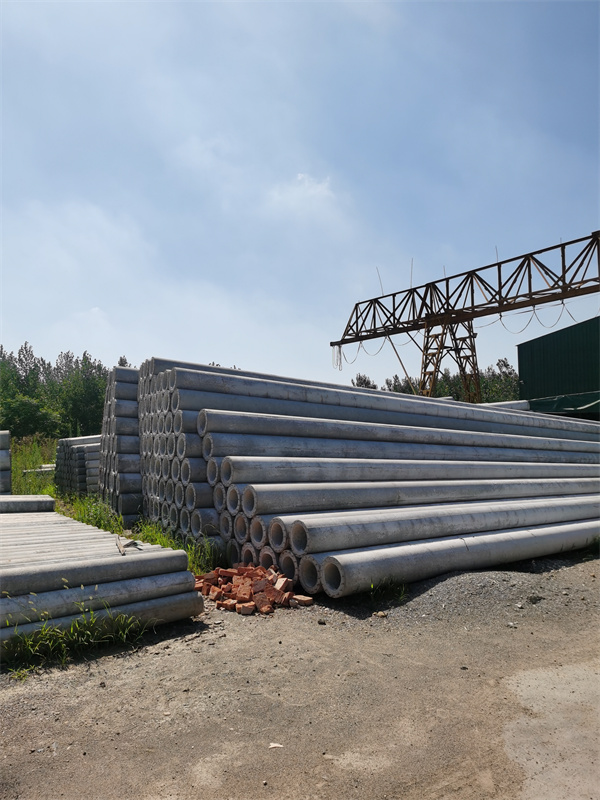
In the operation and maintenance system of power infrastructure, concrete poles are often regarded as durable assets that are "invested once and serve for long." Admittedly, their design service life can reach decades, but this timeline is not without challenges??wind and rain erosion, freeze-thaw cycles, foundation changes, and external impacts all silently degrade the health of the poles over time. For this reason, regular maintenance is not merely an added bonus but a rigid requirement for ensuring the safe operation of transmission lines. Based on material degradation patterns and engineering practice experience, we clearly recommend that concrete poles undergo systematic maintenance inspections once every quarter.
I. Why "Quarterly"?
The determination of maintenance intervals must align with natural rhythms and the rate of damage accumulation. Throughout the year, poles experience four distinctly different stress environments: spring thaw, summer floods, autumn dryness, and winter freeze:
Spring: Frozen soil thaws, foundation bearing capacity changes, and the pole base may experience uneven settlement;
Summer: Alternating high temperatures and heavy rainfall intensify concrete expansion and contraction, with the highest risk of rainwater penetrating along fine cracks;
Autumn: Increasing temperature differentials lead to frequent surface condensation, and prolonged wet conditions accelerate carbonation;
Winter: Subzero temperatures cause intruding moisture to freeze and expand, exerting frost heave pressure on internal pores.
If the maintenance interval exceeds one quarter, seasonal-specific damage may accumulate to an irreversible stage. For example, slight settlement in spring, if not detected in time, may evolve into pole tilting after summer rainstorms; hairline cracks on the surface in autumn, if left until winter, may expand into penetrating cracks due to frost heave. The quarterly frequency coincides precisely with the "incubation period" of natural damage, ensuring that problems are caught at their inception rather than at their final stage.
II. Core Content of Quarterly Maintenance
Professional quarterly maintenance is not a cursory walk-through but a systematic diagnosis encompassing four dimensions: surface ?C internal ?C foundation ?C environment.
Surface Crack and Damage Inspection
Maintenance personnel should conduct visual and tactile inspections from the bottom to the top of the pole, with special attention to the root section within 1.5 meters above ground??this is the area most severely affected by stress concentration and moisture erosion. For cracks exceeding 0.2 mm in width, a crack gauge should be used to record their orientation and depth, and to assess whether they have reached the steel reinforcement protective layer.
Reinforcement Cover and Carbonation Depth Testing
Use phenolphthalein reagent to test carbonation depth on a fresh cross-section of the pole. If the carbonation front has approached or exceeded the thickness of the reinforcement cover, the risk of steel corrosion rises sharply, and anti-carbonation sealing coatings should be applied promptly.
Pole Base Foundation and Surrounding Soil Inspection
Check for voids, settlement, or scour grooves at the junction between the pole base and the ground. Particularly for pole locations near farmland or riverbanks, the compactness of backfill soil may significantly decrease after the rainy season, requiring timely refilling and compaction.
Prestress State and Inclination Measurement
Use a theodolite or inclinometer to measure the verticality deviation of the pole. The allowable inclination is generally no more than 3?? of the pole height per specifications. If the limit is exceeded, it is necessary to assess whether it is caused by prestress loss or uneven settlement, and to formulate a corrective plan.
III. Maintenance as Safety, Prevention as Benefit
From a full life-cycle cost perspective, a timely quarterly inspection costs far less than the comprehensive expenses of premature pole replacement??not to mention the power outage losses and social impacts caused by pole collapse or line breakage. Maintenance is not a cost expenditure, but an asset value preservation. As a professional concrete pole manufacturer, we not only deliver qualified products but are also committed to promoting scientific maintenance concepts and supporting services to our customers. We recommend that every operation and maintenance unit establish quarterly maintenance records, comparing and archiving data from each inspection to create a unique "health file" for each pole, thus enabling a transition from reactive emergency repairs to proactive prevention.
One pole, four seasons of care. Preventing problems before they arise is the path to long-term reliability.
