



- Publisher:mzadmin
- Published on:2026-09-02
- Pageviews:2393
- Source:
How long is the service life of cement poles
The service life of cement poles has always been the most concerned issue for users and maintenance units. In daily consultations, we are often asked, "How many years can a cement pole last?" The answer is not a simple fixed number, but depends on the comprehensive effect of multiple factors such as design standards, production quality, usage environment, and later maintenance.
From a design theory perspective, circular concrete poles produced according to national standards typically have a design service life of thirty years. The benchmark value for these thirty years is the theoretical calculated lifespan under standard maintenance conditions, subjected to specified load combinations, and in a normal atmospheric environment. However, there are often differences between theoretical values and actual service life. Many electric poles erected in the 1970s and 1980s are still in safe operation today, and their actual service life has far exceeded thirty years. In some areas with harsh environments, electric poles may show significant deterioration after more than ten years. From this, it can be seen that the key to determining the true lifespan of electric poles lies in the internal quality of the production process and the external influence of the service environment.
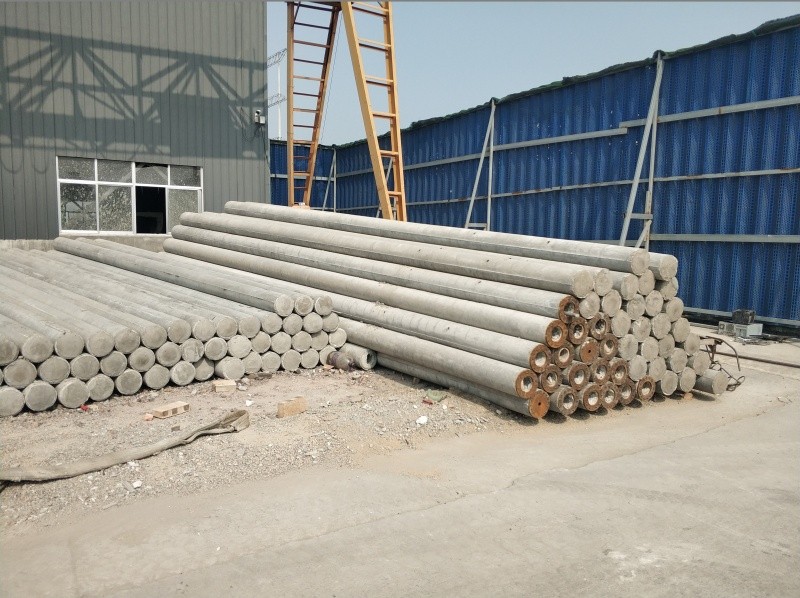
Production quality is the most fundamental guarantee. High quality cement electric poles first rely on strict control of raw materials, using high-grade Portland cement, well graded aggregates, and high ductility prestressed steel bars to endow the pole with excellent density and crack resistance from the source. In the process, the use of centrifugal molding technology can fully compact the concrete during high-speed rotation, significantly reduce pores, and effectively resist the infiltration of moisture and corrosive media. More importantly, the prestressing tension control technology applies precise prestressing stress to the steel bars, ensuring that the concrete of the electric pole is always in a compressed or slightly tensioned state under working conditions. Even if there are slight cracks on the surface, they can automatically close under stress. This "self-healing" characteristic is the core of the durability of prestressed electric poles, which is much better than that of ordinary electric poles.
The impact of usage environment on the lifespan of electric poles cannot be ignored. In dry and rainless areas in the north, the durability performance of electric poles is generally better than that in high humidity and acid rain prone areas in the south. The high concentration of chloride ions in the coastal mudflat will gradually penetrate into the concrete protective layer, causing corrosion and expansion of the reinforcement, and eventually leading to the cracking of the reinforcement, which is the main chemical damage factor for shortening the service life of the poles. In terms of physical environment, differential settlement in soft soil areas and landslide lateral displacement in mountainous road sections can cause additional stress on electric poles beyond the design value. Even if the pole remains intact under long-term action, it may be scrapped prematurely due to foundation instability.
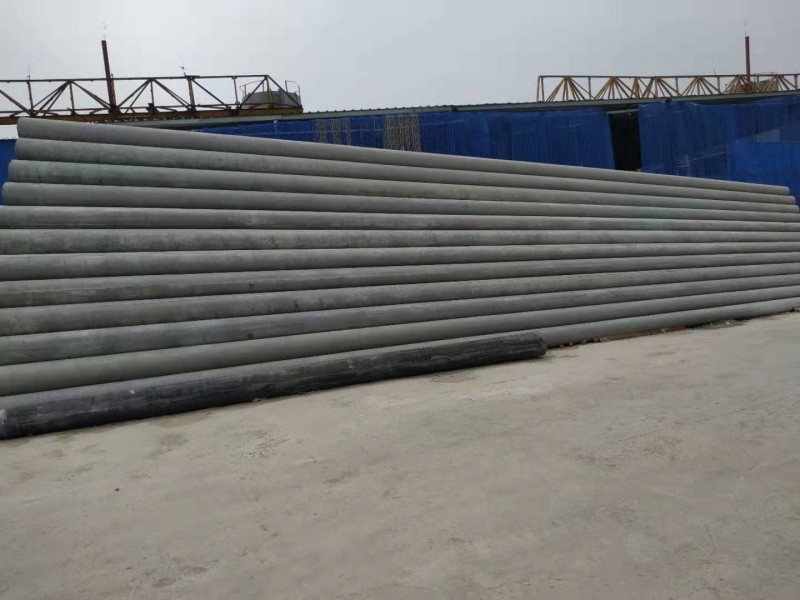
Scientific maintenance and management are effective means to extend the lifespan of electric poles. During regular inspections, the focus is on checking for circumferential cracks at the root, exposed and corroded prestressed steel bars, and obvious bending deformation of the rod body. For shallow cracks found below a height of three meters, polymer repair mortar can be used for sealing treatment to block the path of water infiltration. For poles that tilt beyond the allowable deviation, they should be corrected and straightened in a timely manner, and the foundation should be compacted or reinforced to avoid fatigue damage to the pole body caused by long-term unbalanced loading. Practice has proven that for poles of the same quality level, their service life can be extended by more than 50% when well maintained compared to poorly managed ones.
