


- Publisher:admin
- Published on:2026-08-28
- Pageviews:4359
- Source:
Across the vast plains and along winding mountain roads, rows of silently standing cement poles are the humblest guardians of modern society. Day after day, they bear the surging current of electricity, supporting countless households. Yet few know that the intrinsic quality of these seemingly hard concrete giants often depends on those "invisible details" in the production process??among which, the scientific use of admixtures is the key to endowing poles with soul and backbone.
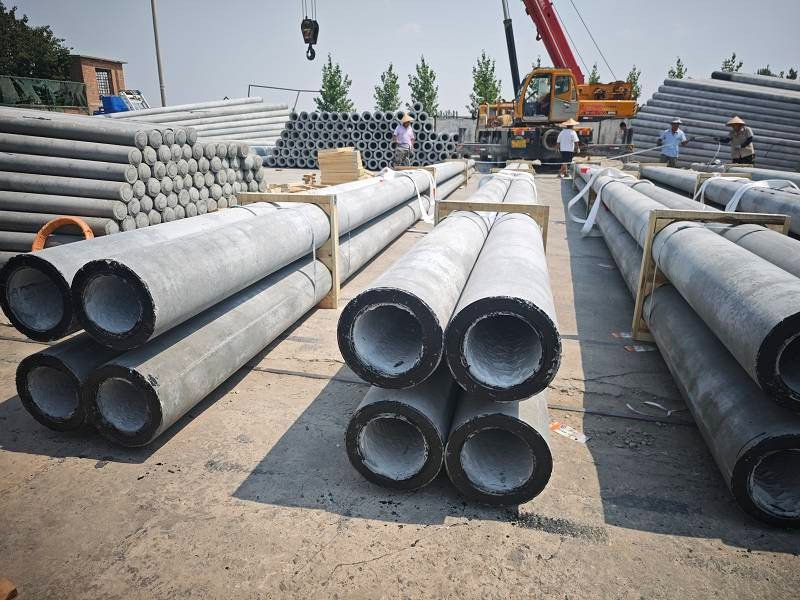
If cement is compared to the "skeleton" of a pole, then admixtures are the "prescription" that regulates bone growth and strengthens the physique. They not only determine whether a pole can stand firm under extreme weather but also decide its service life spanning decades. Today, we will unveil the mysteries of admixture application in cement pole production from a professional perspective.
The Way of Seasons: Tailoring to Weather and Time
Cement products are highly sensitive to temperature, just as humans need to adapt their health regimens to the four seasons, so must pole production adapt to seasonal conditions. In severe winter, low temperatures are the primary enemy of concrete setting. If curing is improper, the unset moisture freezes internally; when spring thaw arrives, the pores left by melted ice crystals will cause crushing corrosion of the pole's internal structure. Though appearing intact externally, it suffers from "osteoporosis" internally, harboring endless hazards. At this time, antifreeze agents become the "guardian" of production. They lower the freezing point of the liquid phase within the concrete, ensuring that cement hydration continues under low temperatures. Meanwhile, to accelerate formwork turnover and improve production efficiency, early-strength agents come into play. Added at 2%?C3.5% of the cement weight, they significantly enhance the early strength of concrete, allowing poles to quickly "build muscle and bone" in the cold. In contrast, summer construction does not require antifreeze, but high temperatures accelerate slump loss, affecting the compaction of centrifugal forming. Here, retarders or water-reducers with slump-retaining functions prove invaluable. They extend the workable time of concrete, ensuring good workability during material placement and centrifugal spinning, thus avoiding surface defects like honeycombing and pitting.
Precise Measurement: The Art of Precision Within Minutiae
The use of admixtures is by no means "the more, the better"; it demands precise dosage and rigorous processes. Taking commonly used high-range water-reducers (such as naphthalene-based and polycarboxylate-based) as an example, the dosage typically ranges from 0.2% to 0.6% of the cementitious material. Despite the tiny amount, they leverage surface-active effects to break the "flocculated" structure of cement particles in water, releasing trapped free water, thereby significantly improving concrete fluidity and compactness without increasing water content. For centrifugally formed poles, an appropriate slump (typically maintained at 30?C50mm) is a prerequisite for a smooth inner wall free of sand lines and voids. For accelerators and early-strength agents, the dosage must be strictly optimized through testing. Taking accelerators as an example, the generally recommended dosage is 4%?C8% of the cement weight, but it must be understood: the higher the dosage, the greater the sacrifice in later-age concrete strength. Therefore, manufacturers must determine the optimal dosage through trials based on cement type and ambient temperature, striking a perfect balance between setting speed and final strength.
Synergistic Effects: The Scientific Compounding for Quality Enhancement
Modern pole production is no longer limited to single-admixture use. Through composite admixture technology, we can achieve "1+1>2" effects. For instance, research and practice show that combining high-range water-reducers with early-strength agents not only eliminates some steam-curing steps and reduces energy consumption but also significantly enhances concrete's impermeability, freeze-thaw resistance, and erosion resistance while maintaining later-age strength. Moreover, the introduction of composite mineral admixtures (such as ultra-fine microbead fly ash and ground slag), replacing an equivalent portion of cement, can even increase the pole's flexural strength and durability, effectively reducing concrete brittleness and endowing poles with greater toughness against violent storms.
Conclusion
Though cement poles are ordinary objects, they must endure wind, rain, and the vicissitudes of time, bearing the joys and sorrows of countless households. From raw materials in the workshop to sturdy backbones in the field, the precise use of admixtures is the most critical technological magic. As a professional pole manufacturer, we fully understand that every pole leaving our factory concerns safety and responsibility. We always adhere to scientific proportioning and rigorous testing, wielding the "magic wand" of admixtures to write a guarantee of safe and reliable power transmission for you. Choosing us means choosing solid quality underpinned by technology.
