



- Publisher:admin
- Published on:2026-08-28
- Pageviews:5068
- Source:
Across the vast expanses of oil field wilderness, transmission lines function like the body's main arteries, delivering an unending flow of power to continuously operating pumping units. Supporting these energy arteries are rows of silently standing high-strength concrete utility poles. They must not only withstand windblown sand and scorching heat but also bear the ultimate demands that oilfield power grids place on safety and efficiency??making them an indispensable component of modern oilfield surface engineering construction.
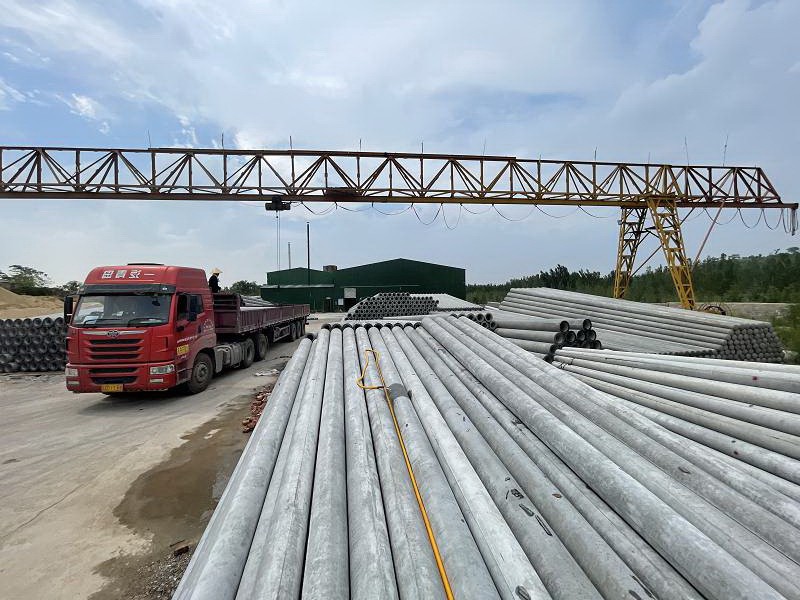
Technological Evolution: From "Guyed" to "High-Bending-Moment"
In traditional oilfield distribution lines, corner poles and terminal poles often relied on guy wires to maintain balance. The guy wires, poles, and ground formed a triangular structure that, while stable, brought numerous complications. In practice at the Huabei Oilfield, guy wires severely interfered with mechanized agricultural operations and even once caused project delays due to land occupation issues.
The emergence of high-strength, high-bending-moment concrete poles fundamentally changed this situation. By optimizing the steel reinforcement skeleton design and centrifugal forming technology, these poles possess significantly enhanced flexural capacity, enabling them to function as guy-less single poles that independently bear the turning and terminal forces of transmission lines. This technological breakthrough not only filled the gap in guy-less single-pole line construction within the Huabei Oilfield power grid but also allowed these poles to be deployed smoothly in complex environments such as farmlands and roadways, eliminating interference with surrounding areas.
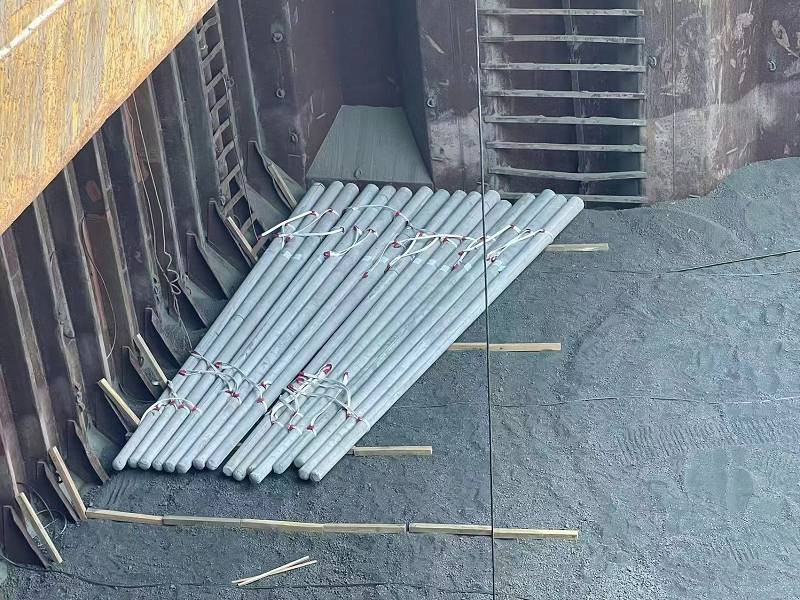
Economic Accounting: Tangible Cost Reduction and Efficiency Improvement
In the oilfield sector, where input-output ratios are meticulously calculated, the economic advantages of high-strength concrete poles are particularly pronounced. Compared with steel tubular poles of equivalent specifications, the procurement cost of high-strength concrete poles is only about 39% of the former. This is an extraordinarily compelling figure??meaning that in oilfield transmission line projects stretching dozens of kilometers, pole procurement alone can save more than half of the investment.
Even greater value lies in long-term operation and maintenance. The anti-corrosion coatings on steel tubular poles and lattice towers are easily damaged during transport and installation, requiring frequent maintenance under atmospheric and saline-alkali soil corrosion, while internal wall anti-corrosion remains a persistent industry challenge. In contrast, high-strength concrete poles, leveraging the inherent advantages of their concrete structure, are virtually immune to atmospheric corrosion, truly achieving "one-time investment, long-term maintenance-free." Simultaneously, the longstanding issue of guy wire theft??a chronic threat to oilfield grid safety??has been completely resolved through guy-less designs.
Harsh Challenges: Standing Firm in Saline-Alkali Lands and Windblown Sands
Oilfields are often located in environmentally harsh regions. In the Tahe Oilfield, the highly alkaline soil caused severe corrosion at the bases of utility poles, leading to multiple toppling accidents. In production areas such as Karamay in Xinjiang and the Shengli Oilfield, high-bending-moment poles have widely adopted high-strength concrete formulations and anti-corrosion coating processes, effectively slowing the erosion of the pole bodies by saline-alkali media.
From a production perspective, in 2024 alone, a single high-tech development zone in Xinjiang produced over 2,000 poles for oilfield use, with specifications ranging from 10 meters to 15 meters. These poles must strictly comply with national standards such as GB/T 4623, undergoing precision processes including centrifugal forming and steam curing to ensure concrete density and accurate steel reinforcement positioning, thereby delivering reliable service lives of decades under harsh operating conditions.
Conclusion
The widespread application of high-strength concrete utility poles in oilfields represents a perfect convergence of materials science and engineering demands. Their guy-less design liberates land resources, their corrosion resistance reduces operation and maintenance costs, and their high load-bearing capacity ensures the unimpeded flow of energy arteries. In the future development of smart oilfields, this power infrastructure??combining economy and reliability??will continue to serve as the "backbone" in the depths of the desert, supporting the steady progress of China's energy industry.
