



- Publisher:admin
- Published on:2026-08-28
- Pageviews:5689
- Source:
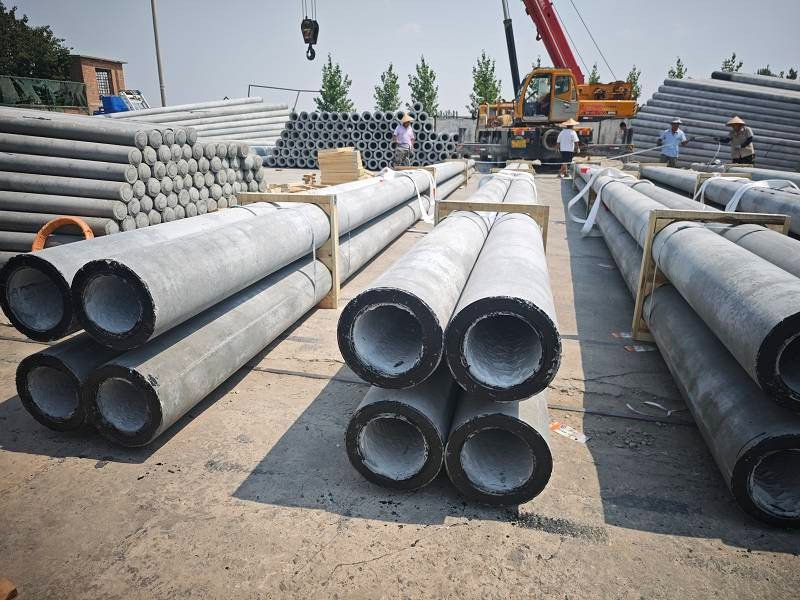
Between the vast fields and bustling cities, there stands an upright figure silently supporting the arteries of modern civilization??the 10-meter concrete pole. As a common piece of infrastructure in power transmission and communication networks, this seemingly plain concrete column embodies rigorous engineering mechanics and precision materials science. Today, let us step into the factory workshop and trace the complete production process of a 10-meter concrete pole, from raw materials to finished product.
Step 1: Steel Reinforcement Frame Fabrication
No concrete structure can be built without a solid steel reinforcement frame. For a 10-meter pole, the internal frame consists of longitudinal main reinforcements and spiral stirrups. The number and specification of main reinforcements are not fixed values; they are determined through structural calculations based on the load class, service conditions, and applicable national standards (e.g., GB/T 4623) as indicated on the design drawings. Commonly used main reinforcement materials include prestressing steel wires or hot-rolled ribbed bars that comply with current national standards.
The steel bars are first precisely cut by a straightening and cutting machine, with length tolerances controlled within permissible limits. Subsequently, the main reinforcements and spiral stirrups are connected by binding or resistance spot welding. End plates (anchor plates) are installed at both ends of the frame to provide anchoring points for the subsequent prestressing tensioning process. Throughout the frame fabrication, geometric dimensions must be strictly controlled to ensure uniform spacing of main reinforcements and consistent stirrup spacing.
Step 2: Mold Preparation and Concrete Mixing
The completed steel reinforcement frame is lifted to the centrifugal station and placed into a mold composed of two precision steel halves. Before mold closing, the inner surface is uniformly coated with a release agent to ensure smooth demolding and a clean pole surface.
Meanwhile, concrete is prepared in the batching plant according to a mix proportion verified by testing. The concrete strength grade is determined by design requirements (commonly C50 or higher). Portland cement or ordinary Portland cement is used, with continuously graded crushed stone as coarse aggregate and well-graded medium sand as fine aggregate. Appropriate amounts of admixtures such as water-reducing agents are added to the mixing water as needed to improve workability. All raw materials must pass incoming inspection before use. Mixing time must ensure uniform consistency, and the slump at discharge should be controlled within the process-specified range.
Step 3: Centrifugal Forming ?C The Core Process
This is the technically more demanding stage in concrete pole manufacturing. The mold containing the steel reinforcement frame is lifted onto the centrifugal machine, secured after clamping, and then rotated in stages according to a preset centrifugation schedule.
The centrifugation process generally involves three phases: low speed, medium speed, and high speed. During the high-speed phase, the mold rotates at the designed speed, and the concrete mix is evenly spread and compacted along the inner wall under centrifugal force, forming a hollow annular cross-section. This process produces a dense and uniform concrete layer while expelling excess mixing water, effectively enhancing concrete density and strength. For tapered poles (smaller tip diameter, larger base diameter), the centrifugal process ensures a gradual wall thickness variation along the pole length, matching structural load requirements. After centrifugal forming, the pole acquires its preliminary shape.
Step 4: Steam Curing
The centrifugally formed pole must be promptly transferred to a steam curing pit for moist-heat curing to accelerate the cement hydration reaction, enabling the concrete to reach demolding strength within a relatively short period.
Steam curing is carried out strictly according to a preset temperature-rise regime, generally divided into four stages: pre-curing (static rest), heating, constant-temperature holding, and cooling. The temperature during the constant-temperature stage must be maintained within an appropriate range based on product technical requirements, with sufficient holding time. Throughout the curing process, temperature changes are continuously monitored to ensure that the temperature variation rate at each stage complies with process specifications. After curing, the pole is cooled in the pit until the temperature difference with the ambient environment meets requirements before it can be removed.
Step 5: Prestress Release and Demolding
For prestressed poles, prestress release is performed after removal from the curing pit. After confirming that the concrete specimen strength meets the design release strength requirement, the tension in the prestressing tendons is released using either overall or symmetrical release methods. The prestress is transferred to the concrete through the end plates, imparting compressive pre-stress to the pole, which significantly improves its crack resistance and load-bearing capacity.
After release, the mold halves are opened, and the pole is lifted out. At this stage, the pole has taken its finished form, with a smooth and clean surface free from obvious defects such as honeycombing or surface pitting. It then enters a natural curing or water-curing phase to allow the concrete strength to continue increasing to the design standard value.
Step 6: Quality Inspection and Marking
Each finished pole must pass the prescribed quality inspection procedures before being approved for dispatch. Inspection items include:
Appearance quality and dimensional deviation check: Measurement of pole length, tip diameter, base diameter, wall thickness, and bending degree to confirm compliance with relevant product standards (e.g., GB/T 4623).
Mechanical performance testing: Poles are selected by batch for crack resistance and load-bearing capacity tests, using a horizontal test method with stepwise load application to measure key indices such as cracking moment and ultimate bearing moment, confirming compliance with design grade requirements.
Concrete strength assessment: Evaluated based on the strength of specimens cured under the same conditions.
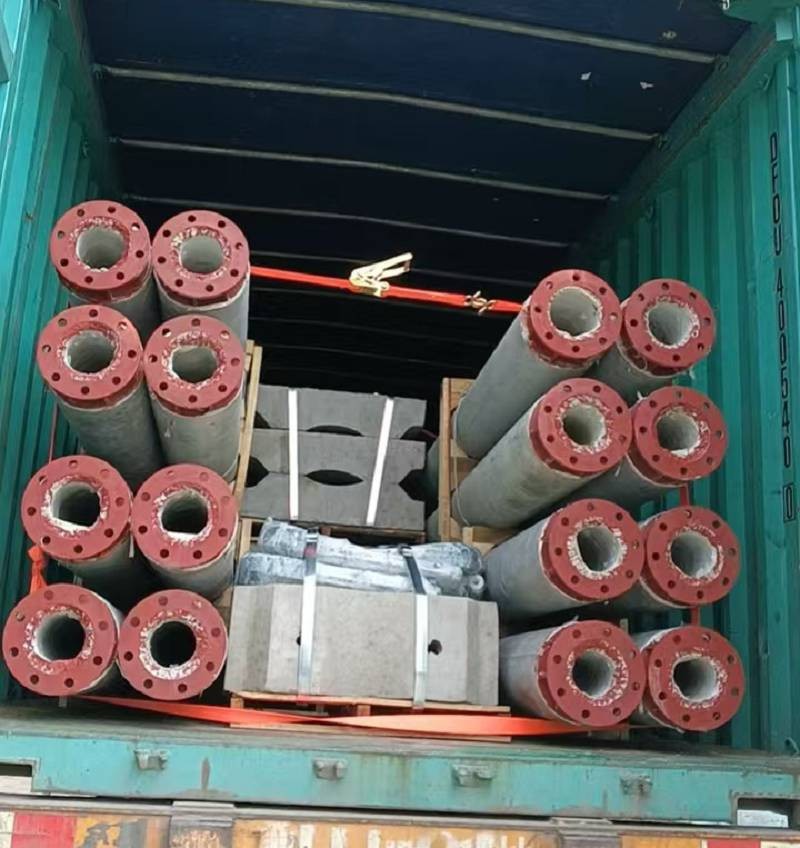
Upon passing inspection, the pole surface is sprayed or fitted with identification marks as specified, including the manufacturer's name, product model, production date, and applicable standard codes for traceability.
From steel processing and concrete mixing to centrifugal forming, curing, and inspection, the birth of a 10-meter concrete pole embodies the collaborative achievements of materials science, mechanical technology, and quality management. Every delivered pole corresponds to specific engineering applications??rural distribution network erection, urban street lighting, communication line support, and more. We consistently rely on standardized processes and reliable quality to provide qualified products for power and communication infrastructure development.
