



- Publisher:admin
- Published on:2026-08-25
- Pageviews:5570
- Source:
In the grand narrative of power grid construction, towers stand tall and wires stretch across the sky. Every concrete pole is an indispensable node in the power transmission chain. When we focus our gaze on these upright concrete components, we often overlook the unassuming detail at their top??the plug. Yet, it is this small device, occupying just a tiny space, that carries the heavy responsibility of ensuring the decades-long service life of the pole. It truly deserves to be called the "safety helmet" of the cement pole.
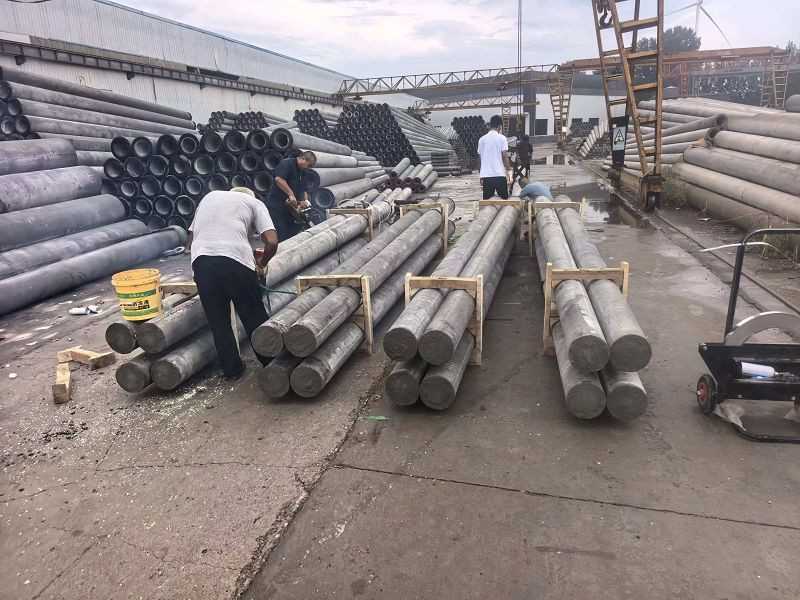
Waterproofing and Frost Protection: The Primary Mission of the Plug
Cement poles are mostly of a hollow, annular cross-section, a structural feature that necessitates proper sealing of the top opening. The most core and direct function of the plug is to prevent rainwater from entering the pole's interior. In regions prone to summer torrential rains, without plug protection, a large amount of rainwater will pour into the hollow cavity through the top opening. When winter arrives, temperatures in northern regions plummet, the accumulated water freezes, and its volume expands. The resulting frost-heave pressure is sufficient to cause longitudinal cracks on the inner wall of the pole. In severe cases, this leads to loosening and spalling of the concrete, exposure and corrosion of the steel reinforcement, ultimately rendering the entire pole scrapped.
The national standard, "Circular Concrete Poles" (GB4623-2006 and GB4623-2014), explicitly requires that all concrete poles must have their tops sealed before leaving the factory. This mandatory requirement is based on a profound understanding of the freeze-thaw damage mechanism. In a well-sealed pole, internal air convection is prevented. Even if a small amount of moisture penetrates in winter, it will not endanger the structural safety of the pole shaft as it remains below the frost line.
Reinforcement and Protection: From Passive Defense to Active Safeguarding
The role of the plug is not limited to waterproofing. During production, transportation, and installation, the small top end is the most vulnerable part of the pole. In mountainous areas, poles are often transported by dragging, causing friction between the small end and the ground, which can easily lead to cracks. A properly sealed pole top has its end concrete reinforced, significantly enhancing its crack resistance.
Furthermore, if the hollow cavity is not sealed, it can become a "haven" for birds to nest and rodents to hide. The accumulation of debris not only affects the internal ventilation and drying of the pole but can also create electrical safety hazards. The plug physically blocks this pathway, maintaining a clean internal environment for the pole.
The Economic Equation: Small Investment, Big Safety Returns
From a lifecycle cost perspective, the value of the plug is even more intuitive. Taking a 7-15 meter pole as an example, the sealing cost per pole is approximately 9.5 RMB. However, if a pole is scrapped due to frost cracks and exposed steel bars caused by a lack of sealing, the material and construction costs alone exceed 700 RMB. If power outage losses are included (estimated at 1680 RMB based on 1 hour at a 2800kW load), the total loss exceeds 2600 RMB. The stark contrast between 9.5 RMB and 2600 RMB highlights the "pivotal" economic efficiency of this minor process.
Process Evolution: From On-Site Casting to Prefabricated Products
Traditional plug construction often uses on-site concrete pouring??using a wire cage as a framework, lined with cardboard, and finished with a layer of concrete into a rounded shape. This method relies heavily on manual operation, resulting in uneven quality and a tendency to detach due to impacts. Today, the industry has introduced a variety of innovative solutions, including prefabricated plastic sealing caps, silicone elastic plugs, and composite sealing covers. These prefabricated components offer advantages such as easy installation, corrosion resistance, and aging resistance. They have reduced high-altitude working time from two hours to under half an hour, significantly improving operation and maintenance efficiency.
Conclusion
The cement pole plug, though not as majestic as a steel tower nor as striking as a conductor, safeguards the century-long foundation of the pole within its small space. As a responsible cement pole manufacturer, we understand that every detail is crucial to power grid safety. From strictly implementing national standard sealing requirements to continuously exploring better sealing techniques, we are committed to treating every pole with meticulous care. We let this small plug serve as a silent yet steadfast guardian throughout the long service life of the power line.
