
- Publisher:admin
- Published on:2026-08-25
- Pageviews:6613
- Source:
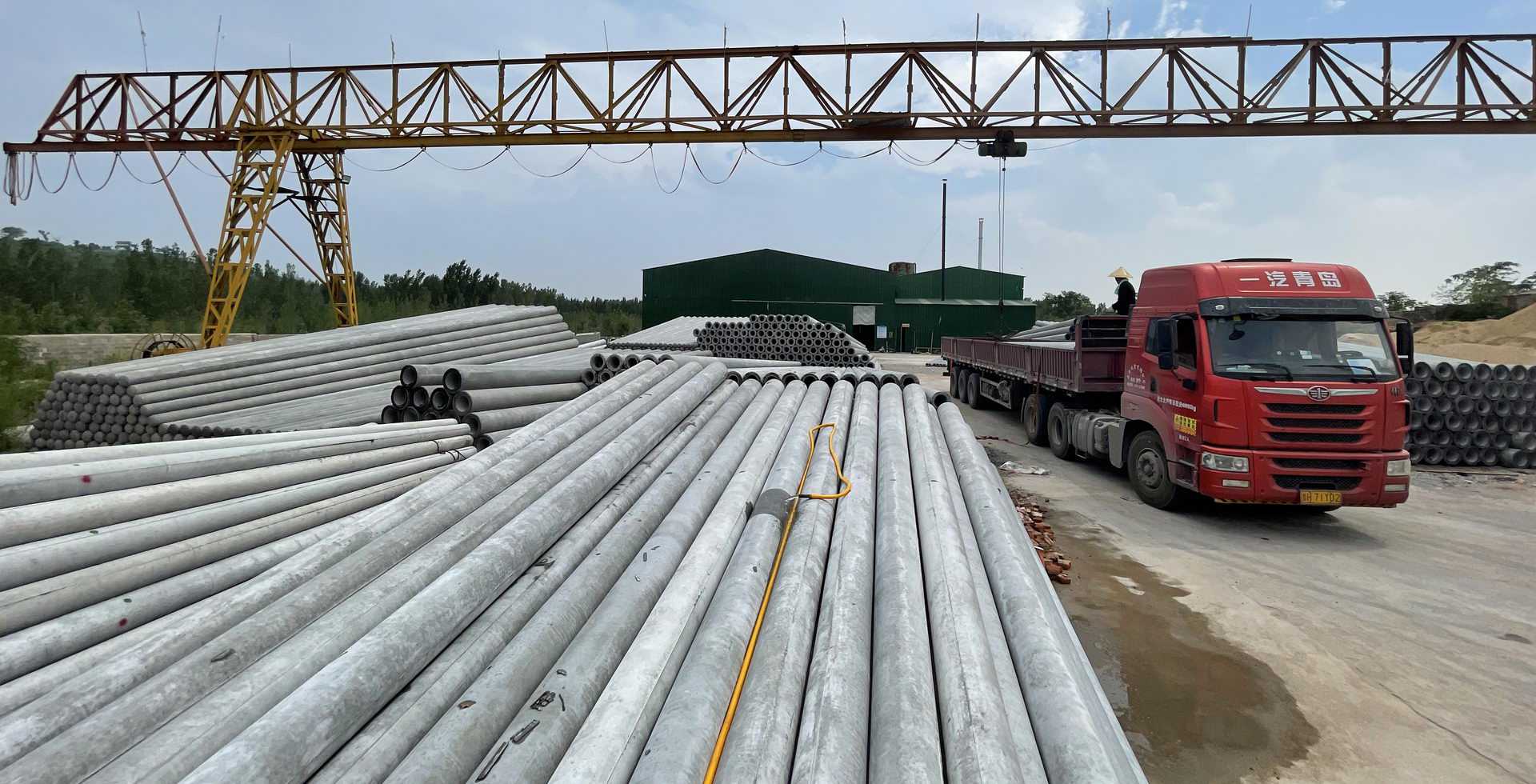
Across the vast farmlands and urban skylines, there stands a silent landscape??cement poles. Like faithful sentinels, they support the networks of electricity and communication, witnessing the extension of modern civilization. Yet, this seemingly rugged concrete column involves a rigorous discipline of safety, durability, and economy in its selection. As a manufacturer deeply rooted in this industry for years, we offer our professional perspective to clear the fog and guide you through the art of selection.
I. Fit for Purpose: A Selection Philosophy Rooted in Application Scenarios
Choosing a pole is by no means a simple matter of "length alone"; it is a precise match based on working conditions. First, clarify the mechanical characteristics: is it a tension pole that bears the pulling force of conductors and unbalanced loads, or merely a straight-line pole for support? Generally, tension poles, due to their complex stress, are better served by ordinary reinforced concrete poles, which have higher reinforcement ratios and are less prone to brittle fracture. Straight-line poles, on the other hand, are well-suited for prestressed concrete poles, offering excellent crack resistance, high stiffness, and effective steel savings.
Secondly, the pole profile also matters. The common tapered pole, with a thicker base and thinner tip, aligns with the moment variation of cantilever loading, offering excellent economy without guy wires. In contrast, uniform-diameter poles are more cost-effective in scenarios requiring guy wires. According to the national standard atlas 26G445, poles are classified by reinforcement type into reinforced concrete (ZG), prestressed concrete (ZY), and partially prestressed concrete (ZBY), each with different load-bearing parameters, requiring calculations per the Code for Design of Circular Concrete Pole Structures.
II. Distinguishing Quality: True Craftsmanship in Subtle Details
Poles on the market may look alike, but their inner qualities vary greatly. As professional manufacturers, we know that quality stems from rigorous control at every step. Concrete strength is the lifeline. National standards require at least C40 grade, with top-tier manufacturers reaching C50. Lower-grade concrete can start spalling within three years under rain, wind, and freeze-thaw cycles.
Reinforcement and protective cover are the skeleton and skin. Inferior poles often use mild steel bars instead of deformed rebar (HRB400) or reduce the number of bars, leading to severe deficiencies in cracking moment. Per GB/T 4623, poles of different lengths have strict crack-resistance test requirements??for instance, a 12-meter pole must achieve at least 29.25 kN??m. Moreover, surface finish is a key indicator. Only high-speed centrifuges and precision molds can produce poles with uniform wall thickness, smooth inner surfaces, and no voids or slurry accumulation. Tapping the pole??a crisp "clang" signals dense compaction, while a dull "thud" may indicate internal voids.
III. A Stable Foundation: Construction and Maintenance Cannot Be Overlooked
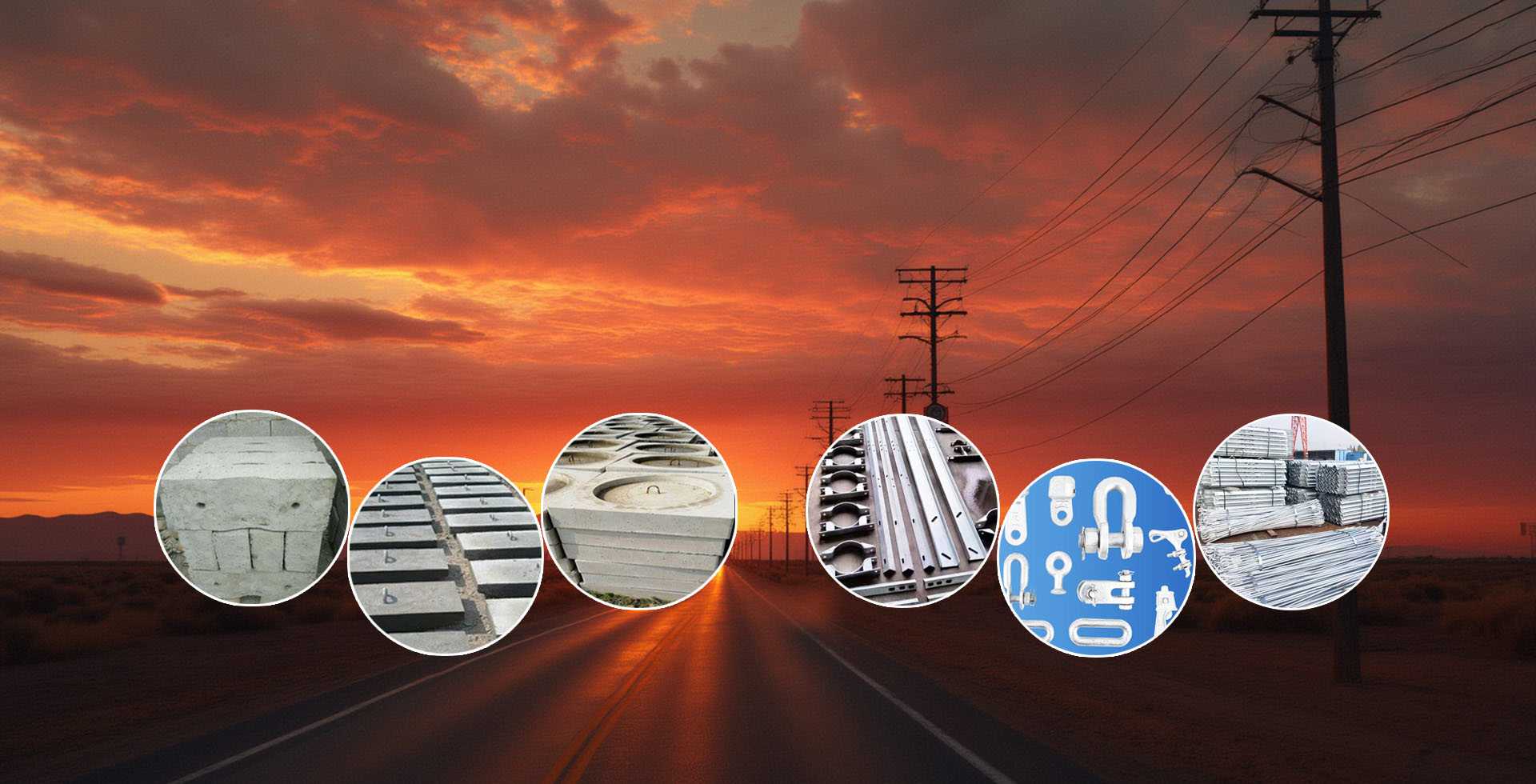
Choosing the right pole is only half the battle; proper erection is equally critical. Embedment depth directly determines overturning resistance. Per industry norms, a 10-meter pole in ordinary soil should be buried no less than 1.7 meters, and a 12-meter pole at least 2.1 meters. In soft ground, base plates and anchor blocks are needed for added stability. Notably, centrifugally cast annular concrete poles offer extremely low life-cycle costs??in highways and remote areas, their 50+ year maintenance-free service life far outmatches galvanized steel pipes.
In this age of efficiency, choosing a trustworthy pole means choosing lasting peace of mind. We control every raw material source, using high-grade cement and high-strength rebar, with mature centrifugal molding and steam curing processes. Every "Songli Pole" that leaves our factory stands resilient against wind and rain, carrying the lights of countless homes. We look forward to joining hands with you to build an unbreakable backbone of power.
