

- Publisher:admin
- Published on:2026-08-24
- Pageviews:4433
- Source:
If the crisscrossing power grid is the lifeblood of a city, then the silently standing utility poles are the solid framework that sustains this lifeblood. And the most core and unpretentious material that constitutes this framework is concrete??a substance we are all familiar with yet often misunderstand. It is far from a simple "lump of cement"; rather, it is a sophisticated art form at the intersection of materials science and industrial aesthetics.
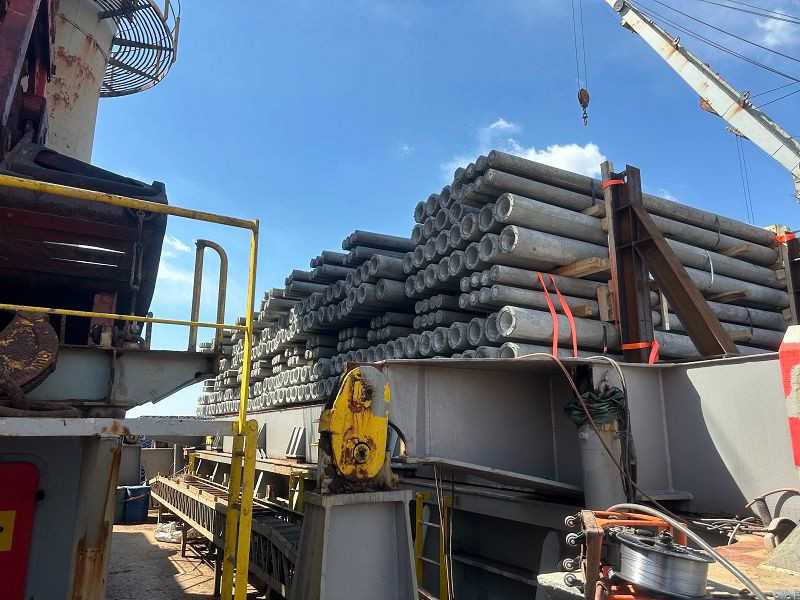
I. The "Four-Ingredient Recipe" of Concrete
The concrete used in utility poles is, in essence, a meticulously calculated composite material. Its "formula" is far more complex than what meets the eye, consisting primarily of four basic elements:
Cement: As the "binder" and soul of concrete, the quality of cement directly determines the strength and service life of the pole. The cement typically used in pole production is Portland cement or ordinary Portland cement with a strength grade of no less than 42.5. These cements act as adhesives, tightly enveloping other materials and forming a hard, stone-like mass through hydration reactions. In certain high-performance or corrosion-resistant poles, low-alkali cement is selected to inhibit alkali-aggregate reactions, ensuring the pole remains steadfast against decades of wind and rain erosion.
Aggregates: These form the "skeleton" of the concrete and are divided into fine and coarse categories. Fine aggregates, typically medium-coarse sand or quartz sand with sound texture and good gradation, fill the voids between coarse aggregates. Coarse aggregates, crushed stone or pebbles with particle sizes exceeding 5 mm, provide the primary compressive strength of the pole. These stones, sourced from mountains and riverbeds, undergo rigorous screening, with strict standards for particle shape, silt content, and crushing index.
Water and Admixtures: Water is the medium for hydration reactions and must be clean potable water. Admixtures, however, are the masterstroke of modern concrete technology. In pole production, high-performance water-reducing agents are widely used to lower the water-to-binder ratio, enhancing concrete density and strength. For prestressed poles, rust inhibitors are incorporated to protect steel reinforcement from corrosion.
Furthermore, to bestow superior performance upon the concrete, mineral admixtures such as silica fume, fly ash, and ground granulated blast-furnace slag are frequently applied. These ultra-fine powders not only fill microscopic voids between cement particles but also participate in secondary hydration reactions, making the poles denser, more durable, and even capable of resisting corrosive environments.
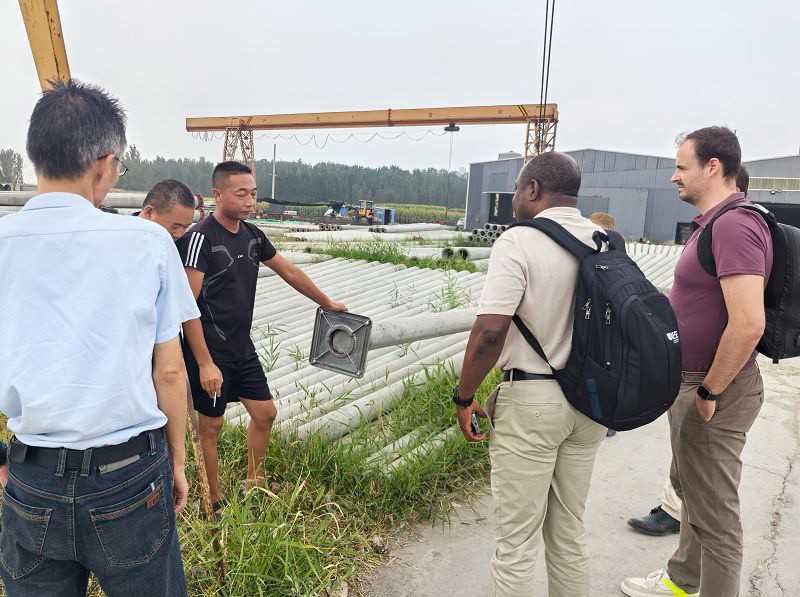
II. The "Family Tree" of Pole Concrete
Based on application and stress characteristics, the concrete in utility poles has distinct classifications.
By strength grade, ordinary poles typically require a concrete strength grade of no less than C40, while prestressed poles require no less than C50. With technological advancements, ultra-high-strength concrete poles boasting strengths up to C80 or even C120 have emerged for large-span, heavy-load, or harsh environments, significantly enhancing load capacity while reducing self-weight.
Classified by reinforcement and stress characteristics, they fall into three main categories:
Ordinary Reinforced Concrete Poles (Non-Prestressed): The longitudinal load-bearing steel bars are hot-rolled ribbed bars without prestressing. This type features relatively simple production processes and is less prone to brittle fracture, though its crack resistance is somewhat inferior.
Prestressed Concrete Poles: High-strength wires or strands are tensioned forcefully before casting. After the concrete hardens, the tension is released, and the retraction of the steel imparts a compressive pre-stress to the concrete, significantly enhancing crack resistance, stiffness, and durability while saving substantial steel. Currently, most annular prestressed poles are formed using the centrifugal method, where high-speed rotation compacts the concrete more densely.
Partially Prestressed Concrete Poles: Combining the strengths of the previous two, these poles feature a mix of prestressed and ordinary steel bars. They offer the toughness of ordinary poles and the crack resistance of prestressed ones, boasting superior overall performance, albeit with the most complex production process.
From the microscopic world of raw materials to the macroscopic classification of mechanics, every concrete utility pole embodies the wisdom of modern industrial civilization. It not only sustains the lights of countless homes but also, through the rising and setting of the sun, interprets the perfect fusion of science and craftsmanship with its silent resilience. Choosing high-quality concrete is choosing a promise of reliability and peace of mind that spans decades.
