
- Publisher:admin
- Published on:2026-08-24
- Pageviews:6483
- Source:
Across vast farmlands and bustling cities, utility poles stand as silent sentinels, upholding the lifeblood of modern civilisation??electricity. From the early wooden poles to today??s diverse material choices, the evolution of pole materials mirrors technological progress and shifting aesthetic sensibilities. As a manufacturer deeply rooted in the concrete pole industry, we invite you to examine the strengths and weaknesses of these three mainstream pole types through a professional lens, and to appreciate the engineering wisdom behind them.
Wooden Poles: A Fading Memory
Wooden poles were the ??pioneers?? of power engineering. Their greatest advantage lies in their light weight??for an 8?metre pole, a treated wooden one weighs about 80 kg, far less than a concrete pole??s 400 kg, which greatly facilitated early transport and installation. Wood also possesses natural flexibility, offering better bending resistance than concrete in some respects.
However, natural decay is the Achilles?? heel of wood. Susceptible to rot, moisture, and termite attack, even preservative?treated poles have an average service life of only 10 to 20 years. Frequent replacements, ongoing maintenance, and the environmental concerns of preservative chemicals have made wooden poles increasingly untenable in today??s resource?conscious and eco?friendly era. Inconsistency in timber quality further complicates standardised application. Today, wooden poles have largely withdrawn from mainstream power grids, surviving only in a few old lines or specialised scenarios.
Steel Poles: Modern Icons of Urban Landscapes
Steel poles, particularly galvanised tubular ones, are the ??darlings?? of urbanisation. Their sleek lines and high formability allow them to be shaped into polygonal tapers or round sections that harmonise with cityscapes. Compared to concrete, steel poles are lighter, stronger, and highly resistant to instantaneous impact, rarely suffering brittle fracture. Sectional assembly also facilitates transport and construction in challenging terrain.
Yet, the inherent weakness of metal is corrosion. Prolonged outdoor exposure, especially in coastal salt?spray environments, makes rust inevitable. Regular anti?corrosion painting and maintenance constitute a continuous and considerable expense. Moreover, steel??s electrical conductivity poses safety risks during line faults. Over its full life cycle, the total cost of a steel pole typically exceeds that of a concrete pole.
Concrete Poles: The Unyielding Mainstay
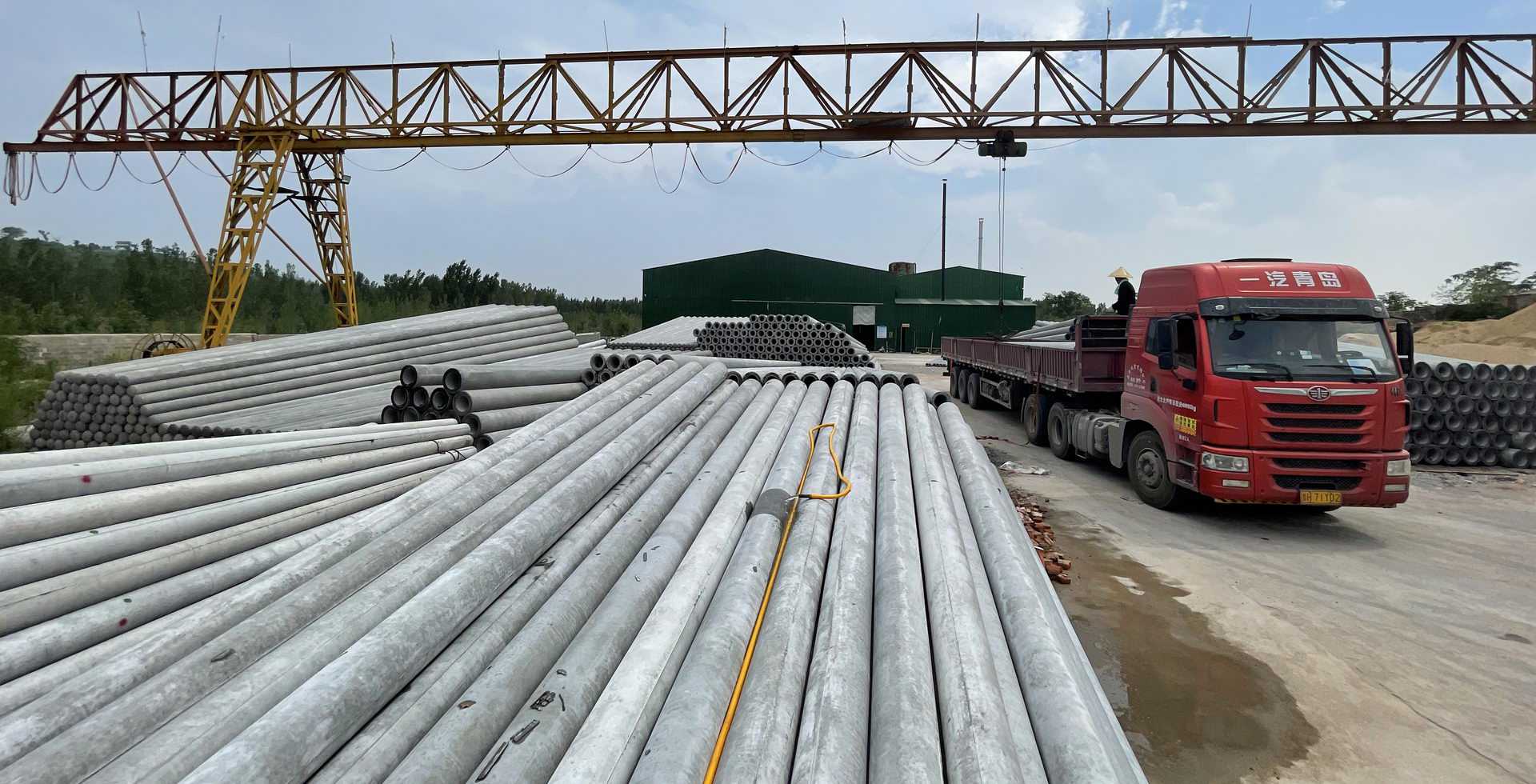
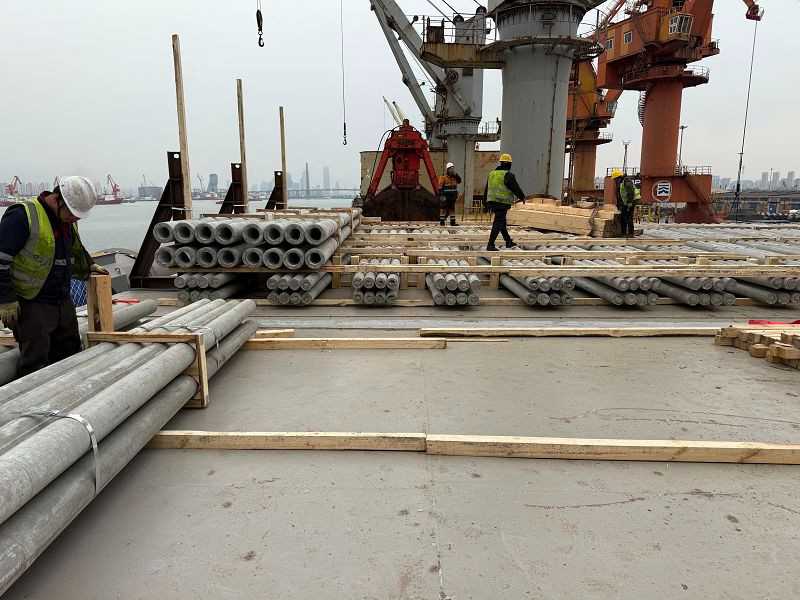
Concrete poles??formally known as circular reinforced concrete poles??are the most widely used pole type today and the true ??cornerstone?? of power grid construction.
Their core strength is an exceptionally long service life with minimal maintenance. High?quality concrete poles can last 30 to 50 years or even longer. Their resistance to corrosion and decay allows them to withstand sun and rain without the need for frequent painting or anti?corrosion work. In an era that prizes life?cycle cost optimisation, this advantage is particularly striking??especially in highly corrosive or safety?critical environments such as expressways and cross?sea bridges, where concrete is often regarded as the more economical and reliable choice.
In terms of safety, concrete is inherently insulating, eliminating the shock hazards associated with metal poles. While conventional wisdom once deemed concrete poles ??heavy and brittle,?? technological innovation is giving them new vitality. With prestressing technology and centrifugal forming, modern high?strength concrete poles have achieved substantial improvements in toughness and crack resistance. Some advanced variants even exhibit self?healing properties for winter cracks through composite structures or specialised curing regimes.
Of course, we must acknowledge concrete??s limitations: its high self?weight raises transport and installation costs, and its relatively uniform shape may fall short of metal poles in ultra?design?conscious urban districts.
| Characteristic | Concrete Pole | Steel Pole | Wooden Pole |
|---|---|---|---|
| Service Life | 30?C50 years, highly durable | Subject to rust, requires regular maintenance | 10?C20 years, prone to rot and pests |
| Maintenance Cost | Very low, essentially maintenance?free | High, needs periodic anti?corrosion coating | High, frequent replacements needed |
| Safety | Good insulation, high safety | Conductive, certain safety risks | Risk of breakage due to decay |
| Typical Applications | Backbone of distribution networks; ideal for rural areas, mountains, farmlands, and corrosive environments | Urban streets, scenic roads, and aesthetically demanding locations | Largely obsolete; limited to old lines |
Conclusion: The Best Choice Is the Right Choice
Wooden poles carry history, steel poles illuminate cities, and concrete poles??in their most unpretentious form??uphold the most fundamental values of power transmission: safety, durability, and economy. As concrete pole manufacturers, we are committed to continuous innovation in strength and adaptability, so that this ??heaviness?? may shoulder even more possibilities. Across vast rural expanses and open wilderness, wherever decades of dependable service are required, the concrete pole remains the trustworthy ??sentry of time.??
