

- Publisher:admin
- Published on:2026-08-18
- Pageviews:3029
- Source:
In power transmission, telecommunications infrastructure, and municipal lighting projects, concrete poles often serve as the most unassuming yet critical structural supports. The selection and design of a single pole is not merely a trade-off between mechanics and materials; it is a sophisticated balancing act involving service life, economic efficiency, and environmental adaptability. As a trusted partner in infrastructure materials, we provide a professional perspective on how to precisely select and design concrete poles tailored to your project needs.
I. Core Classifications: Understanding the Pole??s "DNA"
Based on manufacturing processes and load-bearing characteristics, concrete poles fall into three primary categories, each suited to distinct applications:
Reinforced Concrete Poles (RC): Featuring ordinary non-prestressed reinforcement, these poles rely on the composite action of steel and concrete. They offer high rigidity and good ductility but exhibit moderate crack resistance. Studies show that under equivalent load capacity, H-type RC poles have ultimate strength and ductility approximately 1.6 times and 1.4 times that of prestressed poles, respectively. They are ideal for short-span distribution lines where crack resistance is not critical and cost sensitivity is a priority.
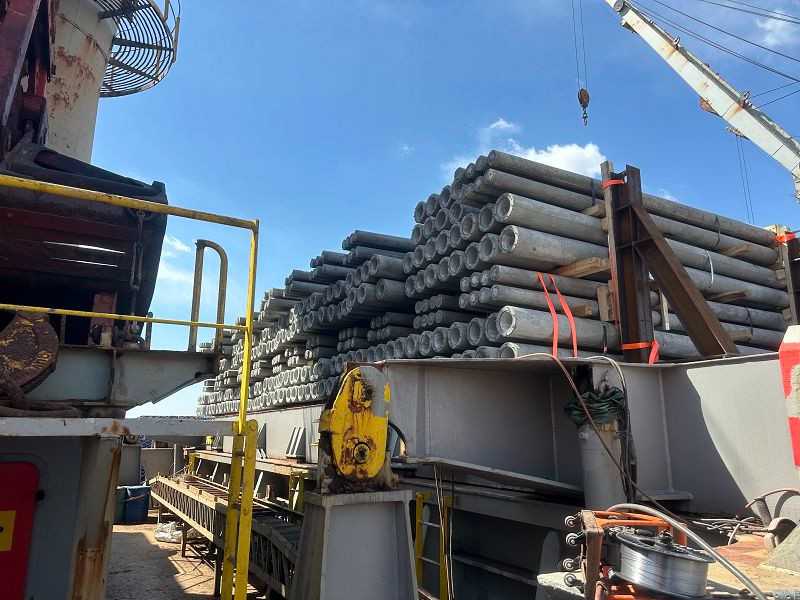
Prestressed Concrete Poles (PC): Manufactured using high-strength steel wires under prestressing force and centrifugal forming technology, these poles achieve uniform concrete compaction through high-speed rotation, delivering superior crack resistance and durability. Although the initial cost is about 22% higher than that of RC poles, their service life is twice as long, making them more cost-effective over the full lifecycle.
Partially Prestressed Concrete Poles (ZBY): Combining the strengths of both RC and PC types, these poles offer a balanced combination of crack resistance and ductility, making them an ideal compromise for complex loading conditions.
II. Design Principles: Anchored in Standards, Measured by Data
Precise design must strictly adhere to international and industry codes. Under the Chinese national standard system, 26G445 "Ring-Type Concrete Pole" Atlas and NB/T 11311-2023 "Design Code for Ring-Section Concrete Pole Structures" provide systematic design bases, covering material specifications, construction requirements, load capacity tables, and connection detail drawings. For international trade, ASTM C1089 (centrifugally cast prestressed poles) and ASTM C935 (statically cast prestressed poles) are widely recognized authoritative standards, imposing stringent requirements on key materials including cement (ASTM C150), aggregates (ASTM C33), and prestressing steel (ASTM A416).
Key Design Parameters:
Loading and Span: Depending on terrain and conductor type, horizontal and vertical spans must be precisely calculated. For 110kV lines, the maximum horizontal span can reach 350 meters in rural settings, whereas urban environments typically limit it to 200 meters due to spatial constraints.
Cover and Reinforcement: To ensure durability, the minimum concrete cover for reinforcement is generally required to be 19mm; for lighting poles, it may be reduced to 13mm. The spacing of circular stirrups is strictly capped (typically no more than 102mm) to control crack development.
III. Selection Strategy: A Game-Theoretic Approach to Environment and Economics
Selecting the right pole is ultimately an integrated technical and economic decision:
Environmental Adaptation: In coastal, high-salinity, or highly humid corrosive environments, prestressed poles must be prioritized, with increased cover thickness or anti-corrosion embedded parts (aluminum inserts are strictly prohibited) to enhance resistance to aggressive agents.
Load Conditions: For tension poles and terminal poles subjected to significant bending moments, the design cracking load must exceed the service load. In mountainous areas with high winds or long-span crossings, high-strength sectional poles with flanged connections offer a reliable solution.
Economic Analysis: Although prestressed poles require higher upfront investment, their superior crack resistance substantially reduces maintenance costs and results in a lower lifecycle carbon footprint, aligning with green infrastructure goals.
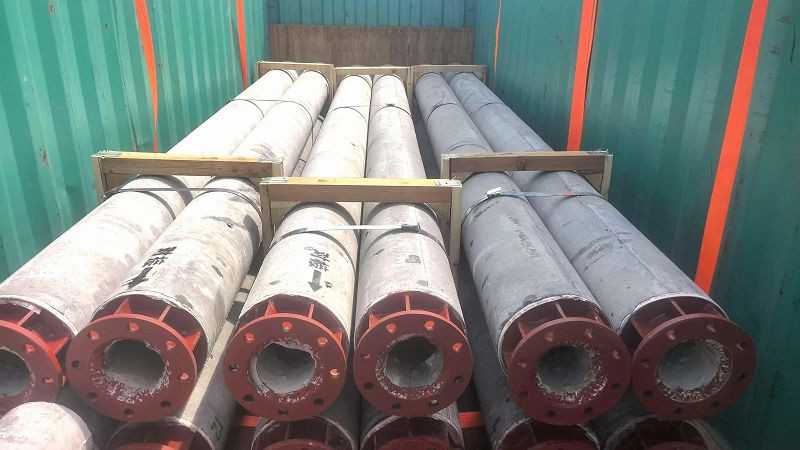
In summary, the essence of design lies in anticipating future risks. From incoming raw material inspection (e.g., mixing water with chloride ion content ??500 ppm), to centrifugal forming process control, and to finished product protection during lifting and transport??every step determines the final quality of the pole.
We are committed to delivering high-performance concrete pole solutions that meet ASTM, IEC, and GB standards. Backed by solid engineering data and extensive international project experience, we provide a steadfast foundation for your above-ground networks. Choose the right pole??and ensure every flow of current has safe, reliable support.
